






















The Election Commission of India has mobilised more than 25 lakh personnel for the forthcoming Assembly elections in Assam, Kerala, Puducherry, Tamil Nadu and West Bengal, alongside by-elections in six states, in what is among the largest coordinated election exercises in recent years.
The poll schedule, announced on March 15, sets the stage for a multi-phase electoral process involving over 174 million voters. The scale of deployment reflects a calculated approach to oversight, with roughly one election official assigned for every 70 voters.
Extensive Deployment Across All Levels
The Commission’s operational framework includes around 15 lakh polling personnel and 8.5 lakh security forces tasked with maintaining order and ensuring smooth conduct on polling days. Supporting them are 40,000 counting personnel, 49,000 micro observers, 21,000 sector officers and an additional 15,000 micro observers dedicated to overseeing the counting process.
At the grassroots level, more than 218,000 Booth Level Officers will act as the primary interface between the system and the electorate. Voters can reach them directly through phone services or via the ECINET mobile application. A dedicated helpline, 1950, has also been activated to register complaints and address queries at the district and returning officer levels.
Clear Directive on Neutrality and Fairness
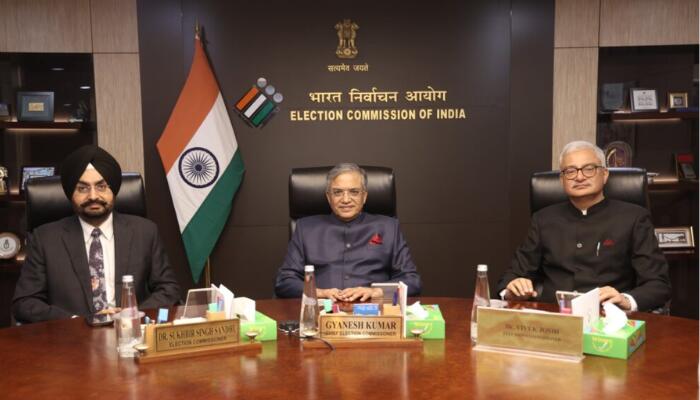
Chief Election Commissioner Gyanesh Kumar has instructed all officials to function with strict impartiality, stressing that the elections must remain free from both violence and inducement. The emphasis, he said, is on enabling every voter to exercise their democratic right without fear or influence.
All personnel deployed for election duty will function under Section 28A of the Representation of the People Act, 1951, placing them on deemed deputation to the Commission and reinforcing institutional control over the electoral process.
Observers to Ensure Real-Time Oversight
To strengthen monitoring, the Commission has deployed 1,111 Central Observers across 832 Assembly constituencies. This includes 557 General Observers, 188 Police Observers and 366 Expenditure Observers, forming a multi-layered oversight mechanism.
Most observers have already reached their assigned constituencies and are expected to maintain daily engagement with candidates, political parties and the public. Their contact details will be made available, and they will hear grievances at designated times each day, creating a direct and transparent channel for complaint redressal.
Focus on Credibility and Voter Confidence
The scale and precision of the deployment signal a clear attempt by the Commission to reinforce trust in the electoral process. By combining manpower, legal safeguards and accessible grievance mechanisms, the institution is positioning itself to deliver elections that are not only orderly but also visibly fair.
As the electoral process unfolds, the effectiveness of this extensive machinery will be closely watched, with its success ultimately measured by the confidence it inspires among voters on the ground.