















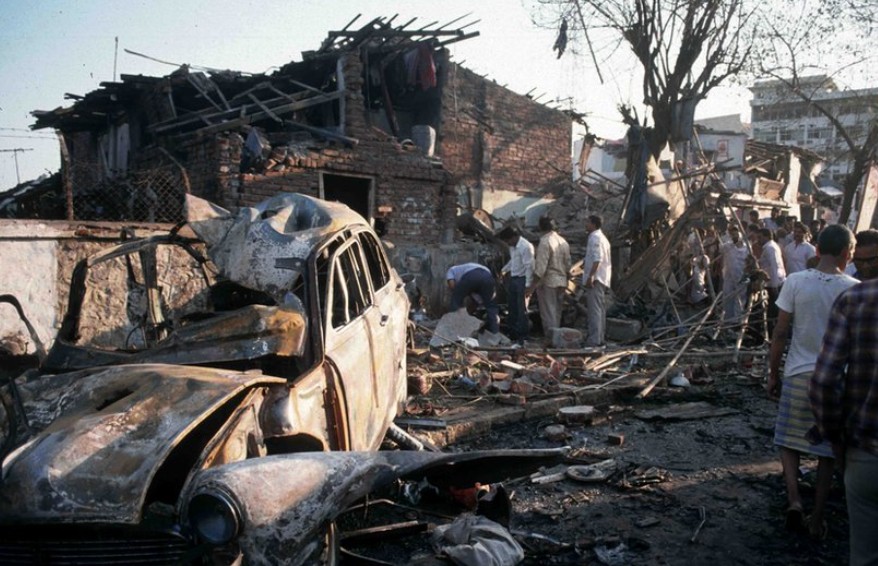
The day after the 1993 Mumbai blasts, India’s security agencies had no playbook for what had just happened and nobody had written one. Thirteen coordinated bombs across a major city in two hours was not a scenario that existing policing structures, intelligence protocols, or legal frameworks had been built to handle.
However, what followed the attacks was not just grief, rather a slow, painful, and sometimes disorganized effort to build systems that should have existed already. The 1993 Mumbai (Bombay) serial blasts were primarily orchestrated by Dawood Ibrahim and his organised crime syndicate D-Company, in collaboration with Tiger Memon (Ibrahim Mussa Memon), who served as the key local coordinator.
The attacks were reportedly carried out with logistical support from Pakistan’s ISI (Inter-Services Intelligence). Tiger Memon and Dawood Ibrahim have been fugitives ever since, believed to be sheltered in Pakistan.
Fragmented Communication and Investigative Challenges
The first breakdown that investigators and officials identified was communication. Mumbai Police, the Central Bureau of Investigation, state intelligence units, and national agencies all received information and responded to the blasts independently.
There was no shared command structure and no fast channel for combining what each agency knew. The gaps between them had allowed the plot to develop without anyone putting the full picture together in time.
Legal and Procedural Overhaul: MCOCA and Network-Based Policing
Maharashtra didn’t just mourn, it tried to learn. In 1999, the state passed the Maharashtra Control of Organised Crime Act (MCOCA), marking a shift in how law enforcement viewed organized crime. Criminals like those behind the 1993 blasts operated in networks, and charging one man for one crime no longer sufficed.
MCOCA allowed prosecutors to target the structure of syndicates, including leadership, finances, and chains of command, fundamentally changing how police approached organized crime.
Inside the Mumbai Police, units were reorganized, and officers began analyzing criminals not just as individual lawbreakers, but as parts of broader networks. The focus shifted from isolated crimes to understanding how networks functioned, tracking money, weapons, and orders from the top down.
Coastal Security and Urban Vulnerabilities
The blasts exposed weaknesses in coastal security, as the RDX had arrived by sea. Maharashtra expanded its marine police operations and increased patrols along the coastline, recognizing smuggling routes as conduits for weapons, not just contraband.
At the national level, intelligence agencies were gradually pushed toward better information sharing. Public spaces in Mumbai also changed, with security checks outside financial buildings, markets, and government offices becoming routine.
Vehicle inspections near sensitive locations became normal, reflecting a new understanding that urban density could be both an economic feature and a security vulnerability.