
















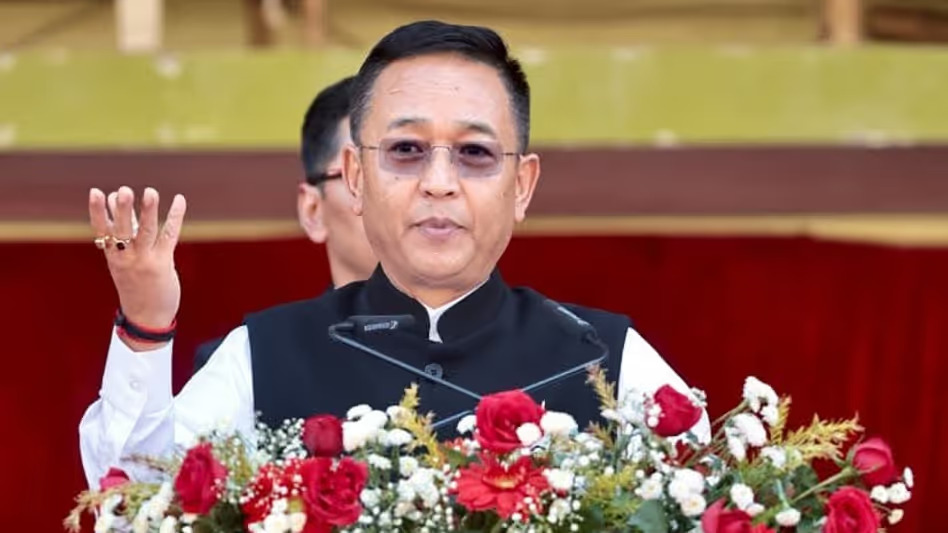
In a controversy that has captured national attention and stirred strong feelings about India’s territorial integrity, Sikkim CM Prem Singh Tamang has openly rebuked The Hindu newspaper for publishing a map of India that excluded the state of Sikkim. The incident, which occurred in the newspaper’s May 13, 2025 edition, has ignited debates on media responsibility, national unity, and respect for constitutional identity.
The uproar began when The Hindu featured a map of India in an article that reportedly omitted Sikkim, a northeastern state that celebrated its 50th year of statehood in May 2025. Sikkim was formally integrated into the Indian Union on May 16, 1975, and its constitutional status is protected under Article 371F of the Indian Constitution.
Taking to social media, the Sikkim CM vehemently criticised the publication, calling the omission “a serious and unacceptable error” that undermined India’s sovereignty. He emphasised that the act was not just a careless mistake but one that was “deeply hurtful to the people of Sikkim”. His comments drew widespread attention, as many in the state and across India echoed his sentiment that such inaccuracies in representing the nation’s map were not trivial.
“This is not a mere oversight,” wrote the Sikkim CM on X (formerly Twitter). “It is a serious and unacceptable error that undermines the sovereignty and territorial integrity of our nation.” These words resonated especially strongly given the emotional context of Sikkim’s golden jubilee celebrations.
Supporters of Prem Singh Tamang pointed out that Sikkim’s identity as an integral part of India is protected both legally and culturally. Critics of the newspaper maintained that excluding the state from the map in a national publication was tantamount to disrespecting its place in the Indian Republic. The Sikkim CM underlined that the state’s constitutional protection under Article 371F was not a symbolic gesture but a recognition of its place within the Indian Union.
While many initially reacted with outrage, The Hindu later issued an apology and corrected the map in its online and e-paper editions, acknowledging the error and its possible implications. The corrected version reinstated Sikkim clearly within the geographic outline of India.
The debate around the omission quickly grew beyond a single newspaper’s error. Some commentators accused The Hindu of a pattern of missteps or editorial laxity when it came to matters of territorial representation. Although these allegations were never formally proven, they added fuel to the public discourse on media accountability and patriotic duty.
Political leaders from the region rallied behind the Sikkim CM’s stance. The state’s Bharatiya Janata Party (BJP) unit demanded a formal apology from The Hindu and even called for an inquiry by the Ministry of Information and Broadcasting into how the oversight occurred. Highlighting Sikkim’s place in the Indian Union and its legal status under the Constitution, they argued that national publications carry a duty of accurate representation.
For many residents of Sikkim, the controversy struck a personal chord. The state’s integration into India remains a source of pride, reflected in celebrations, cultural events, and official commemorations surrounding its golden jubilee year. The fact that such a symbolic mistake occurred amid these celebrations was seen by many as especially disappointing.
Some observers noted that the reaction from the Sikkim CM and his supporters reflects broader concerns about how India’s border states and northeastern regions are perceived or portrayed nationally. While unintentional, the map omission was interpreted by many as indicative of a casual approach toward sensitive matters of geography and identity.
The controversy also underscores the increased public vigilance over media representations in the digital era. In an age of social media, news spreads rapidly, and errors — perceived or real — are quickly brought into the mainstream conversation. The swift backlash over the map omission demonstrated how quickly public sentiment can mobilise when national integrity is perceived to be at stake.
Despite the correction and apology issued by The Hindu, the incident has left a lasting impact on Sikkim’s political discourse. For the Sikkim CM, the episode was a reminder that even seemingly small errors in national publications can carry deep emotional and political weight. Many supporters have said that the strong response by Prem Singh Tamang helped bring the issue the attention it deserved, ensuring that Sikkim’s rightful place in the nation’s map was not taken for granted.
In the aftermath, discussions about media accuracy, national identity, and respect for constitutional protections continue to feature in public debates. For Sikkimese citizens and leaders alike, the controversy has reaffirmed the importance of vigilance when it comes to how their state is represented in national narratives.
Overall, the map omission incident serves as a potent reminder of the emotional bonds that people have with their homeland and the symbols — such as geographic maps — that embody national unity. The Sikkim CM’s firm stance helped ensure that this message resonated far beyond the borders of the northeastern state.