






















With the planned building of its first road tunnel over a main river, India stands to achieve a landmark in its infrastructure history.
The Union Cabinet has approved construction of a 4-lane access-controlled greenfield corridor from Gohpur (NH-15) to Numaligarh (NH-715), including a 15.79-km road-cum-rail underwater tunnel under the Brahmaputra, at a total capital cost of Rs 18,662 crore, the government said on Friday.
The total project length will be about 33.7 km, and will be implemented on an Engineering, Procurement and Construction (EPC) mode. It will be India’s first underwater road-cum-rail tunnel and the world’s second, and is aimed at strengthening connectivity across Assam and the broader Northeast region.
The newly planned greenfield corridor with its tunnel is designed to greatly enhance connectivity, lower logistics costs, and boost the efficiency of freight movement across Assam, Arunachal Pradesh, Nagaland, and other northeastern states.
Strategic and Economic Impact
The government has said that the project will be crucial for strategic connectivity, regional economic growth, and trade expansion, while also strengthening links between major economic centres.
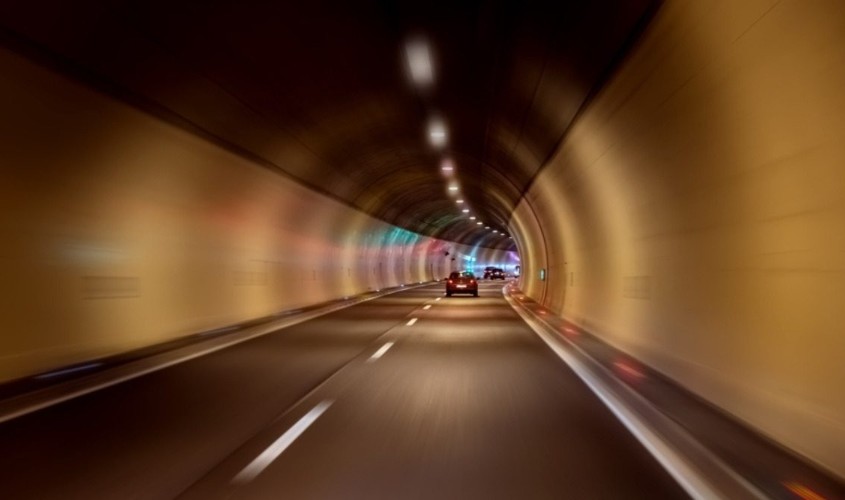
It is expected to generate around 80 lakh person-days of direct and indirect employment, boosting economic activity and development in the surrounding areas. The tunnel component will include a twin-tube TBM tunnel with a rail line in one tube, spanning 15.79 km, a road cut-and-cover section of 1.26 km and a rail cut-and-cover section of 4 km.
The tunnel component will comprise a 15.79-km twin-tube TBM tunnel, with rail provision in one of the tubes, along with a 1.26-km road cut-and-cover section and a 4-km rail cut-and-cover section.
The project will link key economic zones, industrial clusters and social districts, besides improving access to major tourist destinations such as Kaziranga National Park. It will also enhance connectivity between important urban centres, including Numaligarh, Tezpur, Gohpur, Dibrugarh and Itanagar.
Defence Preparedness
Beyond its economic benefits, the project is expected to significantly enhance defence preparedness in the Northeast. Improved road and rail connectivity, along with the long twin-tube tunnel, will enable faster movement of troops, heavy equipment and supplies across strategically sensitive areas near the international border.
The all-weather infrastructure will ensure reliable access even during adverse weather conditions, reducing travel time and logistical bottlenecks. The tunnel and corridor will serve as a strategic asset in the Northeast.
The integrated road and rail design will enable swift movement of troops, armoured vehicles, artillery and essential supplies to forward areas, particularly in regions close to international borders.
The all-weather tunnel infrastructure will ensure uninterrupted connectivity even during heavy rainfall, floods or landslides, which often disrupt surface routes in the Northeast.
By strengthening links between key urban centres and border regions, the corridor will support quicker deployment and coordinated operations, reinforcing India’s overall security architecture in the region.
Especially for the Indian Defence Forces, the planned tunnel will improve the northeast part of the nation’s connectivity and strategic mobility. The twin-tube one-way undersea tunnel will connect National Highway 52 near Gohpur on the north bank and National Highway 37 at Numaligarh on the south bank, reducing travel distance from 240 km to 34 km. This reduction in distance will take travel time from 6.5 hours to merely 30 minutes, giving logistics a revolutionary performance boost.
Network Connectivity
After it is completed, the project will connect key economic zones, industrial areas, social districts, and tourist hubs, including Kaziranga National Park, as well as major urban centres such as Numaligarh, Tezpur, Gohpur, Dibrugarh, and Itanagar. It is expected to significantly improve regional trade, mobility, and overall economic development.
Multimodal integration and network connectivityThe corridor will integrate with two major national highways — NH-15 and NH-715 — and two railway sections: Rangia–Mukongselek railway section (Gohpur side) Furkating–Mariani loop line (Numaligarh side).
The project will also enhance multimodal connectivity and improve access to four major railway stations, two airports and two inland waterway terminals, enabling faster movement of goods and passengers.