
























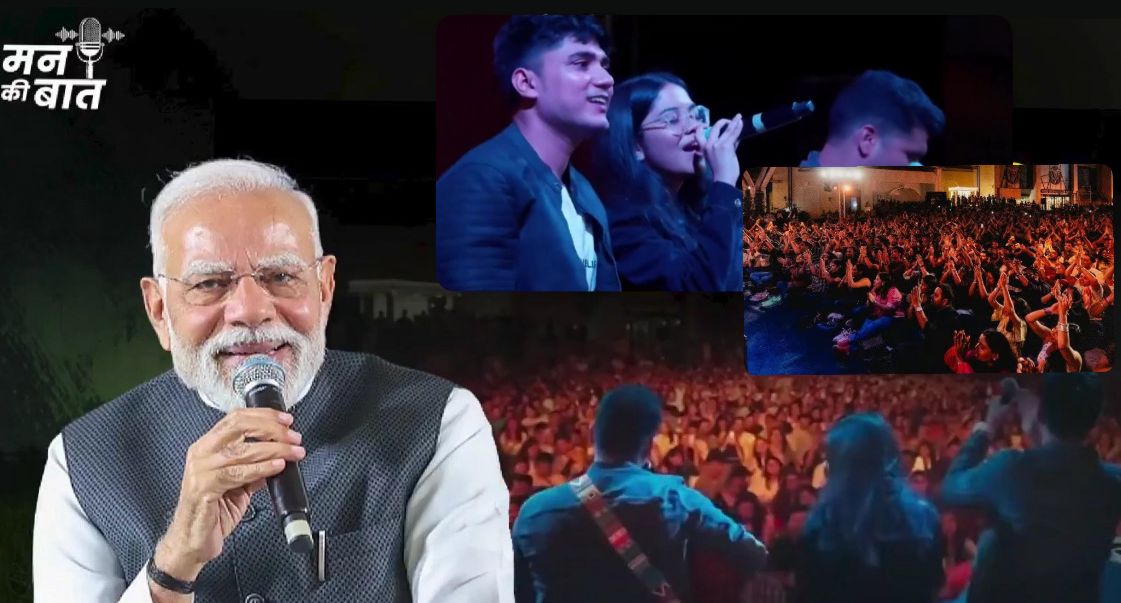
A contemporary, Gen Z–driven cultural phenomenon that reimagines traditional Indian devotional practices through the lens of modern music, youth culture and live-event experiences, termed as ‘bhajan clubbing‘ it is an emerging movement, redefining how young Indians connect with faith, community and modern spirituality.
This way of clubbing brings together large groups, predominantly young people in urban spaces where devotional bhajans are sung collectively. The setting feels much like a live music gig, complete with curated décor, dynamic lighting and professional sound equipment that amplifies the experience and adds an electric energy.
The key distinction, however lies in the soundtrack, as the crowd sings bhajans in place of chart-topping hits. The atmosphere remains deeply respectful without being restrictive, sacred in spirit, yet far from solemn in mood.
Prime Minister Narendra Modi has, since the very beginning of his political journey, made a conscious effort to connect with India’s youth across fields, be it technology, entrepreneurship, culture, sports or spirituality.
In his 130th episode of Mann Ki Baat, PM Modi shed a spotlight on this rising trend and praised how ‘bhajan clubbing’ blends spirituality with modernity while preserving the sanctity of bhajans.
https://x.com/narendramodi/status/2015317286207561808?s=20
“Our Gen-Z is taking to Bhajan Clubbing…it is spirituality and modernity merging beautifully, particularly keeping in mind the sanctity of the Bhajans,” said PM Modi while sharing a video of the new rising cultural trend.
PM Modi demonstrates how tradition and modernity need not be in conflict. His recognition of bhajan clubbing sends a broader message, that faith can be expressed in contemporary forms without being diluted, and that young people should feel encouraged to engage with culture on their own terms.
What bhajan clubbing looks like
Bhajan clubbing events are usually held in urban venues such as auditoriums, open-air grounds, cafés, or cultural spaces. The setup mirrors a live gig, professional sound systems, stage lighting, LED screens, laser effects and curated décor.
Instead of DJs playing mainstream pop or EDM tracks, the music centres on devotional compositions—often familiar bhajans like the Hanuman Chalisa, Achyutam Keshavam, or Krishna chants, sometimes in their classical form and sometimes blended with contemporary elements such as electronic beats, ambient soundscapes, live guitars or percussion.
The atmosphere is energetic and immersive. Participants may sing along loudly, clap, sway, raise their hands in devotion or even dance, creating a collective emotional experience that feels both celebratory and spiritual.
Why it resonates with Gen Z
For Gen Z, bhajan clubbing reflects a shift in how spirituality is experienced and expressed.
Spirituality without rigidity: Many young people seek meaning and faith without strict rules or formal rituals. Bhajan clubbing offers devotion in a form that feels open, expressive and non-judgmental—faith that can be felt rather than formally performed.
Community and belonging: In a digitally driven generation that often struggles with isolation, these gatherings create a strong sense of togetherness. Participants do not need prior connections; shared singing and collective emotion naturally build community.
Emotional release, not escapism: Like concerts, bhajan clubbing provides emotional catharsis, but instead of chaos or excess, it offers calm, grounding and upliftment. It allows young people to process stress, burnout and uncertainty in a spiritually nourishing way.
Role of music and aesthetics
Music is central to bhajan clubbing’s appeal. Familiar devotional lyrics provide comfort and cultural continuity, while modern arrangements make them feel current and relatable. Visual elements—warm lighting, stage design and immersive sound—enhance the experience without overshadowing the devotional core.
Importantly, despite the high-energy presentation, the sanctity of the bhajans is maintained, which distinguishes bhajan clubbing from pure entertainment.
Social media has played a significant role in popularising bhajan clubbing. Short videos of packed venues, glowing lights and hundreds of voices singing in unison circulate widely on platforms like Instagram and YouTube. For Gen Z, sharing such moments online is less about displaying religiosity and more about sharing peace, joy and authenticity in a noisy digital world.
A passing trend or a cultural shift?
Bhajan clubbing represents a broader cultural shift rather than a passing fad. It signals how Gen Z approaches faith—intentionally, emotionally and on their own terms. Tradition is not rejected, it is recontextualised. Ancient devotional practices are preserved but expressed in forms that align with contemporary sensibilities.
In essence, bhajan clubbing is the meeting point of tradition and modernity. It shows that devotion does not need to be quiet or confined to traditional spaces to be sincere. For Gen Z, spirituality can be communal, expressive and vibrant—where prayer, music and modern culture coexist, and where faith feels lived, shared and deeply personal.
Looking at the growing crowds and strong online engagement, bhajan clubbing appears to be more than a fleeting trend. It reflects a broader shift in how young Indians approach faith—less inherited and more intentional, less formal and more deeply felt.
For Gen Z, spirituality is no longer about choosing between tradition and modernity. It is about allowing both to exist in the same space, ideally with good acoustics.
Bhajan clubbing shows that devotion does not need to whisper to be sincere. Sometimes it can sing out loud, carried by hundreds of voices, and still remain deeply personal. In a world obsessed with speed, Gen Z has found a way to pause, pray and vibe.