
























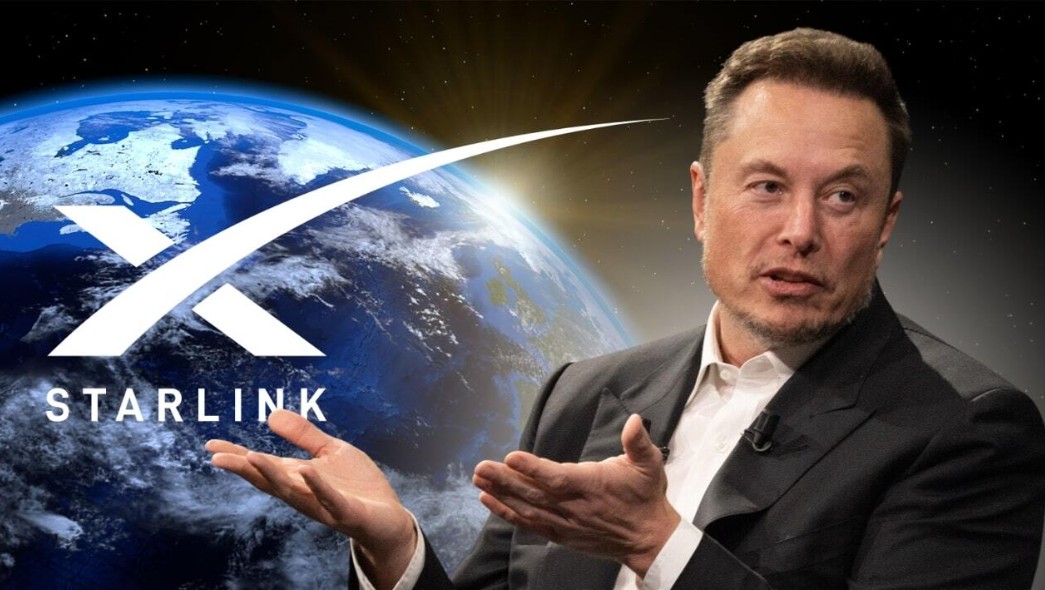
India rejected an application from Elon Musk’s satellite internet company Starlink for its next-generation satellite system, dealing a setback to plans for direct-to-device connectivity in the country.
The proposal was related to Starlink’s Gen 2 satellites, which are designed to transmit signals directly to mobile phones without the need for ground-based terminals.
India’s space regulator, the Indian National Space Promotion and Authorisation Centre (IN-SPACe), declined to approve the Gen 2 application, granting clearance only for Starlink’s Gen 1 system.
The approved Gen 1 network supports conventional satellite broadband services that rely on user terminals and ground infrastructure.
Officials said any new technology introduced by Starlink would require a fresh round of regulatory approvals, as direct-to-device services fall under a separate authorisation framework and are not covered by existing permissions for space-based broadband. As a result, the earlier Gen 2 application is no longer valid.
Starlink had applied for authorisation to operate both its Gen 1 and Gen 2 satellite systems in India. IN-SPACe approved only the Gen 1 proposal, under which the company can offer broadband services using 4,408 low-earth-orbit satellites. These satellites are intended to deliver standard internet connectivity rather than direct access to mobile phones.
IN-SPACe Chairman Pawan Kumar Goyal confirmed that the Gen 2 proposal did not meet regulatory requirements. Officials noted that when the application was submitted several years ago, direct-to-device technology was still at a nascent stage and lacked clear technical and policy definitions. As the technology has evolved more recently, regulators said it now requires a separate and updated assessment.
The Gen 2 satellites incorporate advanced features, including direct-to-device capability and the use of new frequency bands. Regulators said some of these frequency bands are not approved for use in India, which emerged as a key factor in the decision to reject the application.
India currently does not permit direct-to-device satellite services, and a national framework governing such technology has yet to be finalised. The government is still considering its policy approach, while the Department of Telecommunications is examining regulatory options. Authorities also need to determine which spectrum bands could be allocated for these services.
Internationally, Starlink continues to expand its satellite network. The company recently secured approval from the US Federal Communications Commission to deploy 7,500 Gen 2 satellites, taking its total global constellation to around 15,000 satellites.
The Gen 2 satellites feature upgraded designs and more advanced technology, enabling higher capacity and newer services. However, Starlink has not indicated when it plans to submit a revised Gen 2 application for the Indian market.
For now, direct satellite connections to mobile phones remain off the table in India, with any future rollout dependent on regulatory clearances and government policy decisions on emerging satellite communication technologies.