














India’s state-run aerospace major Hindustan Aeronautics Limited (HAL) and Russia’s United Aircraft Corporation (UAC) have taken another significant step in their nearly three-decade-old partnership.
Under a new agreement, the Sukhoi Superjet-100 (SJ-100) passenger aircraft will be manufactured in India under license, marking a major expansion of industrial cooperation between the two sides.
As per the deal, HAL will receive the license to manufacture and sell the SJ-100 aircraft. The agreement also covers the production of aircraft parts, components, and spare parts required for maintenance, repair, and overhaul.
UAC, on its part, will assist HAL in preparing its production facilities for the SJ-100 programme. This support will include design assistance, consulting services, and the involvement of Russian technical experts.
Can the SJ-100 deal pave the way for the Su-57?
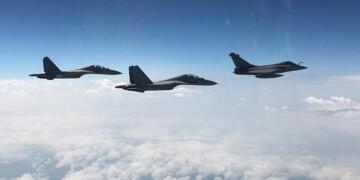
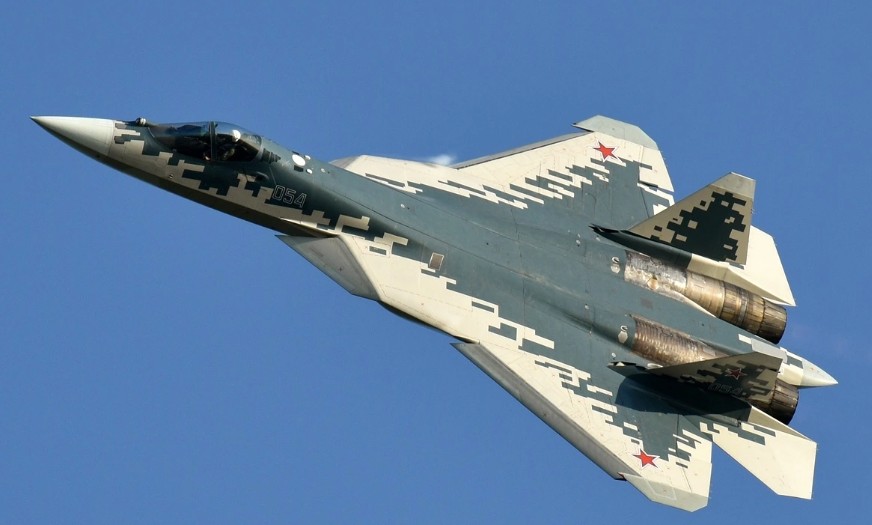
While the SJ-100 deal is civilian in nature, it has reignited discussions around a much larger and more sensitive subject—the possible induction and licensed production of Russia’s fifth-generation fighter, the Su-57, in India.
The renewed interest in the Su-57 is closely tied to the long and extensive history between HAL and Sukhoi. Later this year, in November, the HAL–Sukhoi partnership will complete 30 years. The relationship began on November 30, 1996, when India signed a deal with Sukhoi and Rosoboronexport for the purchase of 50 Su-30MKI fighter jets. These aircraft were delivered in fly-away condition. Four years later, in 2000, HAL signed an agreement for licensed production of the Su-30MKI, marking a turning point in India’s indigenous manufacturing capability.
Since then, HAL has manufactured 222 Su-30MKI fighters at its Nashik facility. The programme continues even today, with HAL receiving an additional order in December 2024 to manufacture 12 more Su-30MKIs.
The question, however, is how strong these reports really are and whether the plan is feasible. Some time ago, UAC representatives visited HAL’s Su-30MKI production facility in Nashik. Following a technical evaluation, UAC stated that the existing assembly line could be adapted for Su-57 production and that nearly 50 percent of the required manufacturing capability already exists. This assessment suggests that, if India chooses to move forward, HAL would not face major structural or industrial challenges in taking up the project.
Additionally, there have been reports indicating that HAL has sought a price report from Russia for Su-57 production. This points to a certain level of seriousness, as such evaluations are unlikely without genuine intent. The ongoing process—ranging from technical assessments to cost evaluations—clearly shows that HAL is at least exploring the Su-57 option.
From Russia’s perspective, the SJ-100 agreement has strengthened optimism about deeper defence cooperation. Moscow appears hopeful that the momentum could eventually extend to the Su-57 as well.
How Serious Are the Su-57 Talks?
India’s interest in the Su-57 is driven largely by strategic necessity. Given the current geopolitical environment and India’s immediate neighbourhood, the Indian Air Force has an urgent requirement for fifth-generation fighter aircraft.
At the same time, it is clear that India’s indigenous fifth-generation fighter, the Advanced Medium Combat Aircraft (AMCA), will not be operational before 2035–36 under any circumstances. This creates a long capability gap, forcing the Air Force to look at imports as a stopgap solution.
When it comes to fifth-generation imports, the choices are limited. Practically, there are only two viable options: the United States and Russia. However, considering existing terms and past experiences with the US, the American option is not seen as particularly comfortable or reliable from India’s standpoint. This leaves Russia—and the Su-57—as the only realistic contender.
Even so, the Su-57 path is far from straightforward. While the aircraft is widely regarded as a true fifth-generation fighter, several concerns remain. The version being offered to export customers like India is not equipped with Russia’s latest AL-51 engine. Russia is unwilling to transfer this technology.
Instead, India is likely to be offered the Izdelie-177 engine, an advanced and modified version of the AL-41. While it provides adequate power and performance, it does not meet the criteria of a true fifth-generation engine—a distinction reserved for the AL-51.
In terms of control over the platform, no original equipment manufacturer offers complete autonomy. However, indications suggest that India may receive sufficient flexibility to integrate its own weapons and data-links, much like it has done with the Su-30MKI. In effect, the level of operational and systems integration could mirror India’s existing experience with Russian fighters.
From a performance standpoint, the Su-57 is undoubtedly a powerful platform. It offers higher weapon-carrying capacity, greater firepower, and longer range compared to many contemporary fighters.
Where Does the Su-57 Fit?
The larger dilemma is whether it makes sense to invest heavily in a platform that sits between generations, especially when India is already close to finalising a Rafale deal worth nearly three lakh crore rupees. Rafale itself is a 4.5-generation fighter, raising questions about overlap and prioritisation.
As a stopgap measure, the induction of two or three Su-57 squadrons could provide a niche, “tip-of-the-spear” capability. However, if these aircraft are to be manufactured in India, large production numbers would be necessary to keep costs viable. Smaller orders would make the programme prohibitively expensive.
With discussions ongoing for 114 Rafales, such large orders for the Su-57 appear unlikely in the near term.
Former Air Force Chief BS Dhanoa echoed a similar assessment in an interview with The Lallantop, offering a clear indication of how the Indian Air Force currently views the Su-57 option.