










TFIPOST हिन्दी
TFIPOST Global
Tfipost.com
Tfipost.com
No Result
View All Result
  • Premium
  • Politics
    • All
    • Analysis
    • Opinions
    • Trending
    A Life Lost to Brutal Intolerance: The Tragic Killing of Khokon Chandra Das in Bangladesh

    A Life Lost to Brutal Intolerance: The Tragic Killing of Khokon Chandra Das in Bangladesh

    Iran Anti-Regime Protesters Set Fire to the Statue of Qasem Soleimani

    Iran Anti-Regime Protesters Set Fire to the Statue of Qasem Soleimani

    The Constitutional Fiction of “Minority” and Institutionalised Asymmetry

    The Constitutional Fiction of “Minority” and Institutionalised Asymmetry

    In Bangladesh, 1971 is Not Optional: Founding Memory and the Risk of Historical Dilution

    In Bangladesh, 1971 is Not Optional: Founding Memory and the Risk of Historical Dilution

    • Analysis
    • Opinions
    • Trending
  • Economy
    • All
    • Business
    • Economy1
    • Finance
    Smart Investment Planning: Calculating Mutual Fund SIP Growth Easily

    Smart Investment Planning: Calculating Mutual Fund SIP Growth Easily

    Indian PM with New Zealand PM

    India–New Zealand Trade Deal Signals Deeper Global Integration, but Bigger Markets Remain Key

    Delaware Court Reverses $1B Judgment: Byju Raveendran’s Major Legal Victory

    Delaware Court Reverses $1B Judgment: Byju Raveendran’s Major Legal Victory

    Things You Should Know Before Suing for Gynecologist Malpractice

    Things You Should Know Before Suing for Gynecologist Malpractice

    • Business
    • Finance
  • Defense
    • All
    • Defence
    • Strategy
    • Weaponry
    EXCLUSIVE: CAT Scraps DRDO Order Appointing BrahMos DG & CEO; Calls Selection Process Arbitrary

    EXCLUSIVE: CAT Scraps DRDO Order Appointing BrahMos DG & CEO; Calls Selection Process Arbitrary

    DRDO's New Cruise Missile

    DRDO’s New Cruise Missile Aims to Reduce Collateral Damage with Loitering Ability

    New NOTAM Sets 2,520 kilometer Missile Zone in Bay of Bengal

    New NOTAM Sets 2,520 kilometer Missile Zone in Bay of Bengal

    Proposed IMRH By HAL

    IMRH Set to Cross 75% Indigenous Mark, Signalling Major Leap in India’s Rotorcraft Capability

    • Defence
    • Strategy
    • Weaponry
  • Geopolitics
    • All
    • Africa
    • Americas
    • Asia Pacific
    • Europe
    • South Asia
    • West Asia
    Iran Anti-Regime Protesters Set Fire to the Statue of Qasem Soleimani

    Iran Anti-Regime Protesters Set Fire to the Statue of Qasem Soleimani

    Gwadar’s Oil Depots: A New Frontline on Pakistan’s Coast

    Gwadar’s Floating Oil Depots Are Turning Pakistan’s Coast into a Conflict Frontline

    Hangor-Class Submarine

    Pakistan Navy Launches Fourth Hangor-Class Submarine ‘Ghazi’ in China

    PM Modi In Car with Different Leaders

    Personal Gestures, Powerful Signals: PM Modi and the Rise of ‘Car Diplomacy’

    • Africa
    • Americas
    • Asia Pacific
    • Europe
    • South Asia
    • West Asia
  • Knowledge
    • All
    • Culture
    • Education
    • History
    • Indology
    From Shaheedi to Silence: Remembering the Sikh Gurus While Punjab Quietly Changes Its Faithscape

    From Shaheedi to Silence: Remembering the Sikh Gurus While Punjab Quietly Changes Its Faithscape

    Veer Bal Diwas: Christmas and New Year’s celebrations are all right but let us not forget the sacrifices of the Sahibzadas

    Veer Bal Diwas: Christmas and New Year’s celebrations are all right but let us not forget the sacrifices of the Sahibzadas

    How Atal Bihari Vajpayee Carried Hindi to the United Nations, Amplified India’s Voice on Global Stage

    How Atal Bihari Vajpayee Carried Hindi to the United Nations, Amplified India’s Voice on Global Stage

    Mahatma Gandhi at an RSS Training Camp: A First-Hand Experience

    December 25 | On This Day in History — Mahatma Gandhi at an RSS Training Camp: A First-Hand Experience

    • Culture
    • History
    • Indology
  • Law
  • Lounge
    • All
    • Books
    • Cinema
    • Entertainment
    • Food
    • Games
    • Health
    • Lifestyle
    • Satire
    • Sports
    • technology
    • Travel
    Elevating the Standard of Online Entertainment: A Comprehensive Look at a Premier Gaming Brand

    Elevating the Standard of Online Entertainment: A Comprehensive Look at a Premier Gaming Brand

    Lt Arun Khetrapal, One of India’s Youngest PVC Awardees

    Before Ikkis, Few Knew These Facts About 21-Year-Old PVC Awardees Lt Arun Khetrapal

    Laser Treatment for Hair Removal in Bangalore

    Laser Treatment for Hair Removal in Bangalore

    Road Safety Innovations in the UAE: What Luxury Car Renters Should Know in 2025

    Road Safety Innovations in the UAE: What Luxury Car Renters Should Know in 2025

    • Books
    • Cinema
    • Food
    • Health
    • Sports
    • technology
    • Travel
    • Satire
Tfipost.com
  • Premium
  • Politics
    • All
    • Analysis
    • Opinions
    • Trending
    A Life Lost to Brutal Intolerance: The Tragic Killing of Khokon Chandra Das in Bangladesh

    A Life Lost to Brutal Intolerance: The Tragic Killing of Khokon Chandra Das in Bangladesh

    Iran Anti-Regime Protesters Set Fire to the Statue of Qasem Soleimani

    Iran Anti-Regime Protesters Set Fire to the Statue of Qasem Soleimani

    The Constitutional Fiction of “Minority” and Institutionalised Asymmetry

    The Constitutional Fiction of “Minority” and Institutionalised Asymmetry

    In Bangladesh, 1971 is Not Optional: Founding Memory and the Risk of Historical Dilution

    In Bangladesh, 1971 is Not Optional: Founding Memory and the Risk of Historical Dilution

    • Analysis
    • Opinions
    • Trending
  • Economy
    • All
    • Business
    • Economy1
    • Finance
    Smart Investment Planning: Calculating Mutual Fund SIP Growth Easily

    Smart Investment Planning: Calculating Mutual Fund SIP Growth Easily

    Indian PM with New Zealand PM

    India–New Zealand Trade Deal Signals Deeper Global Integration, but Bigger Markets Remain Key

    Delaware Court Reverses $1B Judgment: Byju Raveendran’s Major Legal Victory

    Delaware Court Reverses $1B Judgment: Byju Raveendran’s Major Legal Victory

    Things You Should Know Before Suing for Gynecologist Malpractice

    Things You Should Know Before Suing for Gynecologist Malpractice

    • Business
    • Finance
  • Defense
    • All
    • Defence
    • Strategy
    • Weaponry
    EXCLUSIVE: CAT Scraps DRDO Order Appointing BrahMos DG & CEO; Calls Selection Process Arbitrary

    EXCLUSIVE: CAT Scraps DRDO Order Appointing BrahMos DG & CEO; Calls Selection Process Arbitrary

    DRDO's New Cruise Missile

    DRDO’s New Cruise Missile Aims to Reduce Collateral Damage with Loitering Ability

    New NOTAM Sets 2,520 kilometer Missile Zone in Bay of Bengal

    New NOTAM Sets 2,520 kilometer Missile Zone in Bay of Bengal

    Proposed IMRH By HAL

    IMRH Set to Cross 75% Indigenous Mark, Signalling Major Leap in India’s Rotorcraft Capability

    • Defence
    • Strategy
    • Weaponry
  • Geopolitics
    • All
    • Africa
    • Americas
    • Asia Pacific
    • Europe
    • South Asia
    • West Asia
    Iran Anti-Regime Protesters Set Fire to the Statue of Qasem Soleimani

    Iran Anti-Regime Protesters Set Fire to the Statue of Qasem Soleimani

    Gwadar’s Oil Depots: A New Frontline on Pakistan’s Coast

    Gwadar’s Floating Oil Depots Are Turning Pakistan’s Coast into a Conflict Frontline

    Hangor-Class Submarine

    Pakistan Navy Launches Fourth Hangor-Class Submarine ‘Ghazi’ in China

    PM Modi In Car with Different Leaders

    Personal Gestures, Powerful Signals: PM Modi and the Rise of ‘Car Diplomacy’

    • Africa
    • Americas
    • Asia Pacific
    • Europe
    • South Asia
    • West Asia
  • Knowledge
    • All
    • Culture
    • Education
    • History
    • Indology
    From Shaheedi to Silence: Remembering the Sikh Gurus While Punjab Quietly Changes Its Faithscape

    From Shaheedi to Silence: Remembering the Sikh Gurus While Punjab Quietly Changes Its Faithscape

    Veer Bal Diwas: Christmas and New Year’s celebrations are all right but let us not forget the sacrifices of the Sahibzadas

    Veer Bal Diwas: Christmas and New Year’s celebrations are all right but let us not forget the sacrifices of the Sahibzadas

    How Atal Bihari Vajpayee Carried Hindi to the United Nations, Amplified India’s Voice on Global Stage

    How Atal Bihari Vajpayee Carried Hindi to the United Nations, Amplified India’s Voice on Global Stage

    Mahatma Gandhi at an RSS Training Camp: A First-Hand Experience

    December 25 | On This Day in History — Mahatma Gandhi at an RSS Training Camp: A First-Hand Experience

    • Culture
    • History
    • Indology
  • Law
  • Lounge
    • All
    • Books
    • Cinema
    • Entertainment
    • Food
    • Games
    • Health
    • Lifestyle
    • Satire
    • Sports
    • technology
    • Travel
    Elevating the Standard of Online Entertainment: A Comprehensive Look at a Premier Gaming Brand

    Elevating the Standard of Online Entertainment: A Comprehensive Look at a Premier Gaming Brand

    Lt Arun Khetrapal, One of India’s Youngest PVC Awardees

    Before Ikkis, Few Knew These Facts About 21-Year-Old PVC Awardees Lt Arun Khetrapal

    Laser Treatment for Hair Removal in Bangalore

    Laser Treatment for Hair Removal in Bangalore

    Road Safety Innovations in the UAE: What Luxury Car Renters Should Know in 2025

    Road Safety Innovations in the UAE: What Luxury Car Renters Should Know in 2025

    • Books
    • Cinema
    • Food
    • Health
    • Sports
    • technology
    • Travel
    • Satire
No Result
View All Result
Tfipost.com
Tfipost.com
No Result
View All Result
  • Premium
  • Politics
  • Economy
  • Defense
  • Geopolitics
  • Knowledge
  • Law
  • Lounge

In Bangladesh, 1971 is Not Optional: Founding Memory and the Risk of Historical Dilution

Bangladesh in 1971 is not a remote historical marker, it explains the country’s existence, its emergence as a sovereign state, and the basis on which it claims legitimacy

TFI Desk by TFI Desk
3 January 2026
in Trending
In Bangladesh, 1971 is Not Optional: Founding Memory and the Risk of Historical Dilution

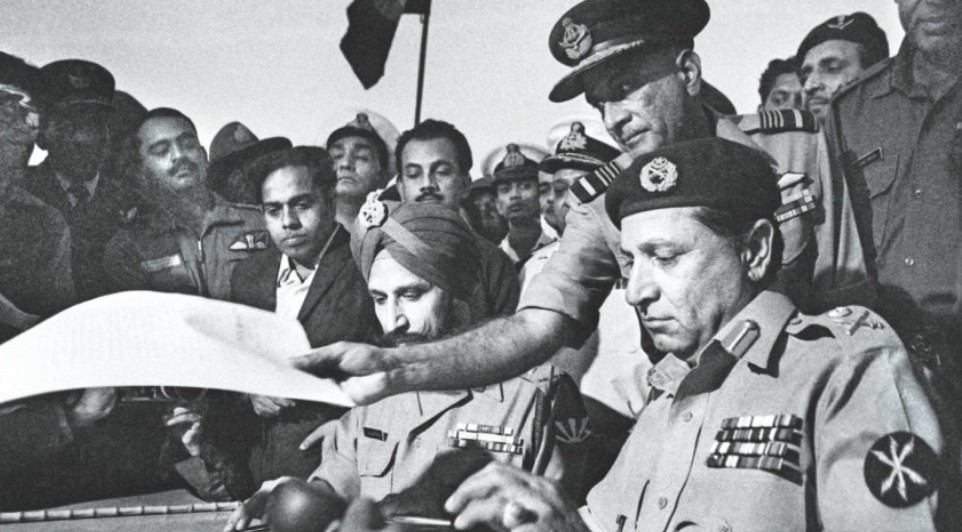
Bangladesh, 1971 (Photos: Raghu Rai/ Magnum Photos)

Share on FacebookShare on X

In Bangladesh, 1971 is not a remote historical marker, it explains the country’s existence, its emergence as a sovereign state, and the basis on which it claims legitimacy.

The Liberation War marks the definitive rupture with Pakistan and provides the foundational logic of independence. This is not a matter of emotion or symbolism alone; it concerns the fundamental mechanics through which states sustain coherence.

RelatedPosts

A Life Lost to Brutal Intolerance: The Tragic Killing of Khokon Chandra Das in Bangladesh

Money over Islamic brotherhood; Mercenary Pak army to now attack UAE

Gwadar’s Floating Oil Depots Are Turning Pakistan’s Coast into a Conflict Frontline

Load More

Every political system rests on a shared point of origin. For Bangladesh, that point is the Liberation War. It ties independence to mass struggle, displacement, and sacrifice, and for decades it has offered a common reference even during periods of intense political division. Despite shifting governments and ideological rivalry, the memory of 1971 has largely functioned as a unifying frame.

Scholarly research on the Liberation War consistently demonstrates that independence was not the outcome of an elite negotiation, it was a mass event. The brutality of Operation Searchlight, the scale of civilian killings, and the flight of millions of refugees into India are well documented.

Participation cut across social boundaries, involving students, rural communities, workers, political organisers, and members of the armed forces who defected. This breadth of involvement is central to why 1971 became the cornerstone of national identity rather than merely a change in political administration.

The experience of the war shaped the early architecture of the state. Constitutional principles, national symbols, and political language were drawn directly from the events of 1971. Independence was articulated not simply as separation, but as liberation from systematic repression. That framing continues to inform how authority is understood and justified.

Research on state legitimacy helps explain the enduring significance of this founding moment. States gain durability when their origins are widely accepted and understood. Founding narratives explain why institutions command loyalty and why authority is recognised. In Bangladesh, 1971 has long served this function. It has remained a reference point through military rule, democratic transitions, and repeated political crises.

Public responses to perceived weakening of this memory reveal its continuing sensitivity. Disputes over textbooks, memorials, or official language regularly provoke protest and criticism. These reactions cut across party affiliations and social groups, indicating that concern over 1971 is not confined to a single political constituency.

This concern is not driven by nostalgia. It reflects anxiety about what holds the country together. When a founding memory appears negotiable, questions emerge about the basis of national unity itself. Studies of post-conflict societies show that uncertainty over origin stories often undermines cohesion, particularly in competitive political environments.

It is important to be precise. The issue is not about enforcing a single moral interpretation of history, nor about restricting academic inquiry. Rigorous debate strengthens understanding. The concern is structural. Shared memory allows political disagreement to take place within a common framework. Without such a framework, politics becomes increasingly fragmented.

Comparative research on memory and identity supports this conclusion. States with contested founding narratives often struggle to maintain stable institutions. When incompatible versions of the past compete for dominance, loyalty shifts away from the state and toward factions.

Governance becomes more difficult, not because disagreement exists, but because there is no agreed baseline. Bangladesh has largely avoided this outcome because the centrality of 1971 has remained intact. Even during authoritarian periods, few actors openly rejected the legitimacy derived from the Liberation War.

Recent public discourse, however, suggests growing strain. Media coverage points to increasing debate over how 1971 is referenced, commemorated, or prioritised. These discussions are no longer confined to academic settings; they now appear in everyday political speech and public mobilisation.

This shift carries risk. When founding memory becomes a tactical issue, it ceases to stabilise political life and instead becomes another arena of contestation. Comparative experience suggests that such developments often precede deeper institutional and social tension.

The danger is gradual rather than immediate. Social trust erodes when people no longer share a clear understanding of why the state exists. Younger generations, lacking direct experience of the war, are especially vulnerable to mixed or ambiguous signals. Over time, this creates space for competing narratives that pull society in different directions.

Historical dilution does not always occur through deliberate revision. It can also result from neglect. Reduced emphasis in education, uneven commemoration, or ambiguous official language can slowly weaken shared understanding. Scholars of collective memory note that silence can reshape history as effectively as distortion.

The consequences are practical. States that rely primarily on performance-based legitimacy are more exposed during economic or political stress. Founding memory provides resilience. It helps justify sacrifice, restraint, and collective responsibility. Without it, authority must depend more heavily on short-term incentives or coercive capacity.

Bangladesh’s own experience reflects this pattern. Periods of relative stability have often coincided with strong reaffirmation of 1971, while moments of heightened tension have frequently involved disputes over history and identity. This relationship is visible in both public debate and political reporting.

None of this implies that history should be frozen. Serious scholarship on 1971 is essential and ongoing. Debate over sources, interpretations, and responsibility deepens understanding. But debate is not the same as dilution. Questioning how the war is studied differs fundamentally from questioning why it matters.

For Bangladesh, 1971 is not optional because it continues to perform a vital political function. It provides legitimacy, coherence, and a shared point of reference. Treating it as negotiable would not modernise politics; it would weaken the foundations on which politics operates.

When a state’s founding memory becomes uncertain, political competition hardens and social cohesion frays. Comparative experience shows that once such an anchor is lost, it is difficult to restore. Preserving it, therefore, is not an act of sentiment. It is a requirement of political stability.

Tags: #Bangladesh1971Liberation WarOperation SearchlightPakistanPolitical Stability
ShareTweetSend
Previous Post

Fundamental Rights through the Lens of Sanatan Darshan: A Constitutional Interpretation from Indian Knowledge Tradition

Next Post

The Constitutional Fiction of “Minority” and Institutionalised Asymmetry

Related Posts

A Life Lost to Brutal Intolerance: The Tragic Killing of Khokon Chandra Das in Bangladesh
Trending

A Life Lost to Brutal Intolerance: The Tragic Killing of Khokon Chandra Das in Bangladesh

3 January 2026

The death of Khokon Chandra Das after a brutal attack has sent shockwaves across Bangladesh and beyond, reopening painful...

Iran Anti-Regime Protesters Set Fire to the Statue of Qasem Soleimani
Geopolitics

Iran Anti-Regime Protesters Set Fire to the Statue of Qasem Soleimani

3 January 2026

Fresh anti-government protests have erupted across several cities in Iran, just days before the anniversary of the killing of...

The Constitutional Fiction of “Minority” and Institutionalised Asymmetry
Trending

The Constitutional Fiction of “Minority” and Institutionalised Asymmetry

3 January 2026

The Indian Constitution presents itself as a charter of equality, secularism, and justice, yet embedded within its framework is...

Load More

Leave a Reply Cancel reply

Your email address will not be published. Required fields are marked *

I agree to the Terms of use and Privacy Policy.
This site is protected by reCAPTCHA and the Google Privacy Policy and Terms of Service apply.

Currently Playing

Captured Turkish YIHA drone Showed by the Indian Army |Defence News| Operation Sindoor

Captured Turkish YIHA drone Showed by the Indian Army |Defence News| Operation Sindoor

00:00:58

A War Won From Above: The Air Campaign That Changed South Asia Forever

00:07:37

‘Mad Dog’ The EX CIA Who Took Down Pakistan’s A.Q. Khan Nuclear Mafia Reveals Shocking Details

00:06:59

Dhurandar: When a Film’s Reality Shakes the Left’s Comfortable Myths

00:06:56

Tejas Under Fire — The Truth Behind the Crash, the Propaganda, and the Facts

00:07:45
Facebook Twitter Instagram Youtube
tfipostTfipost.com
Right Wing | News Analysis | Indian Opinion
  • About us
  • Contact Us
  • Careers
  • Brand Partnerships
  • Terms of use
  • Privacy Policy
  • Sitemap

©2026 TFI Media Private Limited

No Result
View All Result
  • Premium
  • Politics
    • Analysis
    • Opinions
    • Trending
  • Economy
    • Business
    • Finance
  • Defense
    • Defence
    • Strategy
    • Weaponry
  • Geopolitics
    • Africa
    • Americas
    • Asia Pacific
    • Europe
    • South Asia
    • West Asia
  • Knowledge
    • Culture
    • History
    • Indology
  • Law
  • Lounge
    • Books
    • Cinema
    • Food
    • Health
    • Sports
    • technology
    • Travel
    • Satire
TFIPOST हिन्दी
TFIPOST Global

©2026 TFI Media Private Limited