














“Your son is safe. If you desire, I shall set him free,” said Pakistani President Field Marshal Ayub Khan, as he made a special offer to his former commander, General KM Cariappa (Retd), following the 1965 India-Pakistan War.
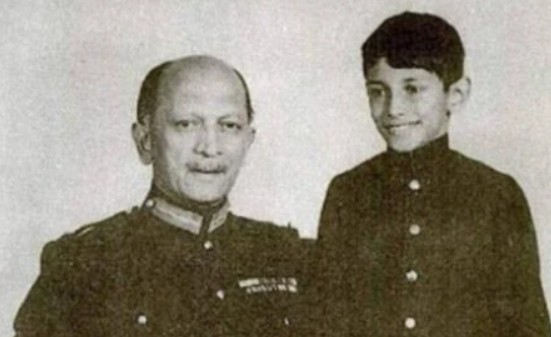
General Cariappa’s son, Flight Lieutenant KC Cariappa, then serving in the Indian Air Force, had been held in captivity by the Pakistani army after his Hawker Hunter fighter plane was shot down in the Khem Karan sector of Punjab in September 1965, just a day before the ceasefire was announced.
In response, General Cariappa sent a firm and principled message, “I will not seek for my son anything which I cannot secure for any Indian soldier. He is no longer my son. He is the son of India. Look after all of them [Indian prisoners of war] well. They are all my sons.”
Ayub Khan had earlier served under General Cariappa in the British Indian Army, which may have prompted the special offer.
Yet, Cariappa, who was later conferred the title of Field Marshal in 1986, refused any special treatment for his son, Flight Lieutenant KC Cariappa, emphasizing equality and fairness for all Indian soldiers.
This episode remains a compelling chapter in India’s military history, especially resonant after recent tensions between India and Pakistan following the Pahalgam terrorist attack and India’s retaliatory Operation Sindoor, which escalated into a four-day mini-war.
The 1965 India-Pakistan War
The 1965 India-Pakistan War was triggered by Pakistan’s Operation Gibraltar, a covert effort to infiltrate Jammu and Kashmir and incite a local uprising. Pakistan also advanced into the deserts of Gujarat, prompting India to launch a full-scale military response in August 1965.
Indian forces crossed the international border, advancing toward Lahore, while Pakistan launched counteroffensives. The war witnessed intense battles, including the Battle of Asal Uttar, where Param Vir Abdul Hamid famously decimated Pakistan’s Patton tanks.
The Indian Air Force provided close air support while countering Pakistan’s aerial attacks from US-supplied F-86 Sabre jets.
About a month after the war began, on September 22, 1965, 27-year-old Flight Lieutenant KC Cariappa was captured during a mission to strike Pakistani positions in Kasur, Pakistan. The Indian Air Force was actively engaged, and several planes were shot down by Pakistani anti-aircraft fire.
KC Cariappa’s plane, a Hawker Hunter, spiraled downward, trailing thick smoke. He ejected barely 100 feet above the ground, crash-landing and fracturing a few bones. As he emerged through the settling haze, soldiers in khaki uniforms approached him:
“‘Ft-Lt Cariappa,’ was the reply. ‘Are you Gen. Cariappa’s son?’ was the next query,” wrote Sanjay Dutt in War and Peace in Kargil Sector (2000).
KC Cariappa later recalled and told to The Hindu in 2019, “Realisation dawned then that I was in the custody of the Pakistani army.”
KM Cariappa’s Refusal of Ayub Khan’s Offer
As the son of India’s first Commander-in-Chief, KC Cariappa became a high-profile Prisoner of War. Even in Pakistan, General Cariappa was widely respected, including by Field Marshal Ayub Khan, who had served under him in the North West Frontier Province during the British Indian Army days, specifically in the Bannu Frontier Brigade in Waziristan.
Despite the personal anguish, KM Cariappa stood firm, as he would not seek preferential treatment for his son. By doing so, he reinforced the Indian Army’s core values, saying all soldiers’ lives are equal, and duty to the nation comes above personal ties.
His stand was a clear contrast to Ayub Khan’s self-serving history, who had elevated himself to Field Marshal after toppling a civilian government in a 1959 coup.
Harsh Conditions in Pakistani Captivity
Following his capture, KC Cariappa was hospitalized for his injuries and then confined to two weeks of solitary imprisonment, with only a battered charpai and three blankets.
“I hardly saw sunlight. Every time I was taken outside I was blindfolded,” Cariappa told Dutt, adding he was interrogated by the Pakistani military during that period.
KC Cariappa was also visited by Pakistani Army Chief General Muhammad Musa and one of Ayub Khan’s sons, who gifted him a PG Wodehouse book and some cigarettes.
After the hospital stay, he was reunited with fellow Indian POWs at Fort Dargai in Khyber Pakhtunkhwa. Food was meagre and repetitive, consisting mainly of pooris, rice, chapattis, lady’s finger, and turnip soup.
Red Cross parcels later reached them, marking their official designation as prisoners of war under the Geneva Convention. The parcels included biscuits, dried fruits, and even books. Actress Asha Parekh contributed items for the soldiers.
After nearly four months in captivity, KC Cariappa was released following the ceasefire brokered by the Soviet Union in September 1965, later formalized under the Tashkent Agreement.
Respect from Pakistani Soldiers and Leadership
Field Marshal KM Cariappa earned deep respect not only within the Indian Army but also from many of his former colleagues and contemporaries in the Pakistan Army.
A notable anecdote from his biography, as recounted by his son Air Marshal KC “Nandu” Cariappa, describes an encounter during a post‑war visit to the Indo‑Pakistan border.
On that occasion, Cariappa crossed into no‑man’s‑land to speak with troops and was initially challenged by a Pakistani commander, who ordered his men to stop him and threatened to open fire.
When it was pointed out that the elderly officer approaching them was Field Marshal Cariappa, the Pakistani soldiers lowered their weapons. The Pakistani commander then saluted Cariappa before the two spoke cordially — Cariappa asking about the officer’s well‑being and whether he was receiving letters from home.
This incident highlights the personal respect and military courtesy extended to him by opposing forces, rooted in his long and distinguished career and reputation in the region.
Testament to Principles of Honour
The story of KC Cariappa’s capture and release is more than a tale of bravery. It is a testament to the principles of honour, equality, and sacrifice upheld by India’s armed forces.
KM Cariappa’s unwavering commitment to fairness, even when it involved his own son, remains an inspiring example of ethical leadership and discipline.
The contrast between the two Field Marshals could not be sharper—Ayub Khan sought power and personal gain, while Cariappa demonstrated principle and character. As history shows, true strength lies not in rank, but in integrity and moral courage.
Field Marshal Kodandera Madappa Cariappa, affectionately known as KM Cariappa was the first ‘Indian’ commander-in-chief of the Indian Army.
He took over from Roy Butcher on 15 January, 1949, and the second person to have been conferred the rank of Field Marshal in 1986 after former Army chief Sam Manekshaw.
Cariappa began his career with the 2/88 Carnatic Infantry, later renamed the 1/7 Rajput Regiment. Over the years, he rose steadily through the ranks, gaining extensive experience in diverse military operations.
After retiring in 1953, Cariappa continued serving the nation as High Commissioner to Australia and New Zealand, strengthening India’s diplomatic ties.
In 1986, he was conferred the rank of Field Marshal, the highest in the Indian Army, becoming only the second Indian to receive this honor, after Field Marshal Sam Manekshaw.
Known for his integrity, simplicity, and unwavering commitment, Cariappa emphasized the apolitical nature of the armed forces and upheld the highest standards of professionalism.
He passed away on May 15, 1993, in Bengaluru, leaving behind a legacy of exemplary leadership and patriotism. In India, January 15, the day he became the first Indian Commander-in-Chief, is celebrated as Army Day, honoring his lifelong contributions to the nation.