












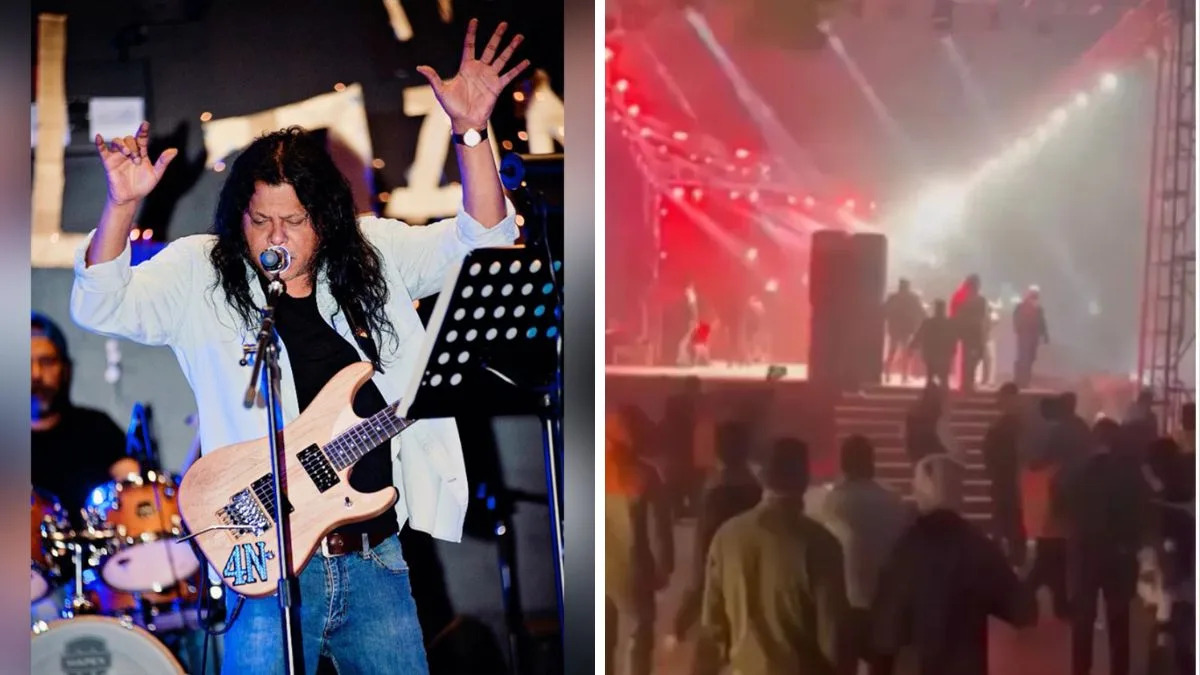
A highly anticipated concert by Bangladesh’s legendary rock musician James, also known as Nagar Baul, was abruptly cancelled on the night of December 26, 2025 after violence erupted at the Faridpur Zilla School grounds, where the performance was set to close the school’s 185th anniversary celebrations. The attack, in which bricks and stones were hurled toward the stage and the crowd, left numerous attendees injured and sparked widespread condemnation from officials and public figures alike.
The event had drawn thousands of students, alumni, and music enthusiasts who had gathered to see James perform. However, just moments before the scheduled start, a group of individuals described as “outsiders” to Faridpur attempted to force their way into the venue after being denied entry. Tensions quickly escalated as the group began pelting the stage and surrounding areas with bricks and stones, causing panic among the crowd. Students present at the event reportedly resisted the attackers but the overall situation deteriorated rapidly.
In light of the chaos, organisers were compelled to halt the concert. Around 10:00 pm, Dr. Mostafizur Rahman Shamim, convener of the anniversary programme’s organising committee, announced from the stage that the show would not proceed, citing instructions from the Faridpur district administration due to mounting safety concerns. Officials noted that the decision was made to prevent further injuries and restore order at the venue.
Initial reports indicate that at least 20 to 25 people were injured as a result of the violence, many of whom were students who had been close to the front of the stage when the attack began. The organisers expressed shock at the sudden turn of events, emphasising that they had prepared thoroughly for the concert and did not anticipate such aggression. “We still do not understand who carried out the attack or why,” said Rajibul Hasan Khan, convener of the publicity and media sub-committee of Faridpur, highlighting the confusion surrounding the motive behind the assault.
The district administration, responsible for overseeing public safety in Faridpur, also addressed the incident. Local officials condemned the violence and underscored the importance of maintaining law and order at public gatherings. They reaffirmed that the cancellation of the concert was a necessary measure to avoid escalation and protect attendees. While authorities have not publicly confirmed the identities or motivations of the attackers, police presence at the venue was increased after the concert was called off to prevent further incidents and secure the area.
The cancellation did not go unnoticed by cultural commentators and artists across Bangladesh and beyond. Taslima Nasreen, a prominent Bangladeshi author and social activist, shared strong criticism of the attack at Faridpur on her social media platforms, framing the incident as part of a disturbing trend of hostility toward artistic expression and cultural institutions in the country. Nasreen’s comments highlighted broader concerns over the safety of cultural events and the rising intolerance that artists may face when performing publicly.
Reactions from within the artistic community also echoed this sentiment, with many expressing solidarity with James and condemning the disruption of what was meant to be a celebratory cultural occasion. Although specific statements from other musicians have not been widely reported, the outpouring of support on horrendous Faridpur episode in social media and through public commentary underscored a collective frustration with the obstruction of artistic freedoms. The concern extends beyond this single event, resonating with wider debates on how music and cultural festivals are received in various parts of Bangladesh.
Fans of James and supporters of cultural expression expressed disappointment that a night meant for joy and music ended in alarm and cancellation. For many, the concert was not just an entertainment event but a symbol of cultural pride and emotional connection to a musician who has significantly influenced Bangladesh’s rock music scene. James himself was reportedly evacuated from the venue safely under security cover, and there were no immediate reports of injury to him or his band members.
Beyond individual reactions, the Faridpur incident has sparked conversation about the need for improved safety protocols at public events, particularly those involving large crowds and high-profile performers. Event organisers, local leaders, and authorities are now facing calls to reassess crowd control measures and ensure that cultural activities can proceed without fear of similar disruptions in the future.
The abrupt cancellation of James’s concert in Faridpur has not only impacted thousands who had come to celebrate music and cultural heritage but also shone a spotlight on ongoing challenges facing artistic communities in Bangladesh. As discussions continue among authorities, artists, and the public, there remains a shared hope that future events can be safeguarded with stronger security and mutual respect for cultural expression.