

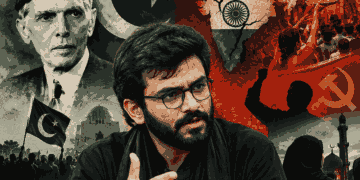





















In South Asia’s volatile political theatre, moments of crisis are rarely allowed to stand on their own. They are quickly absorbed into wider narratives, often shaped less by truth than by the interests of those seeking advantage. The recent shooting of Osman Hadi, convener of Bangladesh’s Inqilab Moncho, has become one such moment—not for what it reveals about India’s role, but for how Pakistan has moved to exploit it in pursuit of its long-standing strategy of proxy disruption and narrative warfare.
India’s Non-Involvement: Facts Over Fabrication
Despite hurried insinuations circulating on social media and echoed by sympathetic outlets, there is no verified evidence linking India to the shooting. Indian authorities have neither been named by credible investigators nor cited in any substantiated intelligence assessment. New Delhi’s position has remained consistent: restraint, non-interference and a willingness to cooperate through formal channels if requested. This restraint has been misread—or deliberately portrayed—as evasiveness. In reality, India’s distance from the episode reflects a conscious decision to avoid being drawn into Bangladesh’s internal political turbulence. For New Delhi, stability on its eastern flank outweighs the temptation of short-term political signalling.
Pakistan’s Playbook: Old Tactics, New Opportunity
Pakistan’s response follows a familiar pattern. Islamabad has seized on the uncertainty surrounding the incident to amplify anti-India narratives, portraying the shooting as part of an alleged pattern of Indian covert interference. Through aligned media platforms, digital voices, and proxy commentators, suspicion has been pushed outward—without evidence and without exposure.
This approach is hardly new. From Kashmir to Kabul, Pakistan has relied on narrative construction and plausible deniability rather than transparent engagement. The Hadi shooting offered a ready-made opportunity–emotionally charged, politically sensitive, and easily repurposed.
What stands out is Pakistan’s complete detachment from the facts on the ground. There is no operational trail, no accountability, and no cost—only narrative leverage.
Bangladesh’s Internal Vulnerability: A Door Left Open
Pakistan’s ability to shape the narrative has been aided, in part, by Bangladesh’s own political fragility. Rival factions, street-level mobilisation, and a fast-moving information environment have created space for outside actors to insert themselves into domestic debate.
Instead of consolidating facts and dampening speculation, sections of the political establishment and aligned voices allowed emotion to override caution. This weakened internal coherence and, unintentionally, lent credibility to Pakistan’s disruptive messaging. Ironically, such dynamics do more to undermine Bangladesh’s sovereignty than any imagined Indian involvement ever could.
Why India Gains Nothing—and Pakistan Gains Plenty
From a strategic perspective, India has little to gain from instability in Bangladesh. Economic integration, border management, counter-terror coordination and regional connectivity all depend on a stable Dhaka. Any Indian role in such an episode would be counterproductive.
Pakistan, by contrast, benefits from discord without bearing responsibility. Each episode that strains India–Bangladesh relations weakens regional cooperation and draws Pakistan back into relevance at a time when its strategic influence is otherwise constrained. This is opportunism in its purest form—turning another country’s crisis into geopolitical currency. The International Lens: Recognising the Pattern
For international observers, the pattern should be familiar. This is not an isolated response, but part of a recurring strategy. Pakistan’s preference for narrative escalation over factual substantiation has been visible across multiple regional theatres.
The Hadi shooting is simply the latest incident onto which these methods have been projected. In a region where misinformation often travels faster than diplomacy, separating evidence from manufactured outrage is essential.
Choosing Clarity Over Chaos
The shooting of Osman Hadi warrants a thorough and impartial investigation, free from external influence and narrative pressure. India’s restraint should be understood not as guilt, but as strategic maturity. Pakistan’s conduct, meanwhile, fits a long-standing pattern of advancing proxy narratives in place of principled engagement.
For Bangladesh, the choice ahead is consequential–assert factual sovereignty and regional balance, or allow domestic pain to be repurposed by external actors pursuing their own agendas.