























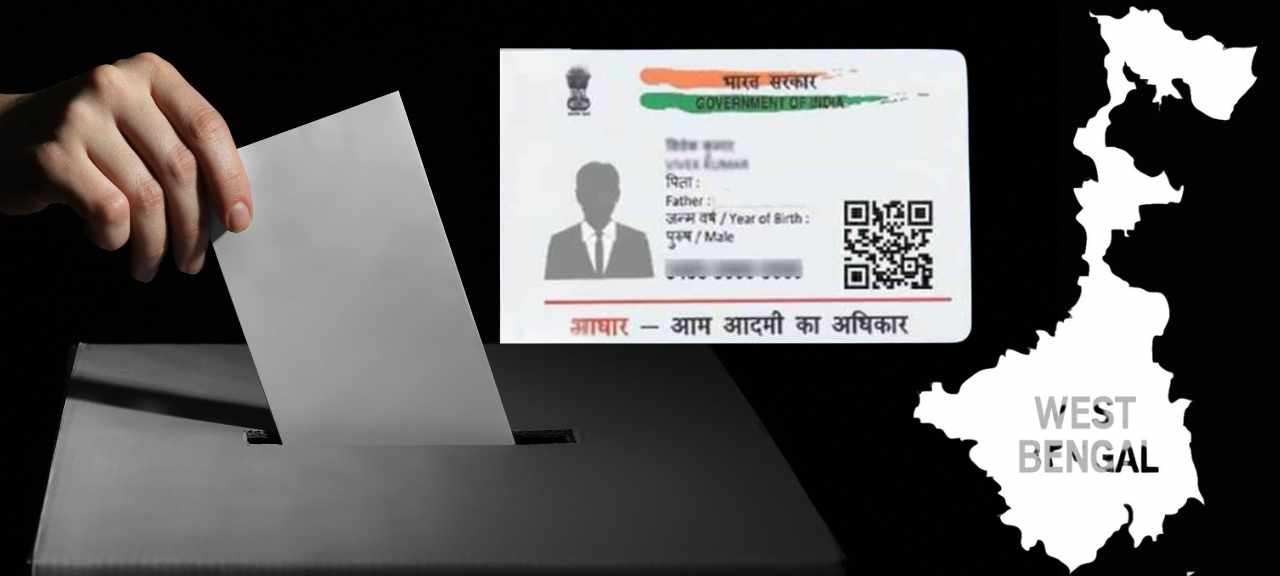
Kolkata – In a significant development ahead of next year’s assembly elections in West Bengal, the Unique Identification Authority of India (UIDAI) has informed the Election Commission of India (ECI) that approximately 34 lakh Aadhaar-card holders in the state have been recorded as deceased since the identity‐scheme launched in January 2009.
The information surfaced during a meeting held on 12 November between UIDAI officials and the state’s Chief Electoral Officer, Manoj Kumar Agarwal, where it was also revealed that around 13 lakh persons never obtained Aadhaar despite being listed as deceased in the UIDAI’s data.
Electoral‐roll revision in focus
The disclosure comes amid the ongoing Special Intensive Revision (SIR) of electoral rolls in West Bengal, a process initiated by the ECI to cleanse the voter list of ghost, duplicate and deceased entries. According to officials, the UIDAI’s data is expected to play a key role in the verification of entries. “The EC has received numerous complaints regarding ghost voters, deceased voters, absentee voters and duplicate names in the rolls. The UIDAI data on deceased citizens is expected to help us in detecting and removing such entries from the electoral rolls,” a senior official from the CEO’s office said.
During the enumeration phase of SIR, it was said that if any applicant has submitted a form while their name has already been removed from the Aadhaar database, the Electoral Registration Officer (ERO) concerned may call them for verification.
Banking links and data cross‐checks
State election officials are also cross‐checking bank account data, since Aadhaar cards are widely linked to banking KYC procedures. According to an official, “Banks have provided data on accounts where KYC updates have not been completed for years, aiding the identification of deceased individuals whose names still appear on voter rolls.”
The CEO’s office reported that over 91.19 % of enumeration forms (approx. 6.98 crore) had been distributed thus far. The door‐to‐door verification is being carried out based on the 2025 electoral rolls, with BLOs matching data from these forms against the last full revision dated 2002. And the revelation of such a huge number of deceased Aadhar-card holders has left the procedure of investigation dumbfounded.
Political context and resistance
The state-wide revision process has encountered overt opposition from the state‐ruling All India Trinamool Congress (TMC), with leaders suggesting that the SIR is a politically motivated exercise aimed at targeting the party’s voter base, including alleged illegal immigrants.
The UIDAI’s disclosure of 34 lakh deceased Aadhaar holders, in this context, raises questions about the integrity of the electoral rolls and the scale of cleanup required. electoral experts note that mismatches between voter lists and Aadhaar/death records are symptomatic of deeper systemic issues.
Implications and what lies ahead
Removal of such a large number of deceased persons from the voter list is expected to enhance the accuracy of the rolls and reduce the risk of fraudulent entries. Officials emphasise that the identification of deceased or duplicate names will prompt action against associated Booth Level Officers (BLOs) if found negligent.
However, the sheer size of the task underlines how stale or inflated electoral databases can be. Depending solely on Aadhaar‐linked verification may also present challenges, given that Aadhaar enrolments and updates depend on citizens’ own initiative and correct information.
The process is now at a critical juncture: after enumeration, the draft roll will go online for objections and claims by citizens. The role of the UIDAI data will thus be crucial in filtering the citizenry and improving trust in the electoral process. The ECI has directed all state CEOs to coordinate with UIDAI to exploit this dataset and expedite verification.
As West Bengal heads toward its next legislative assembly elections, this revelation may become a focal point in political debate—with opposition parties citing it as evidence of prior irregularities, and the ruling side seeing it as a challenge to the premise of revision itself.
The coming weeks will show how efficiently the enumeration forms, door‐to‐door verification, Aadhaar‐crosschecks and bank data analyses converge — and whether the voter rolls can be substantially cleaned up before the election. Now, the moot point – is this all or the number of such deceased voters would increase only.
Kolkata – In a significant development ahead of next year’s assembly elections in West Bengal, the Unique Identification Authority of India (UIDAI) has informed the Election Commission of India (ECI) that approximately 34 lakh Aadhaar-card holders in the state have been recorded as deceased since the identity‐scheme launched in January 2009.
The information surfaced during a meeting held on 12 November between UIDAI officials and the state’s Chief Electoral Officer, Manoj Kumar Agarwal, where it was also revealed that around 13 lakh persons never obtained Aadhaar despite being listed as deceased in the UIDAI’s data.
Electoral‐roll revision in focus
The disclosure comes amid the ongoing Special Intensive Revision (SIR) of electoral rolls in West Bengal, a process initiated by the ECI to cleanse the voter list of ghost, duplicate and deceased entries. According to officials, the UIDAI’s data is expected to play a key role in the verification of entries. “The EC has received numerous complaints regarding ghost voters, deceased voters, absentee voters and duplicate names in the rolls. The UIDAI data on deceased citizens is expected to help us in detecting and removing such entries from the electoral rolls,” a senior official from the CEO’s office said.
During the enumeration phase of SIR, it was said that if any applicant has submitted a form while their name has already been removed from the Aadhaar database, the Electoral Registration Officer (ERO) concerned may call them for verification.
Banking links and data cross‐checks
State election officials are also cross‐checking bank account data, since Aadhaar cards are widely linked to banking KYC procedures. According to an official, “Banks have provided data on accounts where KYC updates have not been completed for years, aiding the identification of deceased individuals whose names still appear on voter rolls.”
The CEO’s office reported that over 91.19 % of enumeration forms (approx. 6.98 crore) had been distributed thus far. The door‐to‐door verification is being carried out based on the 2025 electoral rolls, with BLOs matching data from these forms against the last full revision dated 2002. And the revelation of such a huge number of deceased Aadhar-card holders has left the procedure of investigation dumbfounded.
Political context and resistance
The state-wide revision process has encountered overt opposition from the state‐ruling All India Trinamool Congress (TMC), with leaders suggesting that the SIR is a politically motivated exercise aimed at targeting the party’s voter base, including alleged illegal immigrants.
The UIDAI’s disclosure of 34 lakh deceased Aadhaar holders, in this context, raises questions about the integrity of the electoral rolls and the scale of cleanup required. electoral experts note that mismatches between voter lists and Aadhaar/death records are symptomatic of deeper systemic issues.
Implications and what lies ahead
Removal of such a large number of deceased persons from the voter list is expected to enhance the accuracy of the rolls and reduce the risk of fraudulent entries. Officials emphasise that the identification of deceased or duplicate names will prompt action against associated Booth Level Officers (BLOs) if found negligent.
However, the sheer size of the task underlines how stale or inflated electoral databases can be. Depending solely on Aadhaar‐linked verification may also present challenges, given that Aadhaar enrolments and updates depend on citizens’ own initiative and correct information.
The process is now at a critical juncture: after enumeration, the draft roll will go online for objections and claims by citizens. The role of the UIDAI data will thus be crucial in filtering the citizenry and improving trust in the electoral process. The ECI has directed all state CEOs to coordinate with UIDAI to exploit this dataset and expedite verification.
As West Bengal heads toward its next legislative assembly elections, this revelation may become a focal point in political debate—with opposition parties citing it as evidence of prior irregularities, and the ruling side seeing it as a challenge to the premise of revision itself.
The coming weeks will show how efficiently the enumeration forms, door‐to‐door verification, Aadhaar‐crosschecks and bank data analyses converge — and whether the voter rolls can be substantially cleaned up before the election. Now, the moot point – is this all or the number of such deceased voters would increase only.