























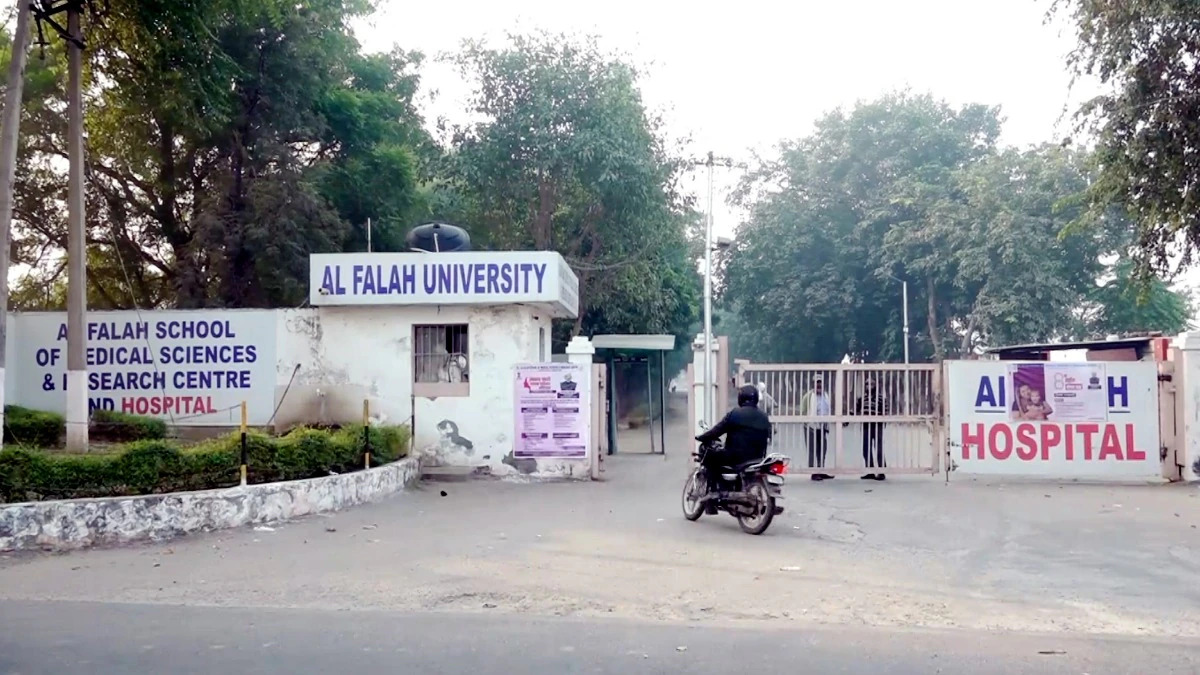
Widening investigations into the November 10 Delhi blast have brought shocking irregularities to light at Faridabad-based Al Falah University. What initially began as a terror-linked probe has now exposed an elaborate financial and academic fraud that allegedly cheated students, misled authorities, and generated illegal profits running into hundreds of crores. According to the Enforcement Directorate (ED), the Al Falah Charitable Trust and its institutions forged accreditation credentials, manipulated financial records, and used student fees for private benefits all while maintaining direct links to individuals now implicated in one of Delhi’s deadliest terror incidents in recent years.
Central to the ED’s case is the allegation that Al Falah University collected full fees from students despite lacking mandatory accreditation. This constitutes fraud, forgery, and cheating under multiple legal provisions. The ED informed the court that the institution earned nearly Rs 415 crore through false claims over a span of seven years. Fake documents were allegedly created to lure students into admissions, and the university continued to project itself as fully accredited, even though it had no legal right to function as such.
The founder and chairman, Jawad Ahmed Siddiqui, was arrested by the ED as part of the terror-financing-linked money-laundering probe. He has been remanded to ED custody till December 1. Investigators argue that Siddiqui held near-absolute control over the university’s finances, decisions, and operations.
One of the first red flags in the ED’s investigation emerged from the financial structure: all bank accounts and income tax returns (ITRs) of the trust and its institutions were filed under a single Permanent Account Number (PAN). This unusual arrangement reflected highly centralised control, raising doubts about transparent accounting practices.
When the agency examined ITRs dating back to 2014-15, it found large and unexplained donations amounting to Rs 30.89 crore in 2014-15 and Rs 29.48 crore in 2015-16. From 2016-17 onward, the university began showing its income as academic revenue. What followed was an extraordinary spike. From Rs 24.21 crore in 2018-19, the income skyrocketed to Rs 80.01 crore by 2024-25, totalling Rs 415 crore. The ED maintains that this income was not only illegally generated but also siphoned off for personal use.
Statements from senior university officials further strengthened the ED’s findings. Mohammad Razi, the Chief Financial Officer of Al Falah, told investigators that he answered directly to Siddiqui and that every major financial decision required the chairman’s sign-off. This reinforced the ED’s belief that Siddiqui exercised absolute authority, thereby enabling the alleged fraud and misappropriation of funds.
Compounding the scandal is Al Falah University’s disturbing connection to suspects in the Red Fort blast case. The suicide bomber, Dr Umar Mohammad, as well as his associates Shaheen Saeed, Muzammil Shakeel, and Adil Rather, all worked at Al Falah. Investigators say they smuggled chemicals from the university’s laboratory to assemble the explosive device that detonated near Red Fort, killing 13 people.
The Al Falah University case is no longer merely a matter of academic misconduct it has evolved into a major national security and financial crime investigation. With allegations of fraud, forged accreditation, illegal income, and direct links to terror activities, the scandal underscores the urgent need for stricter oversight of private educational institutions. As the ED continues its probe, the full scale of the conspiracy and its impact on both students and national security may yet prove to be even more alarming.