




















TFIPOST हिन्दी
TFIPOST Global
Tfipost.com
Tfipost.com
No Result
View All Result
  • Premium
  • Politics
    • All
    • Analysis
    • Opinions
    • Trending
    From pilgrimage to metros, now without the wait

    From Kashi to Mumbai and Ayodhya to Pune: Modi Expands Rail Network with New Amrit Bharat Express Services

    Why is Making a Jet Engine so Hard | The failure of Kaveri

    Why is Making a Jet Engine so Hard | The failure of Kaveri

    Rajnath Singh at SCO, reaffirming India’s zero-tolerance stand on terrorism.

    “No More Double Standards”: Rajnath Singh’s SCO Message Rewrites India’s Terror Response Playbook

    Nepal PM Faces Fresh Controversy as Church Demolition Row Triggers Political Storm

    Nepal PM Faces Fresh Controversy as Church Demolition Row Triggers Political Storm

    • Analysis
    • Opinions
    • Trending
  • Economy
    • All
    • Business
    • Economy1
    • Finance
    India–New Zealand FTA signed in New Delhi, marking a “once in a lifetime” moment in trade ties.

    India, New Zealand Seal Fast-Tracked Trade Pact to Expand Duty-Free Access, Jobs and $5 Billion Trade Target

    Ahmadis in Pakistan: From Faith to Marginalisation Under Law and Society

    Ahmadis in Pakistan: From Faith to Marginalisation Under Law and Society

    Open Demat Account with Zero Annual Maintenance Charges What to Look For

    Open Demat Account with Zero Annual Maintenance Charges What to Look For

    Blood in the Meadows: How the Pahalgam Terror Attack Exposed Calculated Targeting of Civilians in Kashmir

    Blood in the Meadows: How the Pahalgam Terror Attack Exposed Calculated Targeting of Civilians in Kashmir

    • Business
    • Finance
  • Defense
    • All
    • Defence
    • Strategy
    • Weaponry
    Why is Making a Jet Engine so Hard | The failure of Kaveri

    Why is Making a Jet Engine so Hard | The failure of Kaveri

    Rajnath Singh at SCO, reaffirming India’s zero-tolerance stand on terrorism.

    “No More Double Standards”: Rajnath Singh’s SCO Message Rewrites India’s Terror Response Playbook

    Recovered arms and arrests have intensified scrutiny on a suspected cross-border terror network.

    Pakistan’s Proxy War Faces a Setback as Delhi Terror Plot is Crushed, 18 Weapons Seized

    The scars of Pahalgam endure, even as the nation moves forward

    Pahalgam Anniversary: Modi Signals Firm National Stand as India Reasserts Anti-Terror Resolve

    • Defence
    • Strategy
    • Weaponry
  • Geopolitics
    • All
    • Africa
    • Americas
    • Asia Pacific
    • Europe
    • South Asia
    • West Asia
    When law becomes an instrument of exclusion, persecution moves far beyond the courtroom.

    Ahmadis in Pakistan: From Faith to Marginalisation Under Law and Society

    When uranium becomes strategy, India moves first.

    India’s $4 Billion Uranium Coup with Kazakhstan Rewrites the Global Nuclear Balance

    “Fixing the World”: What a Century of Big Ideas Reveals About Us

    “Fixing the World”: What a Century of Big Ideas Reveals About Us

    Pakistan Tried to Bury an NYT Report. It Only Exposed Asim Munir’s Panic

    Pakistan Tried to Bury an NYT Report. It Only Exposed Asim Munir’s Panic

    • Africa
    • Americas
    • Asia Pacific
    • Europe
    • South Asia
    • West Asia
  • Knowledge
    • All
    • Culture
    • Education
    • History
    • Indology
    Chants of ‘Jai Badri Vishal’ Echo as Badrinath Portals Open; All Four Dhams Now Accessible to Pilgrims

    Chants of ‘Jai Badri Vishal’ Echo as Badrinath Portals Open; All Four Dhams Now Accessible to Pilgrims

    Kedarnath Dham Portals Open for Devotees After 181 Days Amid Vedic Chants, Traditional Rituals

    Kedarnath Dham Portals Open for Devotees After 181 Days Amid Vedic Chants, Traditional Rituals

    Sardar Patel and Amit Shah

    Sardar Patel’s 1947 Blueprint on Minority Quotas Resurfaces as Reservation Debate Returns to Centre Stage

    The 1973 Constitution and ‘Bhutto’ the Man Who Made It: What Pakistan Owes and What It Destroyed

    The 1973 Constitution and ‘Bhutto’ the Man Who Made It: What Pakistan Owes and What It Destroyed

    • Culture
    • History
    • Indology
  • Law
  • Lounge
    • All
    • Books
    • Cinema
    • Entertainment
    • Food
    • Games
    • Health
    • Lifestyle
    • Satire
    • Sports
    • technology
    • Travel
    When regulation meets the algorithm

    India Tightens Digital Control as Online Blocking Orders Surge to 24,300 Amid AI Deepfake Trend

    Digital Data Collection In India

    India’s Data Reset Begins: Census 2027 to Become First Fully Digital Population Count

    5 Facilities in Bengaluru Specializing in Mental Health Treatment for Those with Cancer

    5 Facilities in Bengaluru Specializing in Mental Health Treatment for Those with Cancer

    UNESCO World Book Day and Copyright Day

    World Book Day 2026: UNESCO’s Multilingual Push Aligns with India’s Deep Literary Continuum

    • Books
    • Cinema
    • Food
    • Health
    • Sports
    • technology
    • Travel
    • Satire
Tfipost.com
  • Premium
  • Politics
    • All
    • Analysis
    • Opinions
    • Trending
    From pilgrimage to metros, now without the wait

    From Kashi to Mumbai and Ayodhya to Pune: Modi Expands Rail Network with New Amrit Bharat Express Services

    Why is Making a Jet Engine so Hard | The failure of Kaveri

    Why is Making a Jet Engine so Hard | The failure of Kaveri

    Rajnath Singh at SCO, reaffirming India’s zero-tolerance stand on terrorism.

    “No More Double Standards”: Rajnath Singh’s SCO Message Rewrites India’s Terror Response Playbook

    Nepal PM Faces Fresh Controversy as Church Demolition Row Triggers Political Storm

    Nepal PM Faces Fresh Controversy as Church Demolition Row Triggers Political Storm

    • Analysis
    • Opinions
    • Trending
  • Economy
    • All
    • Business
    • Economy1
    • Finance
    India–New Zealand FTA signed in New Delhi, marking a “once in a lifetime” moment in trade ties.

    India, New Zealand Seal Fast-Tracked Trade Pact to Expand Duty-Free Access, Jobs and $5 Billion Trade Target

    Ahmadis in Pakistan: From Faith to Marginalisation Under Law and Society

    Ahmadis in Pakistan: From Faith to Marginalisation Under Law and Society

    Open Demat Account with Zero Annual Maintenance Charges What to Look For

    Open Demat Account with Zero Annual Maintenance Charges What to Look For

    Blood in the Meadows: How the Pahalgam Terror Attack Exposed Calculated Targeting of Civilians in Kashmir

    Blood in the Meadows: How the Pahalgam Terror Attack Exposed Calculated Targeting of Civilians in Kashmir

    • Business
    • Finance
  • Defense
    • All
    • Defence
    • Strategy
    • Weaponry
    Why is Making a Jet Engine so Hard | The failure of Kaveri

    Why is Making a Jet Engine so Hard | The failure of Kaveri

    Rajnath Singh at SCO, reaffirming India’s zero-tolerance stand on terrorism.

    “No More Double Standards”: Rajnath Singh’s SCO Message Rewrites India’s Terror Response Playbook

    Recovered arms and arrests have intensified scrutiny on a suspected cross-border terror network.

    Pakistan’s Proxy War Faces a Setback as Delhi Terror Plot is Crushed, 18 Weapons Seized

    The scars of Pahalgam endure, even as the nation moves forward

    Pahalgam Anniversary: Modi Signals Firm National Stand as India Reasserts Anti-Terror Resolve

    • Defence
    • Strategy
    • Weaponry
  • Geopolitics
    • All
    • Africa
    • Americas
    • Asia Pacific
    • Europe
    • South Asia
    • West Asia
    When law becomes an instrument of exclusion, persecution moves far beyond the courtroom.

    Ahmadis in Pakistan: From Faith to Marginalisation Under Law and Society

    When uranium becomes strategy, India moves first.

    India’s $4 Billion Uranium Coup with Kazakhstan Rewrites the Global Nuclear Balance

    “Fixing the World”: What a Century of Big Ideas Reveals About Us

    “Fixing the World”: What a Century of Big Ideas Reveals About Us

    Pakistan Tried to Bury an NYT Report. It Only Exposed Asim Munir’s Panic

    Pakistan Tried to Bury an NYT Report. It Only Exposed Asim Munir’s Panic

    • Africa
    • Americas
    • Asia Pacific
    • Europe
    • South Asia
    • West Asia
  • Knowledge
    • All
    • Culture
    • Education
    • History
    • Indology
    Chants of ‘Jai Badri Vishal’ Echo as Badrinath Portals Open; All Four Dhams Now Accessible to Pilgrims

    Chants of ‘Jai Badri Vishal’ Echo as Badrinath Portals Open; All Four Dhams Now Accessible to Pilgrims

    Kedarnath Dham Portals Open for Devotees After 181 Days Amid Vedic Chants, Traditional Rituals

    Kedarnath Dham Portals Open for Devotees After 181 Days Amid Vedic Chants, Traditional Rituals

    Sardar Patel and Amit Shah

    Sardar Patel’s 1947 Blueprint on Minority Quotas Resurfaces as Reservation Debate Returns to Centre Stage

    The 1973 Constitution and ‘Bhutto’ the Man Who Made It: What Pakistan Owes and What It Destroyed

    The 1973 Constitution and ‘Bhutto’ the Man Who Made It: What Pakistan Owes and What It Destroyed

    • Culture
    • History
    • Indology
  • Law
  • Lounge
    • All
    • Books
    • Cinema
    • Entertainment
    • Food
    • Games
    • Health
    • Lifestyle
    • Satire
    • Sports
    • technology
    • Travel
    When regulation meets the algorithm

    India Tightens Digital Control as Online Blocking Orders Surge to 24,300 Amid AI Deepfake Trend

    Digital Data Collection In India

    India’s Data Reset Begins: Census 2027 to Become First Fully Digital Population Count

    5 Facilities in Bengaluru Specializing in Mental Health Treatment for Those with Cancer

    5 Facilities in Bengaluru Specializing in Mental Health Treatment for Those with Cancer

    UNESCO World Book Day and Copyright Day

    World Book Day 2026: UNESCO’s Multilingual Push Aligns with India’s Deep Literary Continuum

    • Books
    • Cinema
    • Food
    • Health
    • Sports
    • technology
    • Travel
    • Satire
No Result
View All Result
Tfipost.com
Tfipost.com
No Result
View All Result
  • Premium
  • Politics
  • Economy
  • Defense
  • Geopolitics
  • Knowledge
  • Law
  • Lounge

Khawaja Asif’s War Threat on Afghan, Forgets That Pakistan’s Own Snakes Are Biting Back: How Islamabad’s Double Game Has Come Home To Haunt It

TFI Desk by TFI Desk
12 November 2025
in Analysis, Geopolitics
Khawaja Asif’s War Threat on Afghan, Forgets That Pakistan’s Own Snakes Are Biting Back: How Islamabad’s Double Game Has Come Home To Haunt It
Share on FacebookShare on X

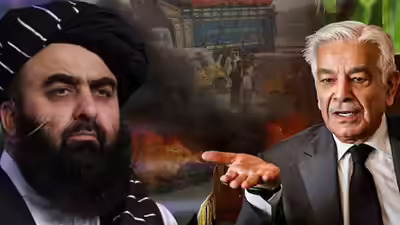
Pakistan Defence Minister Khawaja Asif’s latest outburst against Afghanistan and India once again exposes Islamabad’s long history of denial, deceit, and deflection. After a suicide blast ripped through Islamabad and killed 12 people on Tuesday, Asif was quick to threaten war with Kabul and accuse India of stirring violence through Afghan soil. But behind these loud warnings and conspiracy theories lies a much deeper truth Pakistan is now being devoured by the very terror networks it once bred, trained, and sheltered. The Tehrik-e-Taliban Pakistan (TTP), which Islamabad once used as a pawn in its regional games, has turned its guns on its own masters. And instead of facing that reality, Pakistan’s establishment is manufacturing external enemies to hide its spectacular internal collapse.

Whenever Pakistan is hit by terrorism, its leaders instinctively point fingers outward either toward India or Afghanistan. This time, Khawaja Asif’s reaction followed the same predictable script. Without evidence, he accused the Afghan Taliban of harbouring terrorists responsible for the Islamabad attack and even claimed that India was using Afghanistan as a base to “wage aggression” against Pakistan. He went so far as to say that some Taliban factions were “linked with India” and that Pakistan was ready to “pay back in the same coin.”

RelatedPosts

Pakistan’s Proxy War Faces a Setback as Delhi Terror Plot is Crushed, 18 Weapons Seized

Ahmadis in Pakistan: From Faith to Marginalisation Under Law and Society

Ahmadis in Pakistan: From Faith to Marginalisation Under Law and Society

Load More

But the facts tell a different story. The suicide bombing in Islamabad was claimed by the TTP a group that was born, nurtured, and protected by Pakistan’s own intelligence agencies for years. During the 2000s and 2010s, Islamabad viewed the Taliban and TTP as tools to control Afghanistan and to exert pressure on India in Kashmir. The Pakistani establishment allowed them to grow in tribal areas, armed them, and provided safe havens. The ISI’s “strategic depth” policy to use religious militancy as a foreign policy weapon has now backfired.

The TTP, once seen as a loyal asset, has grown into a Frankenstein’s monster. It no longer takes orders from Rawalpindi but has found new motivation in targeting the Pakistani state itself. Every time Pakistan blames Afghanistan or India, it only exposes its own unwillingness to confront the truth that decades of state-sponsored radicalization have turned Pakistan into a breeding ground for terrorism beyond its own control.

Pakistan’s defence minister claimed that most of the terrorists killed in recent operations were Afghans and that 2,500–3,000 militants had entered Pakistan in the past year. These figures, conveniently thrown around without evidence, serve only one purpose to divert public anger away from the establishment. What Asif and his colleagues will never admit is that the TTP’s strength comes not from foreign lands, but from Pakistan’s own madrasa networks, radical clerics, and political patronage.

The Pakistani state has long played a double game cracking down on some terror groups while secretly protecting others that served its interests. Groups like Lashkar-e-Taiba and Jaish-e-Mohammed were openly glorified as “freedom fighters” when they attacked India. The Afghan Taliban were given sanctuary for years even as the world condemned their actions. When the Taliban returned to power in Kabul in 2021, Pakistan celebrated it as a “strategic victory.” Yet, within two years, that so-called victory has turned into humiliation. The Taliban refuses to take orders from Islamabad, the TTP refuses to stay silent, and Pakistan is stuck between its own lies.

This is why Asif’s recent warning of “war” against Afghanistan sounds hollow. Pakistan can bomb villages across the Durand Line and carry out airstrikes, but it cannot destroy the ideology it cultivated at home. The madrasa networks, extremist clerics, and hate preachers that the state promoted for decades have ensured that terrorism is no longer an imported problem it is a homegrown disease.

In a desperate attempt to control the narrative, Pakistan has started dragging India into its internal chaos. Asif claimed that “some groups in Afghanistan have their strings pulled from India,” and that recent attacks were part of an “Indian aggression” using Afghan soil. These baseless allegations are not new. For years, Pakistan’s military and political elite have portrayed India as the eternal villain to justify their own failures.

However, the facts expose their propaganda. India’s engagement with Afghanistan today is humanitarian and developmental providing food aid, scholarships, infrastructure projects, and trade support. Even the Taliban leadership has acknowledged India as a “close friend” and expressed interest in stronger diplomatic ties. Pakistan’s real fear is not Indian “infiltration,” but India’s growing goodwill in Afghanistan. The same Taliban government that Islamabad once thought would remain its loyal puppet is now choosing to engage with New Delhi on its own terms.

By blaming India for its internal chaos, Pakistan hopes to distract its citizens from economic collapse, rising inflation, and a broken security apparatus. Each suicide attack in Islamabad or Peshawar chips away at the myth of Pakistan’s “strategic depth.” The Pakistani public, already suffering under political instability and poverty, is beginning to see through this old tactic of blaming India for everything.

Khawaja Asif’s claim that “Pakistan is in a state of war” is not just rhetoric it is also a political tool. The Pakistan Army thrives on perpetual conflict. By declaring an invisible war against India or Afghanistan, the military establishment keeps its dominance over politics and public discourse intact. Each terror attack becomes an excuse to expand military powers, silence critics, and divert media focus from economic and governance failures.

But this tactic is wearing thin. Pakistan’s economy is in ruins, with inflation soaring and foreign reserves drying up. Civil unrest and political chaos have deepened under the current establishment. The people are beginning to question why, despite having one of the world’s largest armies and billions in foreign aid, Pakistan remains unsafe and unstable. Blaming Afghanistan or India may have worked in the past, but today’s Pakistanis are paying the price for decades of deception.

Even within the region, Islamabad’s credibility is collapsing. The Taliban regime, despite being internationally isolated, no longer trusts Pakistan. Other Muslim nations like Qatar and Turkey, which once mediated between Islamabad and Kabul, now view Pakistan’s constant blame-shifting as a barrier to peace. The more Pakistan threatens war, the more it reveals its weakness and insecurity.

Pakistan’s tragedy today is entirely self-inflicted. The very groups that its intelligence agencies once described as “strategic assets” have now become existential threats. The TTP and other militant outfits are not Indian agents or Afghan proxies they are the children of Pakistan’s own policy of jihad and denial.

For decades, Pakistan believed it could control fire without getting burned. It used religion to manipulate its people, trained extremists for foreign adventures, and called it national security. Now that fire is consuming its own cities. Each bomb blast, each suicide attack, and each assassination is a reminder that the monster has come home.

Instead of introspection, Khawaja Asif and his colleagues are resorting to the same old lies blaming India, threatening Kabul, and pretending to be victims. But the truth is simple: Pakistan’s terror problem is not born in New Delhi or Kabul; it is born in Rawalpindi. The snakes it raised in the name of jihad are now biting it back, and no amount of propaganda can hide that reality.

Pakistan’s current crisis is not just about terrorism it is about accountability. The country’s establishment, which built its power on false narratives and militant proxies, is now trapped in the very chaos it created. Blaming India or Afghanistan will not change the fact that the TTP and its offshoots are Pakistani creations.

If Islamabad truly wants peace, it must confront its own past dismantle terror networks, end the madrasa-industrial complex, and stop using religion as a weapon of policy. Until then, every bomb in Islamabad will serve as a reminder that Pakistan’s greatest enemy is not across its borders but within its own borders. The snakes it nurtured are no longer under its control and they are biting harder than ever.


Tags: IslamabadKhawaja AsifPakistanSuicide attackTalibanTTP
ShareTweetSend
Previous Post

Islamabad Blast: Diversion Tactic or Genuine Terror Attack?

Next Post

“India stopped doing it”: Trump Signals Tariff Cut for India, Claims New Delhi Has “Stopped Doing the Russian Oil” as Trade Talks Advance

Related Posts

When law becomes an instrument of exclusion, persecution moves far beyond the courtroom.
Geopolitics

Ahmadis in Pakistan: From Faith to Marginalisation Under Law and Society

28 April 2026

The troubles of Ahmadis in Pakistan are not merely those of a religious minority. Their story is about how...

When uranium becomes strategy, India moves first.
Geopolitics

India’s $4 Billion Uranium Coup with Kazakhstan Rewrites the Global Nuclear Balance

28 April 2026

India has secured a landmark uranium supply agreement worth more than US$4 billion with Kazakhstan’s state-run mining giant Kazatomprom....

“Fixing the World”: What a Century of Big Ideas Reveals About Us
Geopolitics

“Fixing the World”: What a Century of Big Ideas Reveals About Us

27 April 2026

In 1945, as the world emerged from the devastation of global war, representatives of 50 nations gathered in San...

Load More

Leave a Reply Cancel reply

Your email address will not be published. Required fields are marked *

I agree to the Terms of use and Privacy Policy.
This site is protected by reCAPTCHA and the Google Privacy Policy and Terms of Service apply.

Currently Playing

From Runways to Warships: India’s Firefighting Warrior Built for Bases & Battles| IAF | VayuShakti

From Runways to Warships: India’s Firefighting Warrior Built for Bases & Battles| IAF | VayuShakti

00:05:40

Ethanol, EVs and Solar- How India’s Energy Game Is Changing | Modi on LPG & Crude Oil | war| Hormuz

00:05:21

Truth of IRIS Dena: 8 Days That Changed Narrative | War zone Reality, Not an Indian Navy Exercise

00:08:02

300 Million Euros for SCALP: Strategic Necessity or Costly Dependency on France300

00:04:06

Tejas Mk1A: 19th aircraft coupled but Not Delivered: What Is Holding Back the IAF Induction?

00:07:21
Facebook Twitter Instagram Youtube
tfipostTfipost.com
Right Wing | News Analysis | Indian Opinion
  • About us
  • Contact Us
  • Careers
  • Brand Partnerships
  • Terms of use
  • Privacy Policy
  • Sitemap

©2026 TFI Media Private Limited

No Result
View All Result
  • Premium
  • Politics
    • Analysis
    • Opinions
    • Trending
  • Economy
    • Business
    • Finance
  • Defense
    • Defence
    • Strategy
    • Weaponry
  • Geopolitics
    • Africa
    • Americas
    • Asia Pacific
    • Europe
    • South Asia
    • West Asia
  • Knowledge
    • Culture
    • History
    • Indology
  • Law
  • Lounge
    • Books
    • Cinema
    • Food
    • Health
    • Sports
    • technology
    • Travel
    • Satire
TFIPOST हिन्दी
TFIPOST Global

©2026 TFI Media Private Limited