
















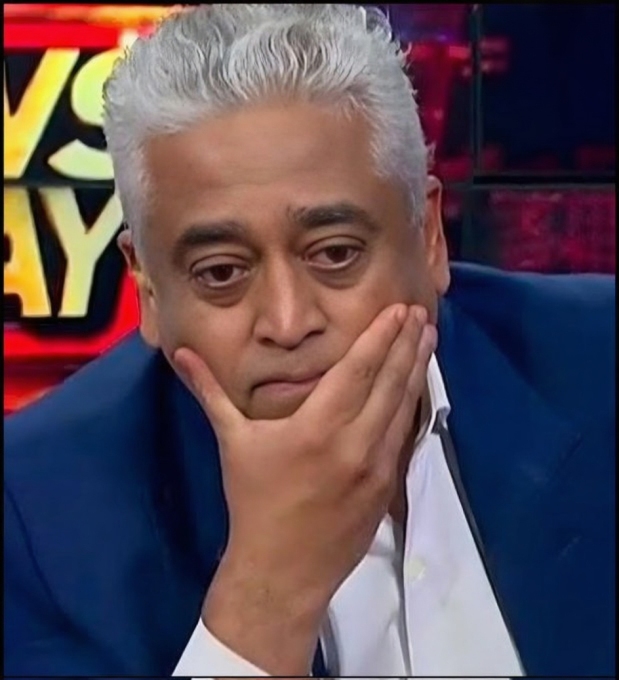
On October 13, 2025, senior journalist Rajdeep Sardesai once again found himself issuing a public apology — this time, for a programme aired nearly fifteen years ago. The 2011 investigative show Dilli’s Double Agents, produced on IBN7 in collaboration with Cobrapost, had falsely accused former BJP councillor Ajit Singh Tokas of demanding bribes related to unauthorised constructions in Delhi’s Munirka area.
In a subdued video message posted on Instagram, Sardesai expressed regret for the “false and defamatory allegations” made in the programme, acknowledging that no credible evidence supported the charges. On X (formerly Twitter), he issued a written apology admitting that the show had “wrongly suggested that Mr. Ajit Singh Tokas demanded gratification” and that subsequent reviews found “no material on record to substantiate this claim.”
Sardesai clarified that the sting was “executed by an external agency,” claiming his involvement was limited to anchoring. Yet, he took “full moral responsibility” for the reputational damage caused to Mr. Tokas, acknowledging the “social and political harm” that followed.
While some observers might view this as a rare act of accountability, others see it as part of a troubling pattern that has shadowed Sardesai’s career — one marked by recurring controversies, factual errors, and retractions that have disproportionately targeted the Bharatiya Janata Party and figures linked to it.
A Familiar Pattern of Controversy
This is far from Sardesai’s first apology. In fact, the veteran journalist has faced repeated accusations of bias and sensationalism over the years. The latest apology only revives questions about journalistic ethics and the accountability of high-profile anchors in India’s television ecosystem.
Media critic Anirudh Shrivastav recalls Sardesai’s controversial role during the 2008 Cash-for-Vote scandal, when a sting operation purportedly exposed bribe deals intended to rescue the Manmohan Singh-led UPA government during a trust vote in Parliament. The tapes reportedly showed cash transactions involving political operatives.
According to Shrivastav, Sardesai, then heading a major television channel, reviewed the footage and chose to delay its broadcast “for verification,” a move that effectively ensured the story lost its political impact. The footage surfaced months later, long after the UPA government had survived the trust vote. Soon after, Sardesai was conferred with the Padma Shri, sparking allegations of political favouritism and compromised editorial integrity.
The Sohrabuddin Case: Another Long-Delayed Apology
This is not the first time Sardesai has apologized years after airing a misleading story. In November 2019, he tendered an unconditional apology in connection with a 2007 CNN-IBN programme titled 30 Minutes – Sohrabuddin: The Inside Story. The broadcast had alleged that senior IPS officer Rajiv Trivedi assisted the Gujarat police in abducting Sohrabuddin Sheikh and his wife Kauserbi, even claiming he provided cars with fake number plates for the operation.
The allegations were later proven false, and Sardesai’s apology came twelve years after the report aired. By then, the damage to the officer’s reputation had already been done — a pattern eerily similar to the one now playing out in the Ajit Singh Tokas case.
Behind the Glamour: A Rot in Television Journalism
Those who have worked with Sardesai also point to a deeper malaise within India’s television news industry — a culture of optics over substance, and performance over precision.
Former TV journalist Manoj Ranjan Tripathi, who has worked alongside prominent anchors including Sardesai, offered a candid account of newsroom priorities. He recalled being instructed to “wear a tie” before going on air, even when reporting from sites strewn with corpses — a grim illustration of how appearance often trumped authenticity.
Tripathi’s experience echoes a broader critique of Indian television media, where the race for ratings has led to an erosion of credibility. The need to dramatize stories, push ideological narratives, and amplify controversies often comes at the expense of verified facts.
Apologies Without Accountability?
Sardesai’s repeated apologies — often issued years after the initial misreport — raise an uncomfortable question: Are these acts of accountability, or mere attempts at reputation management once the truth becomes undeniable?
Critics argue that the harm done by such reports cannot be undone by belated apologies. In the case of Ajit Singh Tokas, years of public perception shaped by the 2011 allegations may have had lasting social and political consequences. A simple online apology, critics contend, does little to repair that damage.
Furthermore, by distancing himself from the sting operation and blaming “an external agency,” Sardesai has been accused of evading full accountability. As one senior journalist put it, “You cannot enjoy the limelight when a story breaks, and then disown responsibility when it collapses.”
A Mirror to the Media
Rajdeep Sardesai’s October 2025 apology may appear to close yet another chapter of flawed journalism, but in truth, it reopens an ongoing debate — about the ethics, biases, and responsibilities of those who shape public discourse in India.
In an era where media trust is eroding and ideological polarization runs deep, such repeated lapses by senior journalists not only damage individual reputations but also weaken the very foundations of credible journalism.
If anything, Sardesai’s apology to Ajit Singh Tokas serves as a stark reminder that journalism, when divorced from accountability, ceases to inform — and begins to mislead.