





















RelatedPosts
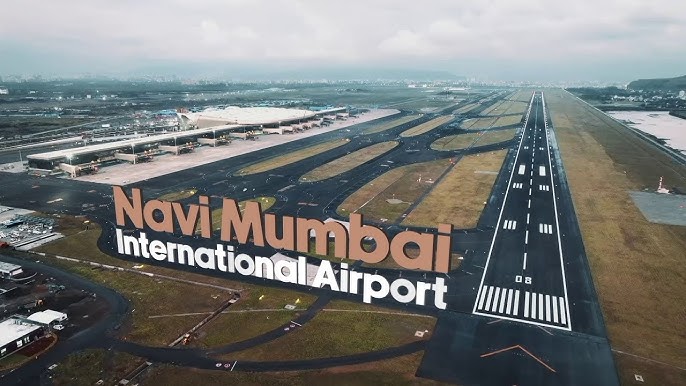
The long-awaited Navi Mumbai International Airport (NMIA), inaugurated today by Prime Minister Narendra Modi (October 8), marks a defining moment in India’s aviation history. Designed to decongest the overburdened Chhatrapati Shivaji Maharaj International Airport (CSMIA) and reshape Mumbai’s air connectivity, the NMIA is set to become a global gateway a modern marvel combining technology, sustainability, and architectural brilliance. Spread over 1,160 hectares in Ulwe, about 37 km from South Mumbai, the greenfield airport will not only handle both domestic and international traffic but will also emerge as a major logistics and business hub for western India. With its lotus-inspired design, 5G-enabled operations, and seamless multimodal transport links, the airport represents the future of Indian infrastructure bold, self-reliant, and globally competitive.
A Solution to Mumbai’s Air Congestion Crisis
Mumbai, India’s financial nerve center, has long faced the limitations of operating with a single international airport. The CSMIA, despite continuous expansions, has reached saturation, handling more than 50 million passengers annually. NMIA is the long-term solution a world-class, sustainable alternative to distribute passenger and cargo loads efficiently.
Located strategically in Ulwe, Navi Mumbai, the airport is built to handle 20 million passengers annually in its first phase, scaling up to 90 million passengers per year once fully operational. The project is managed by Navi Mumbai International Airport Private Limited (NMIAL), a joint venture between Adani Airports Holdings Limited (74%) and CIDCO (26%). With a total investment of ₹20,000 crore in Phase 1 and an additional ₹30,000 crore earmarked for future phases, the NMIA stands as one of India’s largest infrastructure projects under the public-private partnership (PPP) model.
Architectural Grandeur Meets Cutting-Edge Technology
Designed by the globally renowned Zaha Hadid Architects, the terminal embodies India’s national flower, the lotus, symbolizing purity and renewal. The structure features 12 sculptural columns representing petals and 17 mega-columns that support vast canopies resembling blooming lotus leaves. The terminal’s total area spans 2,34,000 square meters, integrating art, sustainability, and functionality in equal measure.
The airport’s Phase 1 infrastructure includes one 3,700-meter-long runway designed to Code F specifications, enabling it to accommodate large aircraft like the Airbus A380. Eventually, the airport will expand to four terminals and a second parallel runway, transforming it into a full-fledged international aviation hub akin to Dubai or Heathrow.
Every element of NMIA has been crafted for efficiency. Its automated baggage handling system allows real-time baggage tracking through the “aviio” mobile app. 5G-powered IoT systems monitor airside operations, while Digi Yatra integration ensures a contactless passenger experience from check-in and security to boarding. This is India’s first fully digital airport, eliminating paper boarding passes and manual document verification.
Connectivity and Multimodal Integration: India’s First of Its Kind
One of NMIA’s standout features is its multimodal connectivity the first of its kind in India. The airport is accessible via multiple high-speed routes: the Mumbai Trans Harbour Link, Sion-Panvel Highway, and the Ulwe Coastal Road, ensuring swift access from every corner of the Mumbai Metropolitan Region (MMR).
The Navi Mumbai Metro Line 1 (Belapur–Pendhar) is already operational, while Mumbai Metro Line 8, now in the planning stage, will directly connect CSMIA and NMIA. Additionally, water taxis and high-speed train services are on the horizon, making NMIA India’s first truly multimodal air transport hub.
Proximity to industrial and commercial zones adds immense logistical value. The Jawaharlal Nehru Port Trust (JNPT), located just 14 km away, and the MIDC Taloja industrial belt (22 km away) will benefit significantly from the new airport’s cargo and connectivity capabilities. As one NMIAL official stated, “This will be India’s first airport seamlessly linking road, metro, rail, water, and air redefining passenger and cargo movement for the next generation.”
Passenger-Centric Design and World-Class Facilities
The NMIA terminal promises a next-generation passenger experience focused on comfort, efficiency, and cultural immersion. The airport houses 66 check-in counters, 22 self-baggage drop points, 29 aerobridges, and 10 bus boarding gates, all designed to minimize wait times.
Inside the terminal, passengers can enjoy digital art installations, interactive exhibits, and a children’s play area in the domestic departures zone. For business travelers, NMIA provides lounges for 500 VIPs and corporate guests and an 80-room transit hotel for short stays. The airport also offers home baggage delivery and repair services, setting new benchmarks for convenience.
Retail and dining experiences are equally robust, with 5,000 square meters of commercial space, including 1,800 square meters of duty-free shops. Passengers can digitally order meals through an integrated airport app, which facilitates delivery anywhere within the terminal a first for Indian airports.
Sustainability and Green Innovation at the Core
Beyond design and technology, NMIA exemplifies India’s commitment to sustainable infrastructure. The airport aims to generate 47 MW of solar power, coupled with rainwater harvesting, wastewater recycling, and energy-efficient fixtures. The lotus-inspired architecture promotes passive cooling, naturally reducing energy demand across terminal areas.
Electric vehicles will dominate airside operations, and by Phase 3, an Automated People Mover (APM) system will connect all terminals internally. The runways and taxiways use rockfill construction methods to minimize environmental impact, enhancing ground stability and reducing soil erosion.
NMIA’s Category II Instrument Landing System (ILS) will allow landings even under low-visibility conditions (as low as 300 meters of runway visual range), outperforming the CSMIA’s current visibility threshold of 550 meters. This ensures operational continuity during fog or monsoon conditions.
Cargo Powerhouse and Economic Multiplier
NMIA’s cargo terminal will play a central role in strengthening India’s logistics sector. In its first phase, it can handle 0.5 million metric tonnes annually, scaling up to 3.2 million tonnes once all development phases are complete. The facility includes seven dedicated freighter stands, 49 truck bays, and high-speed automation systems for 24/7 operations.
The cargo terminal is built to meet IATA CEIV (Centre of Excellence for Independent Validators) standards, making it suitable for handling sensitive cargo like pharmaceuticals, perishables, and high-value goods. This capacity, combined with proximity to JNPT, positions NMIA as a future cargo hub for South Asia, supporting India’s growing role in global supply chains.
Operational Plan and Airline Strategy
Initially, the airport will operate one runway and one integrated terminal, handling 20 million passengers annually. 42 aircraft stands including 29 contact and 13 remote stands will support flight operations, which are expected to commence in December 2025.
Flight timings in the early phase will run from 8 am to 8 pm, with 10 air traffic movements per hour, gradually scaling to 40 movements within six to nine months. IndiGo, Akasa Air, and Air India Express are among the first carriers to operate from NMIA. Air India Express will launch 20 daily departures (40 ATMs) connecting 15 Indian cities, and plans to scale up to 55 daily flights by mid-2026, including five international routes.
A New Symbol of India’s Infrastructure Revolution
The inauguration of the Navi Mumbai International Airport is more than a milestone in aviation it’s a statement of India’s capability to build world-class, sustainable, and passenger-focused infrastructure. By merging cutting-edge design, digital innovation, and environmental responsibility, NMIA sets a new benchmark for future airports across Asia.
As Mumbai emerges as a dual-airport megacity, the NMIA will redefine how India connects to the world faster, greener, and smarter. It’s not just an airport; it’s a symbol of Atmanirbhar Bharat where Indian infrastructure rises to global standards, and every takeoff from Navi Mumbai represents the soaring ambitions of a new India.