
















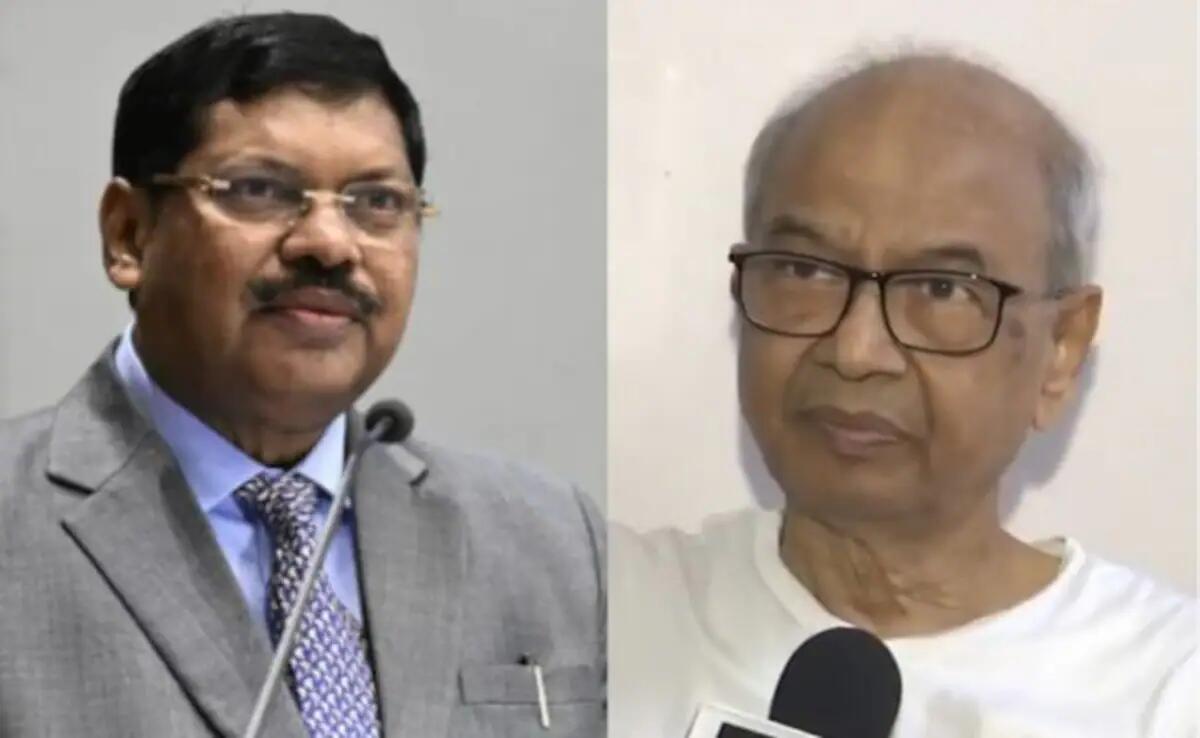
The so-called “Brahmanical outrage” theory that certain leftist groups tried to build around the shoe-hurling incident at Chief Justice of India (CJI) BR Gavai has fallen flat. Advocate Dr. Rakesh Kishore, who has been accused of attempting to throw a shoe at the CJI, has revealed that he himself belongs to the Dalit community. This revelation has dismantled the propaganda that his act stemmed from “caste prejudice.” In an interview after his suspension by the Bar Council, Kishore questioned, “Can someone tell my caste? Maybe I am a Dalit too. How can you say I attacked a Dalit? He (CJI Gavai) was a Sanatani Hindu first and later followed Buddhism. If he has renounced Hinduism, how is he still a Dalit?”
This statement has shaken the foundation of the divisive narrative that tried to pit “Dalits versus Hindus.” Because in India, the vast majority of Scheduled Castes (SC), Scheduled Tribes (ST), and Other Backward Classes (OBC) proudly identify as followers of Sanatana Dharma. They worship the same deities, celebrate the same festivals, and share the same dharmic traditions that define Hindu civilisation. Only a certain section of people like the left liberals, Tukde tukde gang, periyarists have politically weaponised caste identity to promote an anti-Hindu sentiment. These groups, whom many rightly call “HINOs” (Hindus in Name Only), distort the spirit of equality that both Sanatana Dharma and the Constitution stand for.
Beyond Caste Politics
Rakesh Kishore’s version of events presents a different picture altogether. Far from being a caste-based act of defiance, he described his outburst as a spontaneous expression of anguish over what he called “mockery of Sanatana Dharma” by the CJI. “The Almighty made me do it,” he said, refusing to apologise or express regret. “Judges should work on their sensitivity. Lakhs of cases are pending… I am neither going to apologise, nor do I regret it. I have not done anything wrong.” he added
Kishore made it clear that he saw his act as a moral protest against what he perceived as the growing disdain for Hindu beliefs among certain influential voices, even within the judiciary. His remarks were rooted not in hate but in frustration frustration over how easily ancient Hindu traditions are dismissed under the garb of “liberal critique.” According to him, CJI Gavai’s controversial remarks about Lord Vishnu “reflected deep-seated resentment towards Hindus and Sanatan Dharma.”
When asked about risking his legal career, Kishore was unflinching: “I didn’t risk my life; I did what God commanded. I wasn’t drunk; I was fully conscious. I tried to awaken Hindus. With God’s grace, it will happen.” His license has since been suspended by the Bar Council, but public sympathy for him continues to grow.
“Buddhism Is Ours” A Sanatani Interpretation
Interestingly, despite his open criticism of the CJI, Rakesh Kishore says he holds deep respect for Lord Buddha and Buddhist teachings. “Buddhism is ours; it originated from us. It grew out of our great tree,” he explained, adding that he reads Buddhist texts extensively. But he was quick to point out a vital distinction that Gautam Buddha never insulted Hinduism. “Buddha never abused Sanatan Dharma; he only showed a way to refine inner truth,” he said.
Kishore’s perspective reflects an inclusive view of faith that Buddhism and Sanatan Dharma are not adversaries but branches of the same civilisational ethos. His disappointment, therefore, lies not with Buddhism itself but with those who exploit it to attack Hindu traditions. “I am saddened that there is a group that is separating itself from Hindus. They surrounded my house yesterday they are tyrannical people,” he said, referring to individuals who have allegedly harassed him after the incident.
This broader point exposes the ideological manipulation at play in India’s caste and religion debates. Over the years, a section of political and intellectual elites has tried to appropriate Dalit and Buddhist identities as tools to attack Hinduism. But as Kishore’s case demonstrates, many within these very communities continue to hold deep devotion to Sanatana Dharma.
The Debate over CJI Gavai’s Religious Identity
Rakesh Kishore’s has also questioned that whether someone who renounces Hinduism still claim to represent its social classifications? “He (CJI Gavai) was a Sanatani Hindu first,” Kishore remarked. “He then renounced his faith and followed Buddhism. If he feels that he has come out of Hinduism after following Buddhism, how is he still a Dalit?”
He also pointed out that Sanatana Dharma never discriminates between individuals on the basis of caste when it comes to faith. Anyone, irrespective of birth, can worship, pray, and seek salvation. Therefore the narrative of “Brahmanical oppression,” often used by left-leaning groups, collapses when confronted with the lived reality of millions of Dalit Hindus who proudly identify as Sanatanis.