














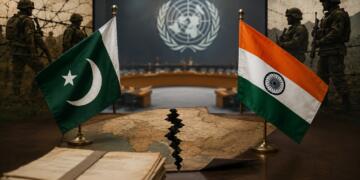




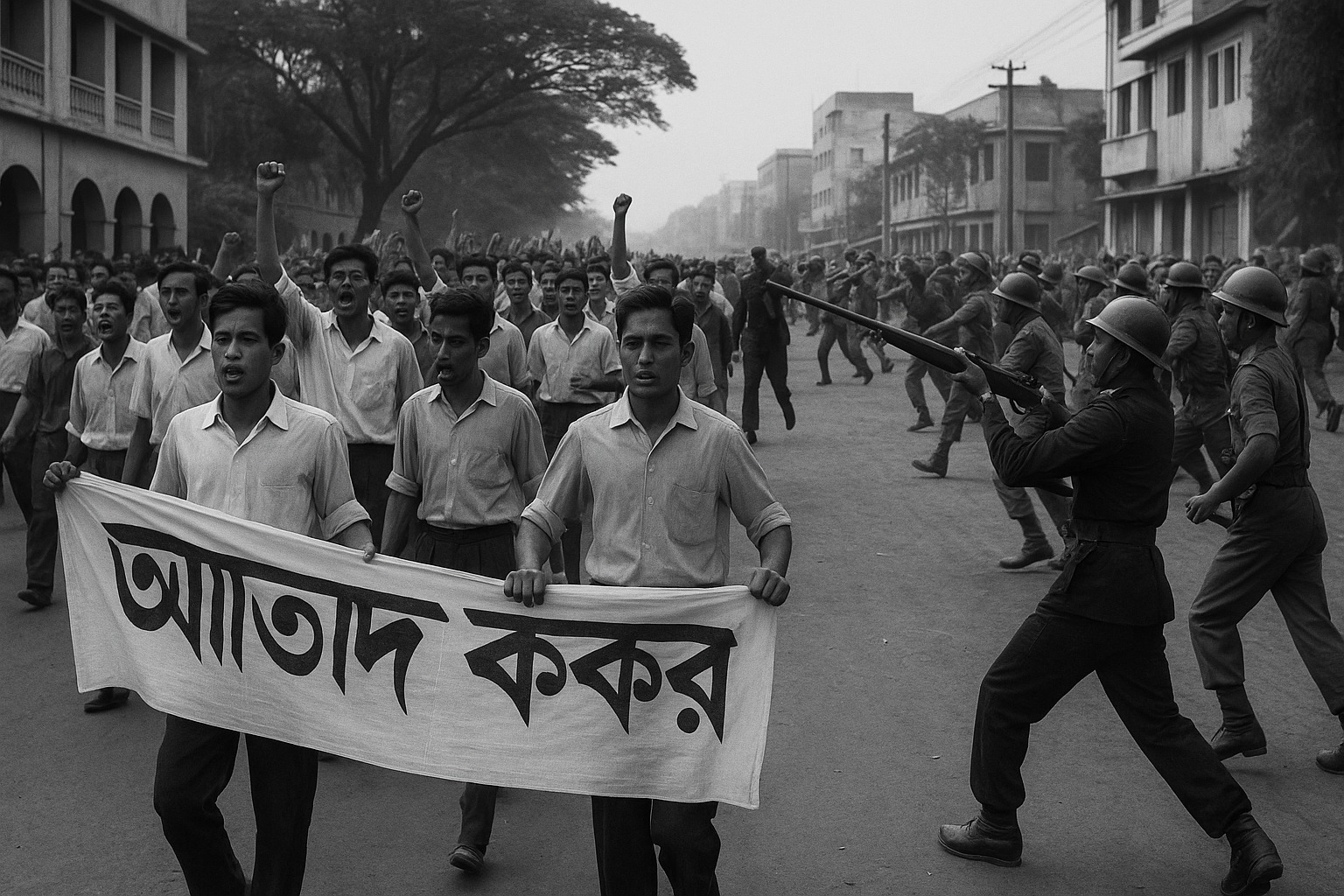
The partition of British India in 1947 created a state divided by more than a thousand miles of Indian territory West Pakistan (present-day Pakistan) and East Bengal (later East Pakistan, now Bangladesh). This geographical anomaly became a political fault line that would define the subcontinent’s postcolonial trajectory. From the very beginning, Pakistan’s leaders in the west pursued a project of centralisation and domination, seeking to mould a linguistically and culturally diverse nation into a monolithic Islamic identity under Punjabi–military control. The renaming of East Bengal as East Pakistan and the imposition of the One Unit policy were not mere administrative adjustments; they were instruments of political repression and cultural erasure. Against this backdrop, India’s response evolved from humanitarian concern to decisive strategic intervention, culminating in the liberation of Bangladesh in 1971.
Pakistan’s Renaming and One Unit Policy: Instruments of Domination
The decision in 1955 to rename East Bengal as East Pakistan was a calculated attempt to dismantle its historical and cultural distinctiveness. The name “Bengal,” with its centuries-old linguistic, literary, and civilisational heritage, was deliberately erased from Pakistan’s official vocabulary. This act of symbolic violence coincided with Prime Minister Muhammad Ali Bogra’s One Unit policy, which amalgamated the four western provinces into a single administrative entity. The goal was transparent: to neutralise East Bengal’s demographic advantage and create a constitutional fiction of parity between the two wings of Pakistan.
This structural manipulation institutionalised Punjabi dominance within Pakistan’s bureaucracy, armed forces, and political institutions. Although East Bengal’s population was larger, its share of civil service positions, defence roles, and development funds remained grossly disproportionate. Economic exploitation accompanied political subjugation. Development budgets favoured the western wing, while East Bengal’s economy was systematically drained of resources. The rhetoric of “national unity” concealed a hierarchy in which West Pakistan ruled, and East Bengal obeyed.
Federalism in Pakistan became a façade. The central government frequently dissolved provincial assemblies that expressed dissent, imposed governor’s rule, and silenced opposition leaders through arrests and censorship. What began as linguistic discrimination soon evolved into political disenfranchisement. By the late 1960s, decades of exploitation and repression had transformed East Bengal’s resentment into an organised movement for autonomy led by Sheikh Mujibur Rahman and the Awami League.
India’s Role: Sanctuary, Strategy, and Liberation
As Pakistan’s internal contradictions reached breaking point, India emerged as both a humanitarian refuge and a strategic actor. The military crackdown launched by Pakistan in March 1971—Operation Searchlight—triggered one of the worst humanitarian crises in South Asia. The violence against Bengali civilians, students, and intellectuals drove nearly ten million refugees into Indian border states such as West Bengal, Assam, and Tripura. India faced an untenable situation: a massive refugee burden, regional instability, and mounting evidence of genocide across its borders.
New Delhi’s initial response was humanitarian. Camps were established, relief operations launched, and international attention drawn to the unfolding catastrophe. But India’s involvement soon deepened. Recognising that the crisis could not be resolved without dismantling Pakistan’s military grip on East Bengal, India extended covert and later overt assistance to the Mukti Bahini—the Bengali liberation forces. Indian intelligence agencies provided training, logistics, and weaponry, while Indian media and diplomacy worked to expose Pakistan’s atrocities to the global community.
When Pakistan launched pre-emptive air strikes on Indian bases in December 1971, the conflict escalated into full-scale war. India’s military campaign, coordinated under the leadership of Prime Minister Indira Gandhi and Army Chief General Sam Manekshaw, achieved a swift and decisive victory. Within thirteen days, Pakistani forces in East Pakistan surrendered in Dhaka, marking the birth of Bangladesh on 16 December 1971. India’s intervention, grounded in both humanitarian obligation and strategic foresight, reshaped the political map of South Asia.
Political Repression and the Collapse of the Pakistani State
The tragedy of East Bengal under Pakistani rule is a cautionary tale of how state centralisation and ethnic exclusion can destroy the very foundations of national unity. The renaming of East Bengal, the imposition of Urdu, and the One Unit policy reflected a deliberate strategy to suppress pluralism and institutionalise West Pakistani hegemony. These measures alienated the Bengali majority, for whom language, culture, and self-respect were inseparable from political autonomy.
The failure of Pakistan’s leadership to recognise the legitimacy of regional aspirations revealed a profound misunderstanding of nation-building. Instead of fostering inclusion, it resorted to coercion. The result was predictable: rebellion, resistance, and ultimately secession. In trying to extinguish Bengali nationalism, Pakistan’s rulers ignited the very forces that would dismantle their state.
India’s Strategic Vision and Regional Legacy
India’s role in Bangladesh’s liberation was neither accidental nor purely altruistic. While driven by moral outrage at Pakistan’s brutality and the refugee crisis, New Delhi also recognised the geopolitical opportunity to permanently alter the regional balance of power. By aiding the creation of Bangladesh, India effectively dismembered its principal adversary and secured its eastern flank. Yet India’s conduct after the war demonstrated restraint and respect for sovereignty. Its armed forces withdrew swiftly, and governance was transferred to the democratically elected leadership of Sheikh Mujibur Rahman.
This combination of military decisiveness and political magnanimity enhanced India’s standing in the international arena. It underscored a model of intervention grounded not in occupation but in liberation. At the same time, India’s involvement carried long-term implications: the challenge of managing post-war expectations in Dhaka, balancing strategic interests with neighbourly goodwill, and navigating the evolving geopolitics of South Asia amid Cold War rivalries.
Conclusion
The history of East Bengal’s subjugation and liberation illuminates the intertwined dynamics of identity, power, and geopolitics in South Asia. Pakistan’s efforts to impose an artificial unity through renaming and centralisation created deeper divisions that no military coercion could contain. In contrast, India’s intervention combined moral conviction with strategic clarity, transforming a humanitarian catastrophe into a decisive moment of regional transformation.
The birth of Bangladesh remains one of modern history’s clearest demonstrations of how state repression can catalyse resistance, and how regional alliances can reshape nations. For contemporary South Asia, the lessons endure: exclusionary nationalism breeds instability, and the denial of identity invites disintegration. The liberation of Bangladesh was not merely a triumph of arms it was a triumph of identity, resilience, and justice over the politics of repression.
(Aritra Banerjee is a Defence, Foreign Affairs & Aerospace Journalist and co-author of The Indian Navy @75: Reminiscing the Voyage. Having spent his formative years in the United States before returning to India, he combines a global outlook with on-the-ground insight in his reporting. He holds a Master’s in International Relations, Security & Strategy from O.P. Jindal Global University, a Bachelor’s in Mass Media from the University of Mumbai, and Professional Education in Strategic Communications from King’s College London (War Studies). With experience across television, print, and digital media.)