


















RelatedPosts
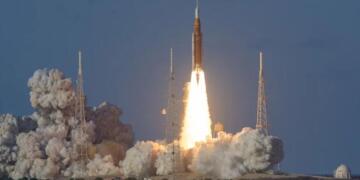
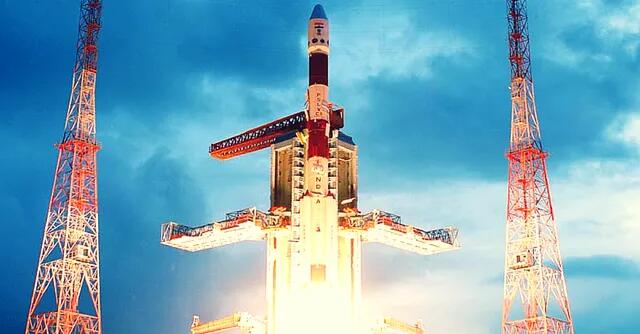
On October 22, 2008, India made history when the Indian Space Research Organisation (ISRO) launched Chandrayaan-1, the country’s first lunar mission, from the Satish Dhawan Space Centre in Sriharikota aboard a PSLV-XL rocket. The mission marked India’s official entry into the global space race, showcasing its ability to conduct high-precision launches and complex deep-space operations. More than a scientific endeavour, Chandrayaan-1 represented India’s arrival as a credible space power capable of exploring beyond Earth’s orbit.
The mission aimed to orbit the Moon and perform high-resolution remote sensing to map its surface, mineral composition, and topography. Equipped with 11 advanced scientific instruments, developed through collaborations with global agencies such as NASA (USA), ESA (Europe), and Bulgaria, Chandrayaan-1 sought to deepen understanding of the Moon’s evolution and composition. Among its core goals were the mapping of minerals, studying the distribution of elements like magnesium, aluminium, and silicon, and searching for water ice in the Moon’s permanently shadowed polar craters.
Today, as India celebrates the 17th anniversary of this groundbreaking mission, the success of Chandrayaan-1 continues to inspire. Since then, India’s space program has achieved remarkable feats the Mars Orbiter Mission (Mangalyaan), the Chandrayaan-3 Moon landing, the Aditya-L1 solar mission, and even sending an Indian astronaut to the International Space Station all of which trace their roots back to the pioneering success of Chandrayaan-1.
Mission Operations and Key Achievements
After entering lunar orbit, Chandrayaan-1 maintained a height of around 100 km, conducting chemical, mineralogical, and photographic mapping of the lunar surface. The spacecraft’s scientific payloads came from India, the USA, the UK, Germany, Sweden, and Bulgaria, representing a truly international collaboration in space science.
Having achieved its main objectives, ISRO raised the satellite’s orbit to 200 km in May 2009, ensuring extended observations. By the time it lost contact on August 29, 2009, Chandrayaan-1 had completed over 3,400 orbits, transmitting an incredible 70,000 images of the lunar surface. These images and data significantly advanced global lunar science and positioned ISRO as a respected scientific agency worldwide.
However, the mission’s greatest triumph came in October 2009, when instruments onboard the spacecraft—particularly the Moon Impact Probe (MIP) and NASA’s Moon Mineralogy Mapper (M3)—provided conclusive evidence of water molecules on the lunar surface. This discovery fundamentally altered scientific understanding of the Moon’s geology, revealing that the lunar surface was not as arid as once believed.
Scientific Breakthroughs That Changed Lunar Exploration
The Chandrayaan-1 mission delivered several landmark discoveries across multiple disciplines.
Moon Mineralogy Mapper (M3): Developed by NASA, it provided the first definitive spectral evidence for hydroxyl (OH) and water (H₂O) molecules on the Moon, especially at higher latitudes. This discovery remains one of the mission’s defining achievements.
Moon Impact Probe (MIP): The probe, carrying the CHACE mass spectrometer, detected direct traces of water vapour in the Moon’s exosphere—confirming the presence of volatile compounds during its controlled descent.
Miniature Synthetic Aperture Radar (Mini-SAR): The radar mapped the lunar poles and inferred sub-surface water ice deposits in permanently shadowed craters.
Terrain Mapping Camera (TMC): Produced a high-resolution 3D atlas of the lunar surface, revealing details such as buried lava tubes—potential sites for future human habitats.
Lunar Laser Ranging Instrument (LLRI): Generated precise topographic maps essential for crater and surface analysis.
Chandrayaan-1 X-ray Spectrometer (C1XS): Mapped the distribution of major rock-forming elements like Magnesium, Aluminium, and Silicon, crucial for understanding lunar crust composition.
Sub-keV Atom Reflecting Analyzer (SARA): Studied solar wind interactions, detecting neutral hydrogen atoms reflected off the lunar surface.
High-Energy X-ray Spectrometer (HEX): Measured concentrations of Uranium, Thorium, and Radon, providing insight into the Moon’s internal radioactivity.
Radiation Dose Monitor (RADOM): Recorded radiation levels in lunar orbit, vital for planning future human missions to the Moon.
Together, these instruments provided a comprehensive picture of the Moon’s chemical, mineral, and physical environment. They not only advanced India’s scientific standing but also laid the foundation for Chandrayaan-2 and Chandrayaan-3, which built on the data and experience from this mission.
The vision for India’s first lunar mission took shape at a 1999 meeting of the Indian Academy of Sciences, later endorsed by the Astronautical Society of India in 2000. Following their recommendations, ISRO formed a National Lunar Mission Task Force to evaluate the feasibility of such a mission. By November 2003, the Government of India formally approved Chandrayaan-1, marking a turning point in India’s space ambitions.
The mission was more than a scientific quest—it was a strategic initiative. It helped India build the Deep Space Network (DSN), critical for deep-space communication, and advance the design of lunar craft, onboard instruments, and launch technologies. These developments later proved vital for India’s interplanetary missions, particularly Mangalyaan.
Chandrayaan-1’s success also demonstrated India’s growing capability to manage complex, multi-agency space collaborations, cementing ISRO’s reputation on the global stage. It positioned India among an elite group of space-faring nations capable of conducting independent planetary missions.
Seventeen years after Chandrayaan-1’s launch, its legacy remains as bright as the day it left Earth’s orbit. The mission not only placed India on the global space map but also ignited a sense of national pride and scientific confidence. It redefined India’s ambitions, showing that with determination, innovation, and indigenous talent, even the Moon was within reach.
Chandrayaan-1 was not merely a spacecraft—it was India’s declaration of self-reliance in space exploration. Every subsequent ISRO mission, from Chandrayaan-3’s lunar landing to the upcoming Gaganyaan human spaceflight and India’s goal of a crewed lunar mission by 2040, carries forward the legacy of that first bold leap.
As the world looks once again to the Moon, Chandrayaan-1 stands as a testament to India’s enduring vision — a small spacecraft that sparked a giant leap for a nation.