























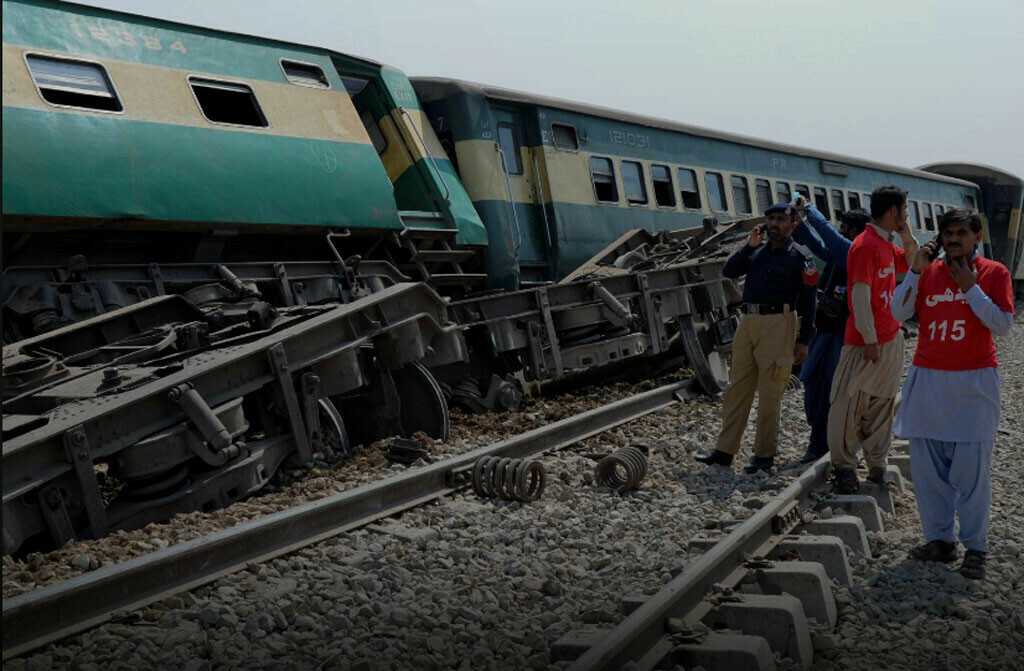
A powerful explosion on Tuesday morning derailed the Jaffar Express near the Sindh-Balochistan border, leaving at least seven people injured. The blast occurred around 8:15 a.m. in Sindh’s Shikarpur district, a region that has seen repeated attacks on railway infrastructure in recent months. Shikarpur Deputy Commissioner Shakeel Abro confirmed that four bogies of the Quetta-bound train were thrown off the tracks due to the explosion. Emergency teams were dispatched to the site, and the injured passengers were shifted to nearby hospitals for treatment.
Series of Attacks Targeting the Jaffar Express
The latest incident marks yet another strike on the Jaffar Express, one of Pakistan’s most frequently targeted passenger trains. The service, which connects Peshawar in the northwest to Quetta in Balochistan, has suffered multiple bombings and derailments this year alone.
In August, a similar explosion on the tracks derailed six bogies of the same train in Balochistan’s Mastung district, injuring several passengers. Just days before that, another bomb detonated near Sibi railway station shortly after the Jaffar Express had passed, narrowly avoiding another major tragedy. On August 10, four people were injured when an improvised explosive device (IED) derailed six coaches in Mastung, while on August 4, gunmen opened fire at the train’s pilot engine near Kolpur. The separatist Baloch Liberation Army (BLA) later claimed responsibility for that attack.
The Shadow of the Baloch Insurgency
Tuesday’s blast comes amid an intensifying insurgency in Pakistan’s restive Balochistan province. The Baloch Liberation Army, an armed separatist outfit fighting for what it calls Baloch self-determination, has repeatedly targeted Pakistani infrastructure, including railways, military convoys, and communication lines. For decades, Baloch nationalist groups have accused Islamabad of exploiting the province’s natural resources while neglecting its people’s development.
In March, the same Jaffar Express was hijacked in a violent standoff that lasted over 24 hours, resulting in the deaths of 33 hijackers and 24 soldiers. The BLA later claimed responsibility for that hijacking as well. The frequency and sophistication of these attacks underline the growing challenge Pakistan faces in containing militancy in Balochistan and adjacent regions.
Pattern of Rising Violence Across the Region
The surge in attacks on railway infrastructure reflects the broader instability gripping Balochistan and parts of Sindh. In recent months, Pakistani security personnel have come under repeated assaults. In August, nine soldiers, including a captain, were killed in an ambush in Washuk district. The following month, coordinated attacks were reported across multiple districts, leaving several Frontier Corps personnel dead. The insurgents’ strategy now seems to be expanding beyond traditional guerrilla warfare, targeting civilian and transport networks to cripple state control.
A Fragile Security Landscape
The derailment of the Jaffar Express once again exposes Pakistan’s fragile internal security structure. Despite repeated assurances from authorities, critical infrastructure remains vulnerable to sabotage, especially in areas bordering Balochistan. The BLA’s sustained campaign underscores the deep-rooted resentment and volatile conditions in Pakistan’s largest but least developed province. Unless Islamabad undertakes serious political dialogue alongside counterinsurgency efforts, such attacks will continue to destabilize the region and threaten the lives of ordinary citizens who rely on the country’s crumbling railway network.