











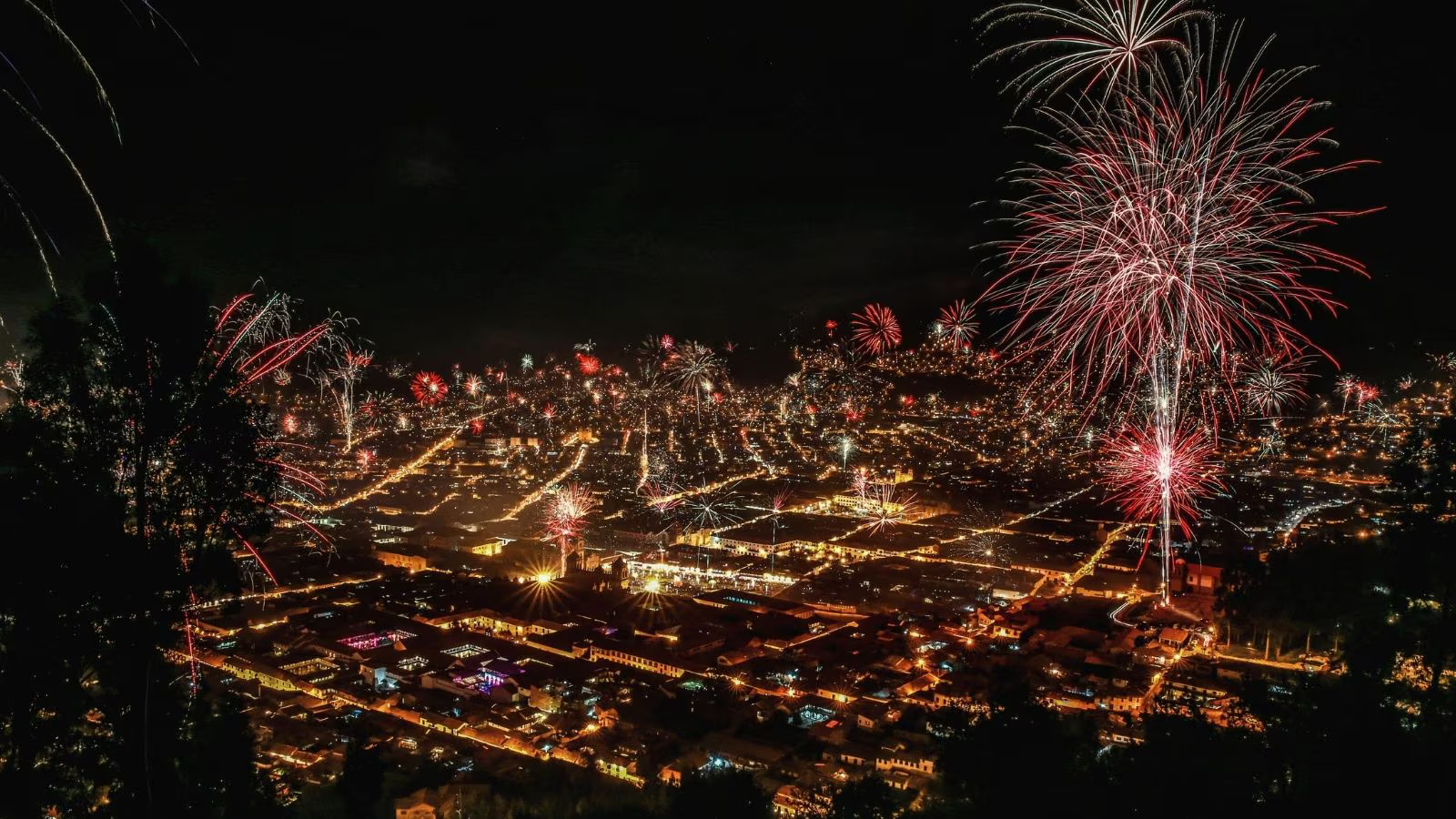
For years, a myth has been repeated that the tradition of bursting firecrackers during Diwali is a modern invention brought by foreign rulers, and that gunpowder came to India from China in the medieval era. But when we look at historical sources, Sanskrit texts, archaeological evidence, and civilizational memory, a very different story emerges. The truth is simple bursting firecrackers, or using fire and light to celebrate Deepavali, is an ancient Bharatiya tradition deeply rooted in Hindu belief, ritual, and culture.
Let us understand how.
At the heart of this myth is the claim that gunpowder was discovered in China in the 9th century and that fireworks were later introduced to India through Muslim invaders. Chinese sources themselves, however, do not fully support this story. In fact, they mention that a Buddhist monk from India brought with him the knowledge of gunpowder to China around 664 CE. He discovered certain soils in China containing saltpetre — the primary ingredient in gunpowder. The earliest Chinese studies on saltpetre chemistry also show strong Indic connections. Even Roger Pauly, a noted Western scholar known for his admiration of China, acknowledges that there was “Indian inspiration” in the making of gunpowder.
This should not surprise anyone familiar with Hindu literature. Long before the 7th century, Hindu texts referred to substances and compounds identical to those used in making gunpowder. The Atharva Rahasya clearly mentions the combination of charcoal, sulphur, and saltpetre — the three key ingredients of gunpowder. Similarly, in the Mahabharata, sage Vaisampayana describes the preparation of smoke balls made using such compounds. Later commentators explicitly identify them as early forms of gunpowder.
These references show that ancient Bharatiyas had deep chemical knowledge and used such materials in religious, ritualistic, and even protective purposes.
Even today, traditional fireworks in India — especially those made in Sivakasi, Tamil Nadu, and parts of Andhra Pradesh — are made using the same ingredients: sulphur (gandhaka), saltpetre (suryakara), and sand. The very word suryakara is Sanskritic in origin, while the Persian word for saltpetre, shora, is never used in these native industries. This linguistic continuity itself is evidence that the knowledge and terminology are indigenous, not borrowed.
To assume that Hindus — who had mastered metallurgy, chemistry, astronomy, and surgery thousands of years ago — were incapable of creating basic fireworks until foreigners arrived, reflects a deeply colonized mindset. It ignores centuries of indigenous innovation and cultural continuity.
Now, let us come to Deepavali itself. Why do Hindus light lamps, burn firebrands, and burst crackers on this night?
At the core of Diwali is the belief that our departed ancestors — the Pitrs — return to their realm after their annual visit during Pitru Paksha. It is believed that on the night of Chaturdashi and Amavasya, they begin their journey back. The light and sound created on this night help show them the path in the darkness. That is why Hindus illuminate their homes, light lamps, and make celebratory sounds.
The Skanda Purana, one of the 18 major Puranas, describes this tradition. In its Vaishnava Khanda, it explicitly says that Diwali should be celebrated by holding ulkas — or firebrands — in one’s hands. The word ulka in Sanskrit originally meant a meteor — something bright, fiery, and illuminating that makes both light and noise. Scholars like Dr. G.V. Raghavan and Indologist Tracy Pintchman have explained that this ritual symbolically represents lighting up the path for the ancestors and driving away darkness and negative forces.
So, when we burst crackers and light fireworks on Diwali, it is not merely for amusement — it has spiritual and cultural meaning rooted in Sanatana Dharma. It symbolizes illumination, divine energy, and the connection between the living and the departed.
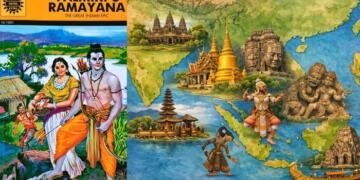
There are also textual references beyond the Puranas. The Ananda Ramayana, which elaborates on Valmiki’s Ramayana, mentions Diwali celebrations involving light, sound, and firebrands. Critics have tried to downplay this by saying the Ananda Ramayana is a later work, perhaps from the 15th century. But in Hindu tradition, the age of a text does not decide its authenticity — its acceptance by various sampradayas does. The Ananda Ramayana is accepted across traditions, and that makes it part of the living Hindu canon.
Moreover, Medhātithi, an 11th-century commentator on the Manusmriti, explained that any act performed by learned persons with a spiritual purpose becomes authoritative. By that logic, the practice of bursting firecrackers — done with religious intent and ancient symbolism — holds the same traditional legitimacy as any other ritual act in Sanatana Dharma.
Now, let’s look at material and artistic evidence. While India’s tropical climate and constant habitation mean fewer ancient artifacts survive, there are enough hints. In the Thyagaraja Temple of Tamil Nadu, murals dating back to the 9th century depict festival scenes that include firebrands and luminous celebrations. The Bogar Sattakandam, attributed to the Tamil Siddha Saint Bogar (dated by some to 500 BCE and others to around the 7th century CE), describes in detail how to prepare vediuppu cheyanir — or saltpetre solution — used in making gunpowder and fireworks.
This textual and linguistic continuity shows that the art of making combustible fireworks existed in ancient Tamil culture long before any foreign influence.
Civilizational memory also reinforces this. Across India, there are countless traditional paintings and folk art depictions showing Lord Krishna celebrating Deepavali with fireworks. In Maharashtra, the great saint Eknath in the 16th century described in his writings how firecrackers were used in the wedding of Rukmini and Krishna — mentioning types such as Agniyantra, Havai, Sumanmala, and Chichundari.
Similarly, Samarth Ramdas, the spiritual guide of Chhatrapati Shivaji Maharaj, referred to firework-like celebrations in his own Ramayana. He mentioned phula (phuljhari), ghosha, and other types of fireworks burst by Sri Rama’s army. These are not modern inventions — they are cultural memories preserved through verse, art, and practice.
When we connect all these dots, the conclusion is clear. If one claims that fireworks were introduced in India only after the medieval era, then one must also believe that every Hindu saint, poet, artist, and scholar from the last thousand years was collectively mistaken. That, of course, is absurd.
The Ulkas described in ancient texts were likely simple firebrands — predecessors of today’s fireworks. They made noise, they produced light, and they served both religious and social purposes. Even today, in Odisha, during Diwali, people use Kaunriya Kathi — a traditional firebrand that makes a crackling noise and emits sparks, just like ancient Ulkas.
Yes, the design and technology of firecrackers have evolved with time. But that does not mean the concept itself is foreign or recent. Just as the chairs or lamps we use today are modern forms of ancient furniture, modern crackers are simply advanced versions of what our ancestors once used. The essence remains the same — using fire and sound to celebrate light over darkness.
In Sanskrit, the word Ulkā means a meteor — a streak of fiery light shooting through the sky. It is not a coincidence that ancient Hindus chose this very word to describe what we today call firecrackers. It captures the visual and spiritual essence perfectly — a burst of light piercing the darkness, symbolic of dharma triumphing over adharma.
So, the next time someone says that bursting crackers on Deepavali is a modern, imported, or non-Hindu practice — remember this. The tradition of using fire, sound, and light to celebrate Deepavali is older than recorded history. It is deeply embedded in Hindu scriptures, rituals, and collective memory.
For millennia, Hindus have lit the night of Deepavali with lamps and firebrands — not just to rejoice, but to guide the ancestors, to honour the gods, and to celebrate the eternal light of truth.
That is the real meaning of Diwali — and firecrackers are not a recent addition but a proud continuation of this ancient dharmic tradition.