

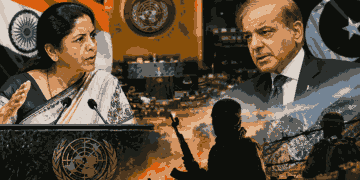










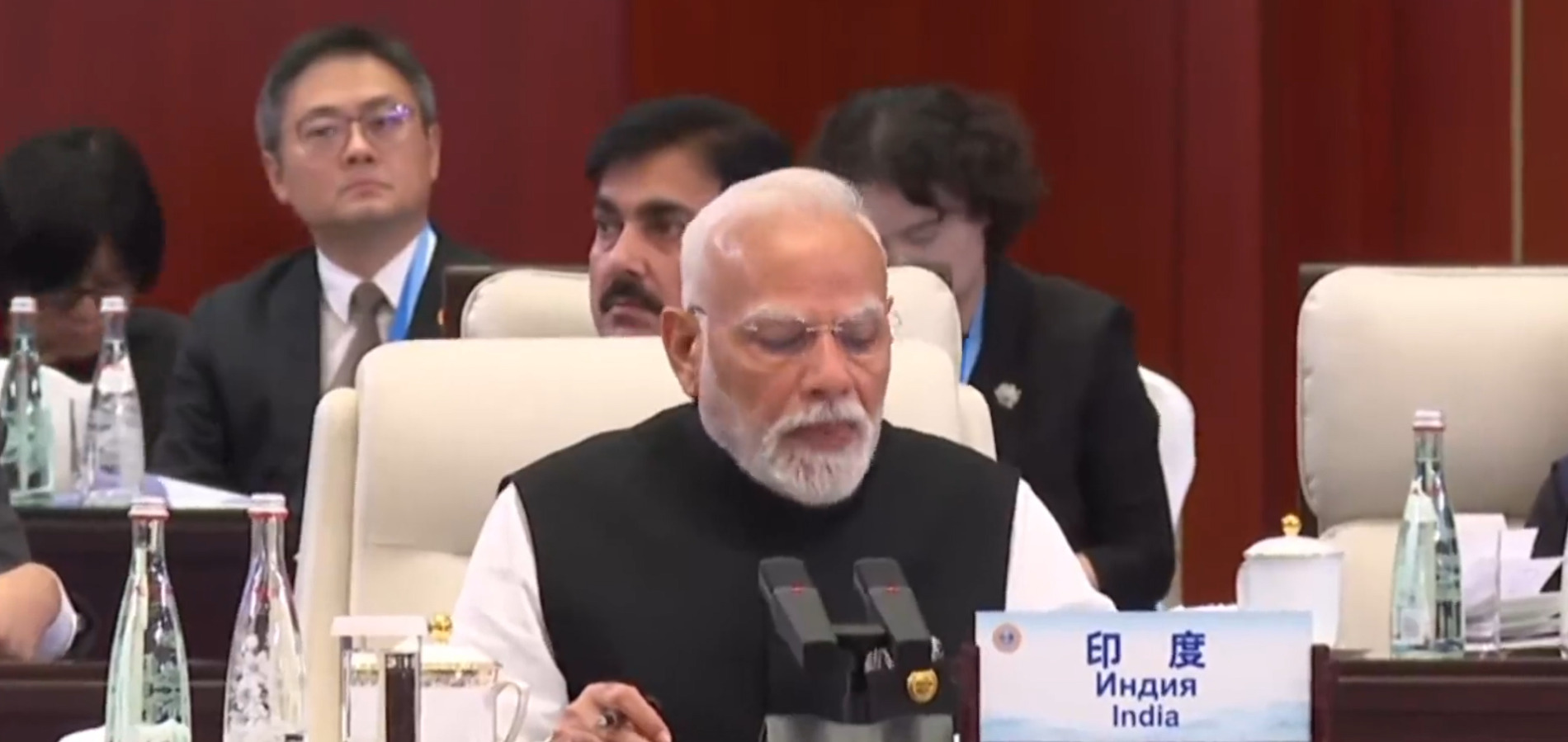
At a time when the world speaks in whispers against terrorism, India roared. Prime Minister Narendra Modi used the stage of the Shanghai Cooperation Organisation (SCO) summit in Tianjin to deliver an uncompromising message: there will be no double standards on terrorism. The words were directed at everyone in the room including Pakistan’s Prime Minister Shehbaz Sharif and China’s President Xi Jinping. Modi reminded the gathering that peace in Asia is impossible so long as some nations continue to use terrorism as state policy, arm those who wage jihad, and then pretend to seek stability. The elephant may walk with the dragon, but only if the dragon stops feeding the snake.
SCO Condemns the Pahalgam Attack, Echoes India’s Stand
Modi’s speech came against the backdrop of the April 22 terror attack in Pahalgam, Jammu and Kashmir, where 26 innocent lives were brutally cut short. For India, this was not just another strike but a stark reminder of Pakistan’s consistent export of terror.
What made Tianjin significant was not only Modi’s speech, but also the outcome. In a joint declaration after the summit, SCO member states including China and Turkey condemned the Pahalgam attack in the strongest terms. They expressed their “deepest sympathy and condolences to the families of the dead and wounded” and called for perpetrators, organisers, and sponsors to be brought to justice.
The declaration went further: “SCO strongly condemns terrorism in all its forms and manifestations and stresses that double standards in the fight against terrorism are unacceptable.” The language echoed Modi’s very words from the plenary session. Diplomatically, this was a watershed moment for India.
PM Modi’s Clear Warning: Terrorism Is a Red Line
In his 11-minute speech, Prime Minister Modi made it plain that terrorism is not just India’s problem but a threat to humanity itself. He said:
“We have to say clearly and unanimously that no double standards are acceptable on terrorism. This attack (Pahalgam) was an open challenge to every country and person who believes in humanity. In such a situation, it is natural to raise the question of whether the open support of terrorism by some countries can be acceptable to us. We have to unanimously oppose terrorism in every form and colour. This is our duty towards humanity.”
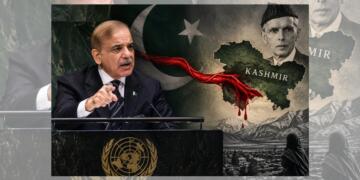
For Pakistan’s Shehbaz Sharif, seated in the same hall, the message was humiliating but inescapable. For Xi Jinping, who just a day earlier had spoken of the “dragon and elephant walking together,” it was a diplomatic reality check. If China truly wants to play partner to India, it cannot continue arming a nation that shelters Lashkar-e-Taiba and Jaish-e-Mohammed.
China’s Dilemma: Dragon Cannot Feed the Snake
Xi Jinping in his address on Sunday tried to paint a vision of India–China cooperation: “The dragon and the elephant must walk together for Asia’s peace and the progress of the developing world.” The metaphor sounded appealing, but Modi’s subtext was unmissable if the dragon truly wants to walk with the elephant, it must stop feeding the snake.
China today is Pakistan’s largest arms supplier, providing over 80% of Islamabad’s military hardware. In 2021 alone, Pakistan signed a $1.5 billion defense deal with China, which included 20 J-10CE fighter jets and 240 PL-15E air-to-air missiles. Beijing may insist this is “just commerce,” but in reality, it is arming a state sponsor of terror. That contradiction stands exposed at Tianjin.
By condemning the Pahalgam attack in a joint statement, even as its defense factories supply Pakistan, China now faces a credibility crisis. Modi’s message was blunt: if Beijing wants the elephant as a partner, it must stop arming the snake at its feet.
India at SCO: Security, Connectivity, Opportunity
PM Modi also highlighted India’s broader vision for SCO, summarised in three pillars S for Security, C for Connectivity, and O for Opportunity.
On Security, he was unequivocal: peace and development are impossible so long as terrorism, separatism, and extremism remain tools of state policy. On Connectivity, he stressed that Eurasia’s future lies in building real economic and cultural linkages not corridors that ignore sovereignty or fund terrorism. On Opportunity, Modi underlined India’s role as a constructive member, connecting Central Asia, Russia, China, and the larger Global South through balanced engagement.
This three-pillar approach demonstrated that India is not in SCO to play spectator but to shape the agenda. From condemning terror to expanding trade routes, India positioned itself as both a voice of moral clarity and a driver of regional stability.
India’s Message : No Compromise on Terror
For 24 years, SCO has been dismissed in the West as a “talk shop.” But Tianjin 2025 was different. PM Modi ensured that terrorism particularly cross-border terrorism was placed at the very center of the summit. The joint declaration condemning the Pahalgam attack, issued in the presence of Pakistan’s PM and China’s President, is nothing short of a diplomatic win for India.
The message is crystal clear: the world cannot afford double standards on terrorism. If China genuinely wants to talk of “dragon–elephant harmony,” then it must stop arming Pakistan and stand against terror, not alongside it.
India will not bend, will not compromise, and will not accept hypocrisy. As Modi made clear: fighting terrorism is not charity; it is the world’s duty to humanity. And in Tianjin, India ensured that message rang loud, clear, and impossible to ignore.