

















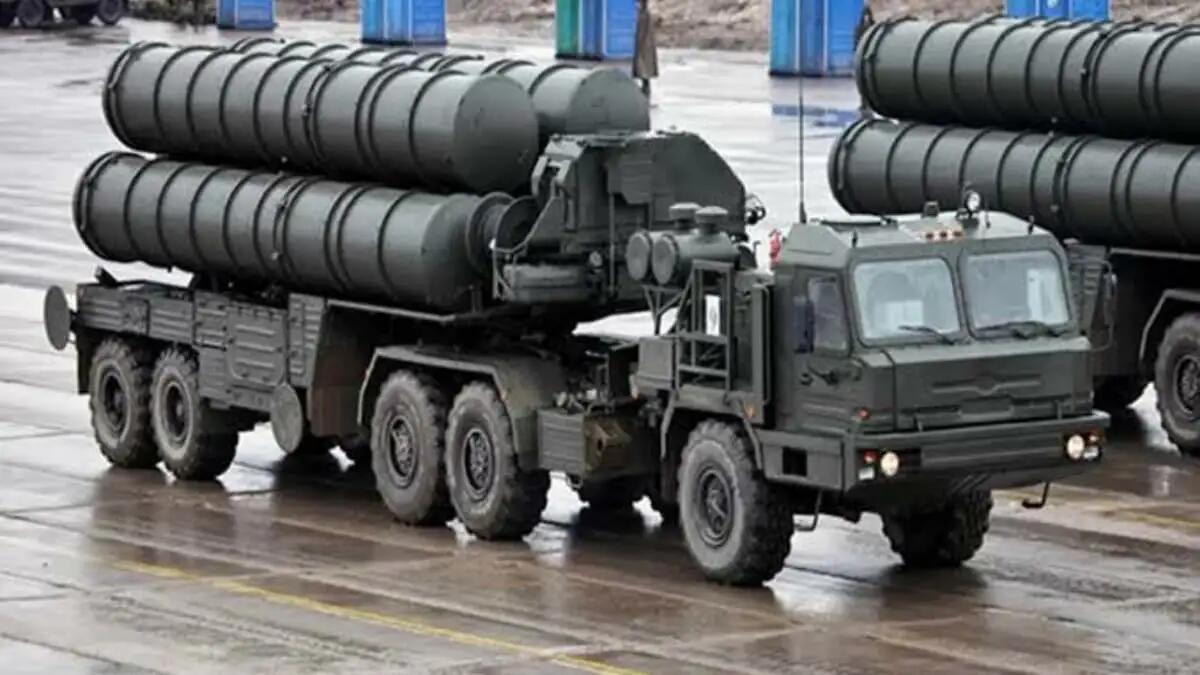
Moscow and New Delhi are currently negotiating the possibility of increasing deliveries of Russian S-400 surface-to-air missile systems to India, according to Russian state agency TASS. Dmitry Shugayev, head of Russia’s Federal Service for Military-Technical Cooperation, confirmed that discussions are ongoing. “India already has our S-400 system. There is potential to expand our cooperation in this area as well. That means new deliveries. For now, we are in the negotiation stage,” Shugayev said.
India had signed a $5.5 billion deal in 2018 for five squadrons of the S-400 Triumf long-range air defence system. Of these, three have been delivered and are operational, while the final two are expected by 2026 and 2027. The talks for further supplies highlight the growing importance of India-Russia defence cooperation despite global geopolitical shifts.
Operational Deployment and Effectiveness
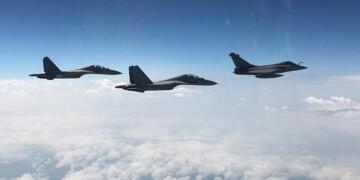
The Indian Air Force (IAF) currently operates three squadrons of the S-400, deployed strategically across sensitive sectors. According to Air Chief Marshal A.P. Singh, the system has already proved its effectiveness in live combat situations. During Operation Sindoor, conducted after the Pahalgam terror attack by Pakistan-backed groups, the S-400 successfully neutralised multiple Pakistani fighter jets and a large airborne platform operating deep inside Pakistan’s airspace.
The S-400, capable of engaging aerial threats at ranges of up to 380 km, offers India a robust shield against hostile aircraft, drones, and ballistic missiles. Air Chief Marshal Singh described the system as a “game changer,” confirming that it had achieved five confirmed kills during the operation. One of these was the downing of a large Pakistani aircraft, potentially an ELINT or AWACS platform, at a distance of nearly 300 km.
India-Russia Defence Ties Remain Strong
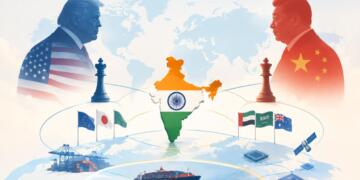
India’s acquisition of the S-400 has been a key marker of its enduring defence partnership with Russia. Despite pressure from the United States to scale down purchases of Russian equipment, New Delhi has maintained its independent stance. Russian Foreign Minister Sergei Lavrov recently underlined this point, stating that India did not bow to U.S. demands and that Moscow “appreciated” New Delhi’s position.
According to data from the Stockholm International Peace Research Institute (SIPRI), Russia accounted for 36% of India’s defence imports between 2020 and 2024, followed by France at 33% and Israel at 13%. The talks for expanding S-400 supplies indicate that Russia will continue to play a central role in India’s defence modernisation efforts, particularly in the domain of strategic air defence.
U.S. Pressure and India’s Independent Path
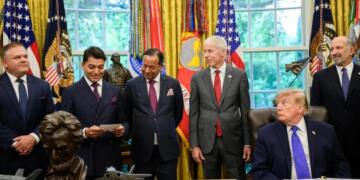
The negotiations come at a time when the U.S. has imposed sweeping 50% tariffs on Indian imports, citing New Delhi’s continued purchase of discounted Russian oil and arms. US President Donald Trump specifically linked half of these tariffs to India’s energy imports from Moscow, while also reiterating long-standing concerns over tariffs on American products such as Harley Davidson motorcycles.
Despite such pressure, India has remained firm in pursuing its defence requirements based on national interest. The effectiveness of the S-400 during live operations has demonstrated why these systems are critical for India’s security environment, particularly given the dual challenge from both Pakistan and China.
S-400 Strengthens India’s Defence Posture
The ongoing negotiations for additional S-400 deliveries mark another step in India’s efforts to enhance Sudarshan Chakra Mission, a multi-layered, modern air defence network. The system has already proven its combat worth by neutralising threats and deterring hostile actions across the western front.
India’s independent decision-making in defence procurement, despite external pressure, underscores its determination to prioritise national security over geopolitical alignments. With the remaining squadrons scheduled for delivery in 2026–27 and talks underway for fresh orders, the S-400 is set to remain at the heart of India’s air defence shield.
For India, the S-400 is not just a weapon system but a strategic asset ensuring that its skies remain secure, its adversaries deterred, and its sovereignty uncompromised.