












TFIPOST हिन्दी
TFIPOST Global
Tfipost.com
Tfipost.com
No Result
View All Result
  • Premium
  • Politics
    • All
    • Analysis
    • Opinions
    • Trending
    ‘Should Work Together, Pave Way for Peace’: Says PM Modi in Bilateral Talks with Putin

    ‘Should Work Together, Pave Way for Peace’: Says PM Modi in Bilateral Talks with Putin

    Indira Gandhi’s Alliance with the Communists Redefined Indian History Education

    Indira Gandhi’s Alliance with the Communists Redefined Indian History Education

    “Inspiration for millions”: PM Modi Presents Russian Edition of Bhagvad Gita as Gift to Putin

    “Inspiration for millions”: PM Modi Presents Russian Edition of Bhagvad Gita as Gift to Putin

    ‘Combat ready, Cohesive, Credible Force’: Indian Navy Reiterates Commitment to Motherland

    ‘Combat ready, Cohesive, Credible Force’: Indian Navy Reiterates Commitment to Motherland

    • Analysis
    • Opinions
    • Trending
  • Economy
    • All
    • Business
    • Economy1
    • Finance
    From Paper-Mandates to eNACH Registration: How Digital Mandates Are Changing Cash Flow

    From Paper-Mandates to eNACH Registration: How Digital Mandates Are Changing Cash Flow

    What is the financial management cycle?

    What is the financial management cycle?

    Smart Investment Planning: Calculating Mutual Fund SIP Growth Easily

    Smart Investment Planning: Calculating Mutual Fund SIP Growth Easily

    Convert ETH to USD Using Price Statistics for Better Trading Decisions

    Convert ETH to USD Using Price Statistics for Better Trading Decisions

    • Business
    • Finance
  • Defense
    • All
    • Defence
    • Strategy
    • Weaponry
    Veterans Deserve More Than Promises: The System Must Match the Soldier’s Sacrifice

    Veterans Deserve More Than Promises: The System Must Match the Soldier’s Sacrifice

    How Ukraine Uses Psychological and Information Warfare to ‘Win,’ and What India Can Learn From This Strategy

    How Ukraine ‘Wins’ the Psychological and Informatiaon War Despite Destruction — Lessons India Cannot Afford to Ignore

    Pakistan’s ‘ship-launched ASBM’ claim doesn’t withstand technical or industrial scrutiny

    Pakistan’s ‘ship-launched ASBM’ claim doesn’t withstand technical or industrial scrutinys

    Borders Can Change: Why Rajnath Singh’s Sindh Remark is India’s New Message to Pakistan

    Borders Can Change: Why Rajnath Singh’s Sindh Remark is India’s New Message to Pakistan

    • Defence
    • Strategy
    • Weaponry
  • Geopolitics
    • All
    • Africa
    • Americas
    • Asia Pacific
    • Europe
    • South Asia
    • West Asia
    ‘Should Work Together, Pave Way for Peace’: Says PM Modi in Bilateral Talks with Putin

    ‘Should Work Together, Pave Way for Peace’: Says PM Modi in Bilateral Talks with Putin

    Europe’s Slow Descent Into Weakness

    Europe: A Continent Happily Committing a Long-Drawn Suicide

    End of NATO? US Secretary of State Marco Rubio May Skip Foreign Ministers’ Meet in Brussels for First Time in Two Decades

    End of NATO? US Secretary of State Marco Rubio May Skip Foreign Ministers’ Meet in Brussels for First Time in Two Decades

    ‘Best Fighter In the World’ Dmitry Peskov Pitches For Sukhoi-57 Fighter Jet Ahead of Putin’s Visit to India

    ‘Best Fighter In the World’ Dmitry Peskov Pitches For Sukhoi-57 Fighter Jet Ahead of Putin’s Visit to India

    • Africa
    • Americas
    • Asia Pacific
    • Europe
    • South Asia
    • West Asia
  • Knowledge
    • All
    • Culture
    • Education
    • History
    • Indology
    Despite Nehru’s objection, Rajendra Prasad became India’s first President !

    How Nehru Resisted Dr. Rajendra Prasad—from Presidency to Somnath visit  and Beyond

    Talom Rukbo Initiated the Donyi–Polo Movement: Bringing Tribal Youth Back to Their Roots

    Talom Rukbo: The Forgotten Hero Who Shielded Arunachal’s Tribal Communities from Religious Conversion

    How Guru Tegh Bahadur The Ninth Sikh Guru Became a Martyr for Religious Freedom

    How Guru Tegh Bahadur The Ninth Sikh Guru Became a Martyr for Religious Freedom

    21 November 1962: Looking Back at the Indo-China war and How it Redefined the Border Equation

    21 November 1962: Looking Back at the Indo-China war and How it Redefined the Border Equation

    • Culture
    • History
    • Indology
  • Law
  • Lounge
    • All
    • Books
    • Cinema
    • Entertainment
    • Food
    • Games
    • Health
    • Lifestyle
    • Satire
    • Sports
    • technology
    • Travel
    감정을 가진 로봇의 시대가 오고 있다

    감정을 가진 로봇의 시대가 오고 있다

    Is AISaver Face Swap the Best Tool for Face Swap Video Online Free in 2025?

    Is AISaver Face Swap the Best Tool for Face Swap Video Online Free in 2025?

    Why Fat Analysis Matters in the Food and Feed  Industry?

    Why Fat Analysis Matters in the Food and Feed Industry?

    Heart Surgery Hospital in Delhi: What to Expect During Your Procedure

    Heart Surgery Hospital in Delhi: What to Expect During Your Procedure

    • Books
    • Cinema
    • Food
    • Health
    • Sports
    • technology
    • Travel
    • Satire
Tfipost.com
  • Premium
  • Politics
    • All
    • Analysis
    • Opinions
    • Trending
    ‘Should Work Together, Pave Way for Peace’: Says PM Modi in Bilateral Talks with Putin

    ‘Should Work Together, Pave Way for Peace’: Says PM Modi in Bilateral Talks with Putin

    Indira Gandhi’s Alliance with the Communists Redefined Indian History Education

    Indira Gandhi’s Alliance with the Communists Redefined Indian History Education

    “Inspiration for millions”: PM Modi Presents Russian Edition of Bhagvad Gita as Gift to Putin

    “Inspiration for millions”: PM Modi Presents Russian Edition of Bhagvad Gita as Gift to Putin

    ‘Combat ready, Cohesive, Credible Force’: Indian Navy Reiterates Commitment to Motherland

    ‘Combat ready, Cohesive, Credible Force’: Indian Navy Reiterates Commitment to Motherland

    • Analysis
    • Opinions
    • Trending
  • Economy
    • All
    • Business
    • Economy1
    • Finance
    From Paper-Mandates to eNACH Registration: How Digital Mandates Are Changing Cash Flow

    From Paper-Mandates to eNACH Registration: How Digital Mandates Are Changing Cash Flow

    What is the financial management cycle?

    What is the financial management cycle?

    Smart Investment Planning: Calculating Mutual Fund SIP Growth Easily

    Smart Investment Planning: Calculating Mutual Fund SIP Growth Easily

    Convert ETH to USD Using Price Statistics for Better Trading Decisions

    Convert ETH to USD Using Price Statistics for Better Trading Decisions

    • Business
    • Finance
  • Defense
    • All
    • Defence
    • Strategy
    • Weaponry
    Veterans Deserve More Than Promises: The System Must Match the Soldier’s Sacrifice

    Veterans Deserve More Than Promises: The System Must Match the Soldier’s Sacrifice

    How Ukraine Uses Psychological and Information Warfare to ‘Win,’ and What India Can Learn From This Strategy

    How Ukraine ‘Wins’ the Psychological and Informatiaon War Despite Destruction — Lessons India Cannot Afford to Ignore

    Pakistan’s ‘ship-launched ASBM’ claim doesn’t withstand technical or industrial scrutiny

    Pakistan’s ‘ship-launched ASBM’ claim doesn’t withstand technical or industrial scrutinys

    Borders Can Change: Why Rajnath Singh’s Sindh Remark is India’s New Message to Pakistan

    Borders Can Change: Why Rajnath Singh’s Sindh Remark is India’s New Message to Pakistan

    • Defence
    • Strategy
    • Weaponry
  • Geopolitics
    • All
    • Africa
    • Americas
    • Asia Pacific
    • Europe
    • South Asia
    • West Asia
    ‘Should Work Together, Pave Way for Peace’: Says PM Modi in Bilateral Talks with Putin

    ‘Should Work Together, Pave Way for Peace’: Says PM Modi in Bilateral Talks with Putin

    Europe’s Slow Descent Into Weakness

    Europe: A Continent Happily Committing a Long-Drawn Suicide

    End of NATO? US Secretary of State Marco Rubio May Skip Foreign Ministers’ Meet in Brussels for First Time in Two Decades

    End of NATO? US Secretary of State Marco Rubio May Skip Foreign Ministers’ Meet in Brussels for First Time in Two Decades

    ‘Best Fighter In the World’ Dmitry Peskov Pitches For Sukhoi-57 Fighter Jet Ahead of Putin’s Visit to India

    ‘Best Fighter In the World’ Dmitry Peskov Pitches For Sukhoi-57 Fighter Jet Ahead of Putin’s Visit to India

    • Africa
    • Americas
    • Asia Pacific
    • Europe
    • South Asia
    • West Asia
  • Knowledge
    • All
    • Culture
    • Education
    • History
    • Indology
    Despite Nehru’s objection, Rajendra Prasad became India’s first President !

    How Nehru Resisted Dr. Rajendra Prasad—from Presidency to Somnath visit  and Beyond

    Talom Rukbo Initiated the Donyi–Polo Movement: Bringing Tribal Youth Back to Their Roots

    Talom Rukbo: The Forgotten Hero Who Shielded Arunachal’s Tribal Communities from Religious Conversion

    How Guru Tegh Bahadur The Ninth Sikh Guru Became a Martyr for Religious Freedom

    How Guru Tegh Bahadur The Ninth Sikh Guru Became a Martyr for Religious Freedom

    21 November 1962: Looking Back at the Indo-China war and How it Redefined the Border Equation

    21 November 1962: Looking Back at the Indo-China war and How it Redefined the Border Equation

    • Culture
    • History
    • Indology
  • Law
  • Lounge
    • All
    • Books
    • Cinema
    • Entertainment
    • Food
    • Games
    • Health
    • Lifestyle
    • Satire
    • Sports
    • technology
    • Travel
    감정을 가진 로봇의 시대가 오고 있다

    감정을 가진 로봇의 시대가 오고 있다

    Is AISaver Face Swap the Best Tool for Face Swap Video Online Free in 2025?

    Is AISaver Face Swap the Best Tool for Face Swap Video Online Free in 2025?

    Why Fat Analysis Matters in the Food and Feed  Industry?

    Why Fat Analysis Matters in the Food and Feed Industry?

    Heart Surgery Hospital in Delhi: What to Expect During Your Procedure

    Heart Surgery Hospital in Delhi: What to Expect During Your Procedure

    • Books
    • Cinema
    • Food
    • Health
    • Sports
    • technology
    • Travel
    • Satire
No Result
View All Result
Tfipost.com
Tfipost.com
No Result
View All Result
  • Premium
  • Politics
  • Economy
  • Defense
  • Geopolitics
  • Knowledge
  • Law
  • Lounge

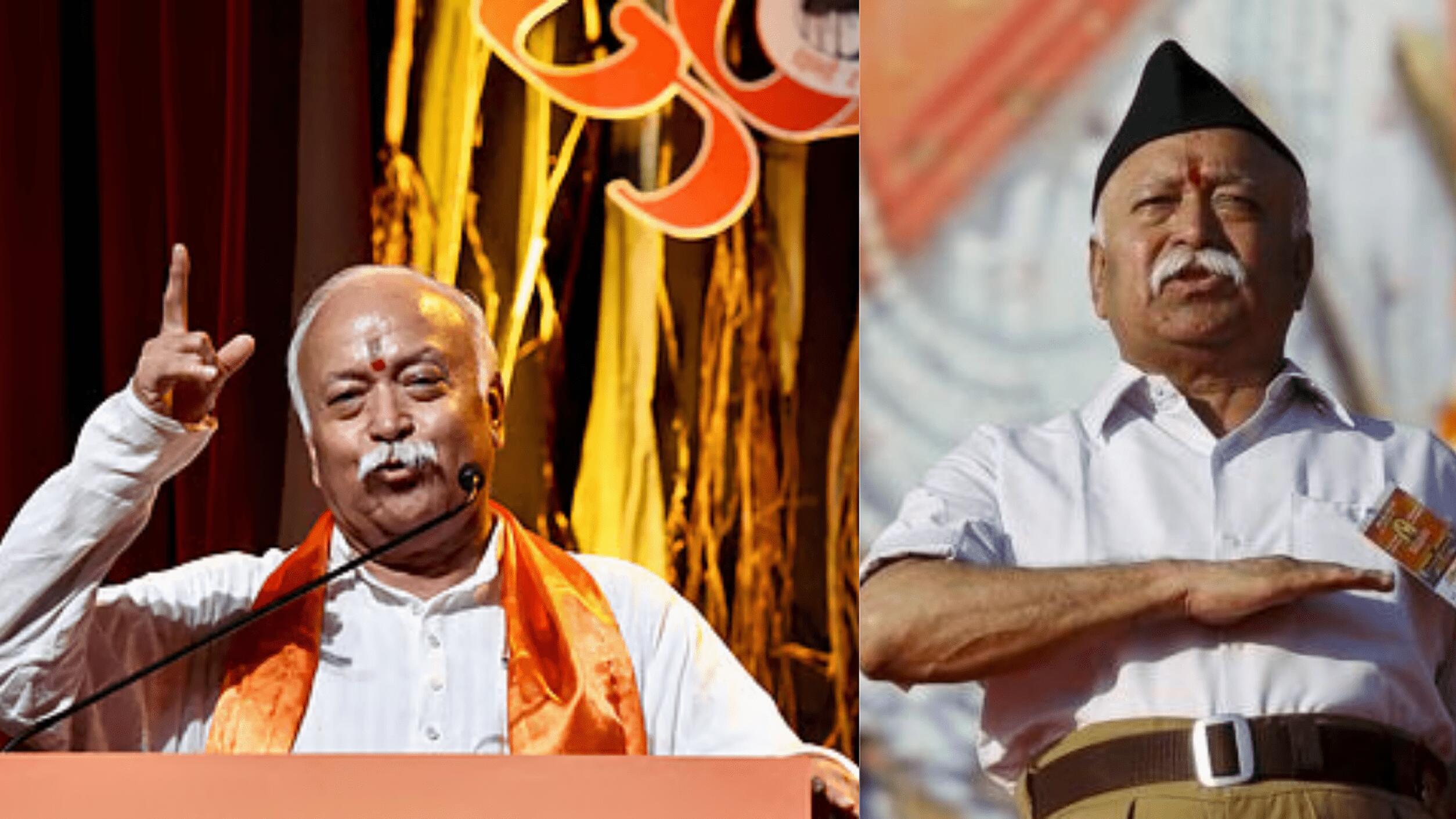
Mohan Bhagwat: The Civilizational Voice at 75

As Mohan Bhagwat turns 75, his leadership calls for critical engagement rather than passive acceptance or rejection

Prof Vivek Misra by Prof Vivek Misra
11 September 2025
in Analysis
RSS Chief Mohan Bhagwat Turns 75

RSS Chief Mohan Bhagwat Turns 75

Share on FacebookShare on X

Shri Mohan Bhagwat, the sixth Sarsanghchalak of the Rashtriya Swayamsevak Sangh (RSS), turns 75 on September 11, 2025. Such a milestone invites reflection from scholars, political observers, and society at large. Bhagwat’s journey represents more than the rise of a dedicated swayamsevak within a cadre-based organisation; it is the story of a thought leader who has shaped discourses on national integration, Indian culture, and civilisational values.

In an era marked by globalisation, technological disruption, identity politics, and social realignments, Bhagwat’s leadership blends rooted tradition with reformist impulse. His interventions have often transcended the organisational boundaries of the RSS, engaging broader questions about India’s trajectory in the 21st century. His leadership is multidimensional—historical, ideological, social, and cultural and therefore demands critical attention from youth, academics, and policymakers alike.

RelatedPosts

Eknath Ranade: The Man Who Turned an Impossible Rock Into a National Monument

Punjab on Edge: RSS Leader’s Son Murdered, Khalistani Group Claims Attack, Where Is Law and Order?

RSS-Led Mission Trishul: The Silent Machinery Behind NDA’s Landslide Victory in Bihar

Load More

Rise of a Pracharak

Mohan Madhukar Bhagwat was born on September 11, 1950, in Chandrapur, Maharashtra, into a family with close ties to the RSS. His father, Madhukar Rao Bhagwat, served as a pracharak, which deeply influenced his early exposure to the ethos of discipline, service, and cultural nationalism.

Though he studied veterinary sciences at Nagpur Veterinary College, Bhagwat abandoned his academic career during the Emergency of 1975 to dedicate himself fully to organisational work. This decision reflected a profound conviction in the RSS mission.

From the 1980s onwards, Bhagwat steadily rose through the ranks, serving as Akhil Bharatiya Sharirik Pramukh (head of physical training) and later as Akhil Bharatiya Pracharak Pramukh (head of full-time workers). On March 21, 2009, he was appointed the sixth Sarsanghchalak, succeeding K. S. Sudarshan.

Mohan Bhagwat inherited an organisation already established as one of India’s most influential socio-cultural forces. His leadership has balanced continuity and change. The continuity is evident in his emphasis on discipline (anushasan), volunteerism (seva), and cultural rootedness (sanskriti), principles defined by Dr. K. B. Hedgewar in 1925. The change is visible in his efforts to modernise outreach, embrace digital platforms, engage diverse communities, and address contemporary social issues.

Social Harmony and Equality

Mohan Bhagwat has repeatedly stressed upon the centrality of social harmony. Recently, his three day discourse to mark the centenary celebrations of RSS, “Vyakhyanmala: 100 Years of Sangh Journey, New Horizons”, at Vigyan Bhawan, New Delhi, organised between 26 to 28 August 2025, Bhagwat emphasised that the RSS is not merely a political force, but a cultural and social organisation whose primary mission is nation-building through the transformation of individuals. He underlined that the foremost value upheld by the Sangh is the cultivation of human character, which, in turn, shapes the collective behaviour of society. For the Sangh, social transformation is seen as a gradual but deeply rooted process, beginning with the personal discipline, moral strength, and selflessness of the swayamsevak. According to Bhagwat, the vision of the RSS is to create a society bound by harmony, shared values, and a sense of responsibility towards the nation.

In his Vijayadashami address of October 2024, he declared: “The first condition for a healthy and able society is social harmony and mutual goodwill among different sections of society… all sections should understand the needs of weaker sections which arise from the circumstances they face.” He has consistently emphasised the eradication of caste-based discrimination. At his 2014 Vijayadashami speech, he stated: “There is an urgent need to eradicate social discrimination in our society in a bigger and faster way. Citizens must come forward to abstain, forbid, and reject all practices that weaken the social fabric. Society must reject all forms of untouchability and inequality.” This vision of samajik samrasta (social harmony) positions Indian society as an organic unity. For the youth, who increasingly reject rigid identities and demand inclusivity, Bhagwat’s emphasis represents a reformist intervention. He has also supported inter-caste marriages as a means to foster equality, pointing out that a significant number of swayamsevaks themselves have embraced such unions. In the same 2014 address, he said that India to evolve a new development model, rooted in dharmic civilisational values yet adapted to modern needs. This demonstrates that the RSS is not against change but seeks transformation aligned with enduring principles.

At the Vyakhyanmala of 2025, Bhagwat also addressed the often-discussed relationship between the RSS and the BJP. While acknowledging that the BJP has emerged as the political wing inspired by the ideals of the Sangh, he clarified that the RSS does not function as a political party itself. Instead, it seeks to work in the social and cultural spheres, influencing political directions only indirectly by shaping the broader ethos of society. In his words, politics is one dimension of national life, but the Sangh’s responsibility extends to every aspect of human development education, culture, economy, and moral values. Thus, while the RSS and the BJP share ideological roots, their operational domains remain distinct.

The Debate on Hindutva

At the Vyakhyanmala of 2025, Bhagwat also reiterated the long-standing conviction of the Sangh that India is fundamentally a Hindu nation. He emphasised that the term “Hindu” should not be understood in a narrow, religious sense, but as a cultural identity encompassing the civilisational ethos of the land. The philosophy behind this idea, as outlined by him, is rooted in inclusivity, harmony, and the recognition of diversity within unity. For Bhagwat, the word “Hindustan” represents not only a geographical territory but also a civilisational space where pluralism, spiritual pursuit, and collective well-being have historically flourished.

By framing the identity of India as a Hindu nation, Mohan Bhagwat sought to highlight the cultural continuity and civilisational depth of the country. At the same time, he argued that this identity is not exclusionary but seeks to affirm the essential values of coexistence and mutual respect. For the Sangh, nationhood is a matter of shared values and cultural belonging rather than rigid political boundaries. Bhagwat’s commitment to Hindutva has drawn both support and criticism. While critics argue that it risks marginalising minorities, Bhagwat has clarified that Hindu Rashtra does not exclude any community. He insists it does not mean a theocracy but rather a civilisational identity grounded in pluralism and harmony.

Earlier in his 2016 Vijayadashami address at Nagpur, he explained: “Hindutva is the identity of this nation. It is not a word of conflict; it is a word of unity. It binds us in diversity and connects us to our eternal ethos.” For Bhagwat, Hindutva is not a sectarian identity but the cultural DNA of the Indian subcontinent, embracing diversity while affirming unity. For students of political science, this interpretation shifts the debate from narrow identity politics to civilisational belonging. Engaging critically with his ideas allows youth to explore Indian thought beyond Western binaries of liberal vs. conservative or secular vs. religious.

Rashtra Dharma and Globalisation

In an age of consumerism and hyper-individualism, Mohan Bhagwat reasserts Rashtra Dharma the principle that duties to the nation precede personal privileges. His call for selfless service, ethical governance, and national pride provides a moral compass for a generation facing rapid change. He has also addressed the challenges of globalisation. In his 2018 lecture at Vigyan Bhavan, “Future of Bharat: An RSS Perspective”, he argued: “Globalisation is inevitable. But Bharat must globalise from its own strength. We should not lose ourselves in imitation; instead, we must contribute to the world with our values of harmony and sustainability.” This vision emphasises aatmanirbhar bharta (self-reliance) and civilisational confidence as prerequisites for engaging with the world.

Appeal to the Youth

Mohan Bhagwat has consistently highlighted the central role of the younger generation. At the preparatory meeting for the RSS centenary celebrations (2024, Nagpur), he declared: “The future of Bharat rests on its youth. They must imbibe discipline, serve society selflessly, and carry forward our civilisation with confidence and compassion.” For students, this underscores that leadership is not limited to politics but extends to building character, vision, and social responsibility.

The Significance of 75

As the RSS moves into its centenary celebrations, Mohan Bhagwat’s articulation of its core values and vision underscores its long-term objective: to transform society from the ground up by shaping individuals, and thereby building a nation that remains rooted in its civilisational heritage while adapting to modern horizons. But it is not necessary to agree with every idea Mohan Bhagwat proposes. Yet dismissing them without understanding undermines critical inquiry. For students and research scholars, engaging with his ideas is essential for grasping one of the most influential ideological currents in modern India. A rational reading of Bhagwat requires contextual awareness and intellectual openness. By doing so, India’s youth can rise above dogma and embrace an informed, ethical nationalism—rooted in history, responsive to the present, and responsible for the future.

As Mohan Bhagwat turns 75, his leadership calls for critical engagement rather than passive acceptance or rejection. Whether one agrees with him or not, his reflections on national identity, social harmony, and cultural confidence have deeply influenced contemporary India. For scholars, he offers a case study in how traditional organisations adapt to modernity. For policymakers, he highlights civil society’s role in nation-building. For the youth, he provides both inspiration and challenge: to reflect on who they are, where they belong, and how they can serve society. In the end, Bhagwat’s message rests on a simple yet powerful truth: India’s strength lies not in imitation but in sharing its own civilisational wisdom with the world.
Tags: 75th BirthdayCivilizational VoiceHindutvaMohan BhagwatRashtriya Swayamsevak SanghrssSarsanghchalak
ShareTweetSend
Previous Post

Level Up in Online Casinos 2025: Strategy, Progression, and Real Rewards

Next Post

Not What’s App Indian Army Used M-Sigma In SAMBHAV Smartphone During Op-Sindoor, A Digital Shield for Secure Communication

Related Posts

How Ukraine Uses Psychological and Information Warfare to ‘Win,’ and What India Can Learn From This Strategy
Analysis

How Ukraine ‘Wins’ the Psychological and Informatiaon War Despite Destruction — Lessons India Cannot Afford to Ignore

29 November 2025

From the very beginning, the Ukraine crisis was sold not as a standalone local conflict, but as part of...

Kerala: How Anti-Hindu play Veeranattyam won Malappuram Youth Festival, and why it has sparked debate on selective freedom of expression?
Analysis

Kerala: How Anti-Hindu play Veeranattyam won Malappuram Youth Festival, and why it has sparked debate on selective freedom of expression?

26 November 2025

A fresh controversy has engulfed Kerala’s cultural and educational landscape after the play Veeranattyam widely criticised as anti-Hindu secured...

Revisiting the Constitutional Spirit: Language, Identity and the Framers’ Vision
Analysis

Revisiting the Constitutional Spirit: Language, Identity and the Framers’ Vision

26 November 2025

The incorporation of the Devanagari script and the acknowledgement of Sanskrit’s civilizational significance were subjects of thoughtful deliberation in...

Load More

Leave a Reply Cancel reply

Your email address will not be published. Required fields are marked *

I agree to the Terms of use and Privacy Policy.
This site is protected by reCAPTCHA and the Google Privacy Policy and Terms of Service apply.

Currently Playing

A War Won From Above: The Air Campaign That Changed South Asia Forever

A War Won From Above: The Air Campaign That Changed South Asia Forever

00:07:37

‘Mad Dog’ The EX CIA Who Took Down Pakistan’s A.Q. Khan Nuclear Mafia Reveals Shocking Details

00:06:59

Dhurandar: When a Film’s Reality Shakes the Left’s Comfortable Myths

00:06:56

Tejas Under Fire — The Truth Behind the Crash, the Propaganda, and the Facts

00:07:45

Why Rahul Gandhi’s US Outreach Directs to a Web of Shadow Controversial Islamist Networks?

00:08:04
Facebook Twitter Instagram Youtube
tfipostTfipost.com
Right Wing | News Analysis | Indian Opinion
  • About us
  • Contact Us
  • Careers
  • Brand Partnerships
  • Terms of use
  • Privacy Policy
  • Sitemap

©2025 TFI Media Private Limited

No Result
View All Result
  • Premium
  • Politics
    • Analysis
    • Opinions
    • Trending
  • Economy
    • Business
    • Finance
  • Defense
    • Defence
    • Strategy
    • Weaponry
  • Geopolitics
    • Africa
    • Americas
    • Asia Pacific
    • Europe
    • South Asia
    • West Asia
  • Knowledge
    • Culture
    • History
    • Indology
  • Law
  • Lounge
    • Books
    • Cinema
    • Food
    • Health
    • Sports
    • technology
    • Travel
    • Satire
TFIPOST हिन्दी
TFIPOST Global

©2025 TFI Media Private Limited