




















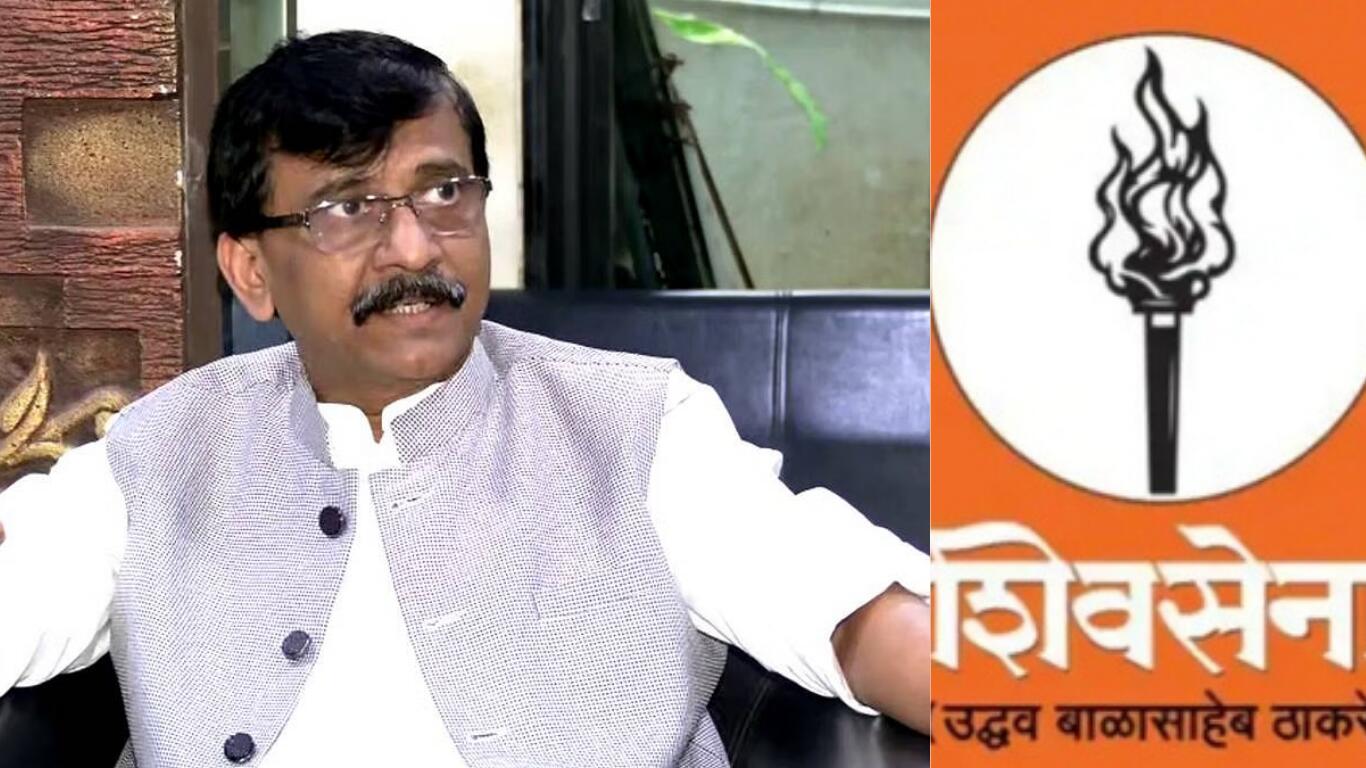
In a shocking and deeply irresponsible statement, Shiv Sena (UBT) MP Sanjay Raut has claimed that the root cause of terrorism lies in poverty, unemployment, and lack of education. Addressing the media, Raut said, “Why do people turn to terrorism? Because they lack livelihood, employment, and education. That’s the reason Naxalism grew.” This astounding justification of terrorism not only insults the memory of innocent victims of terror attacks like 26/11 but also raises serious questions about the political morality of leaders like Raut who choose to rationalize mass murder through socio-economic excuses. Was Ajmal Kasab a terrorist because he missed lunch? Was Osama bin Laden blowing up buildings because he couldn’t find a job? This absurd logic not only trivializes terrorism but dangerously legitimizes it.
Twisting Terror for Political Mileage
Sanjay Raut’s remarks are not just insensitive, they are politically motivated. At a time when India is fighting both cross-border terrorism and homegrown extremism, making such statements weakens national resolve and plays straight into the hands of anti-India forces. Raut attempted to paint terrorism and Naxalism as socio-economic outcomes devoid of ideological or religious influence. He claimed, “Terrorism is terrorism, it is neither green, saffron, nor red.” While at surface this sounds like an attempt to depoliticize terrorism, the actual effect is the exact opposite: it whitewashes Islamist terrorism, Naxalite violence, and other ideologically-driven acts by blaming systemic poverty instead.
This rhetorical stunt might appeal to the Congress and Left-leaning vote banks, but it dangerously undermines the moral and national clarity needed to confront terrorism. India has not forgotten how the 26/11 Mumbai attacks were planned and executed by trained Pakistani terrorists with clear ideological motives. Nor can we forget the brutality of Naxals who target Indian security forces, not for food or jobs, but as part of a violent Maoist agenda.
From Balasaheb’s Nationalism to Uddhav’s Appeasement Politics
It is deeply unfortunate that a party once built on nationalist ideals by Balasaheb Thackeray has fallen to such depths under Uddhav Thackeray’s leadership. Shiv Sena, once a symbol of Hindu pride and fierce nationalism, is now parroting the same narratives as Congress and the Left. After Balasaheb’s demise, Uddhav Thackeray chose political expediency over ideology by joining hands with Congress and NCP to form a government in Maharashtra. Since then, Shiv Sena (UBT) has not only abandoned its core base but also diluted its nationalist stance.
Sanjay Raut, a key face of Uddhav’s faction, has become the mouthpiece for this ideological decay. His attempt to find excuses for terrorism reflects the party’s desperation to remain politically relevant by adopting a pseudo-liberal, anti-establishment posture. But in doing so, they are not just compromising on values; they are actively harming India’s internal security narrative.
Habitual Offender: Raut’s Attack on Operation Sindoor
This is not the first time Sanjay Raut has crossed the line. Just weeks earlier on May 27, he stirred another controversy by declaring India’s cross-border counterterrorism mission, Operation Sindoor, a “failure.” Launched in response to the killing of 26 civilians in Pahalgam, the operation targeted terror launchpads in Pakistan and PoK. While details of the strike remain classified, multiple reports indicate heavy damage to terror infrastructure.
However, Raut dismissed it without evidence, saying, “Operation Sindoor was a failure. In the interest of the nation, the opposition doesn’t want to talk much about it.” He went further and demanded Union Home Minister Amit Shah’s resignation, claiming he should be removed from the Cabinet as “penance.” These statements didn’t just undermine the morale of the Indian armed forces and security agencies; they provided rhetorical ammunition to Pakistan and its sympathizers.
This pattern of behavior makes it clear that Sanjay Raut is not merely expressing dissent but is actively sabotaging national unity for petty political gain.
Dangerous Normalization of Terrorism Must Be Condemned
Sanjay Raut’s repeated attempts to rationalize terrorism, question India’s military operations, and shift blame from ideologies to poverty, are not just political blunders—they are national threats. If leaders begin justifying terror acts by pointing fingers at economic conditions, where does one draw the line? Should we justify every violent act as a result of hunger or unemployment? Such views open dangerous doors for extremist justification and weaken the collective national fight against terrorism.
The Shiv Sena (UBT) under Uddhav Thackeray must answer how a party founded on uncompromising nationalism has transformed into an outfit that now indulges in ideological apologism and terror justification. As a democracy, India values dissent and free speech, but not at the cost of national security and the dignity of terror victims. Sanjay Raut owes the nation an apology. And if the Shiv Sena (UBT) has even a shred of Balasaheb Thackeray’s legacy left, it should publicly distance itself from such disgraceful statements and return to its nationalist roots.