

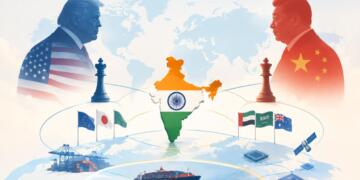

















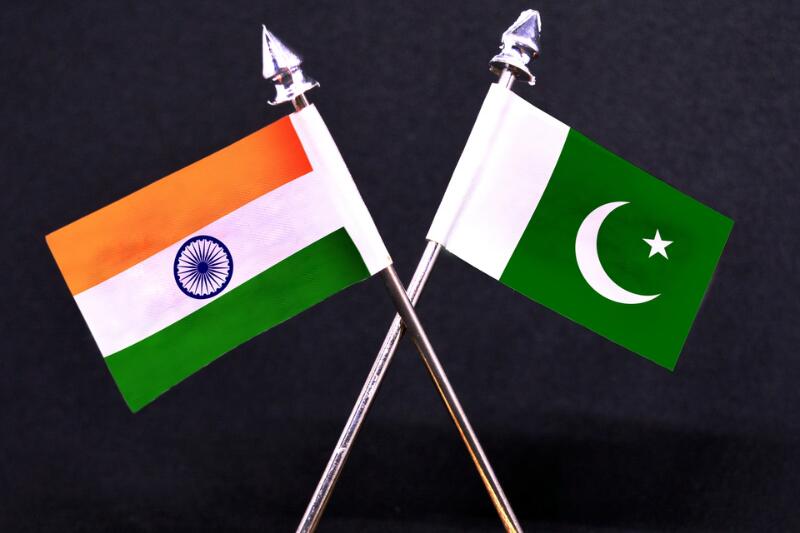
Western powers sustain Pakistan through IMF and aid, not for stability, but to hinder India’s rise. Similar tactics have targeted other nations for strategic sabotage. Yet, the West’s growing dependence on India’s technology, imports, and skilled manpower risks backfiring, creating vulnerabilities that could undermine its own long-term geopolitical and economic security.
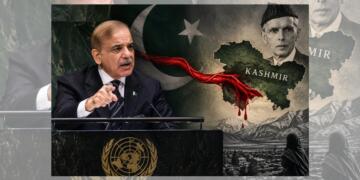
The International Monetary Fund’s continued support for Pakistan, despite its chronic fiscal mismanagement, structural corruption, and militant extremism, is not just an act of economic charity. It is part of a long-term geopolitical strategy to keep Pakistan afloat as a counterweight to India’s rise. Western powers — especially the U.S. and some EU states — view India’s growing economic and strategic clout as a challenge to their own influence in the Global South. A bankrupt and imploded Pakistan would remove a key tool from the Western geopolitical toolbox — a hostile nuclear-armed neighbor that can be leveraged to keep India strategically distracted and regionally contained. This sustained financial lifeline ensures Pakistan never collapses outright, yet also never reforms to become truly stable or self-reliant, maintaining it in a perpetual state of dependence and volatility.
The IMF’s repeated bailouts to Pakistan, often under terms far softer than applied to other debtor nations, are not coincidental. By providing just enough liquidity to avert default, these packages allow Pakistan to keep funding its military, intelligence apparatus, and proxy networks — many of which are focused on India. This creates a constant low-intensity pressure on India’s western front, forcing New Delhi to allocate resources toward defense and counter-terrorism rather than entirely toward economic expansion or global influence. This arrangement benefits Western powers by preventing India from emerging as a fully independent, uncontested pole in the multipolar order.
Weaponizing Aid: The Historical Precedent
The use of economic aid to sustain strategically useful but unstable states is not unique to Pakistan. During the Cold War, the United States poured billions into Egypt after the Camp David Accords, not only to maintain peace with Israel but to keep Egypt within the Western sphere of influence, despite its governance challenges. Similarly, Zaire under Mobutu Sese Seko received vast sums of Western aid for decades, even as it descended into kleptocracy and economic ruin, simply because it was considered a bulwark against Soviet influence in Central Africa.
Pakistan fits squarely into this pattern against India, with the IMF as a modern instrument of strategic sustainment rather than neutral financial reform.
Sustaining a State for Sabotage
Keeping Pakistan economically alive but internally dysfunctional allows it to serve as a regional spoiler. A failed Pakistan could trigger uncontrolled nuclear proliferation, mass refugee flows, and extremist spillover — all risks that might destabilize allies like the Gulf monarchies or even Europe. But a semi-functional Pakistan, dependent on Western-backed loans, remains a controlled source of instability aimed primarily at India.
The West has used similar tactics elsewhere. For instance, during the 1980s, the U.S. indirectly sustained the Afghan mujahideen against the Soviets, knowing full well that empowering such militant actors could later destabilize neighboring regions. More recently, elements of Western policy toward Ukraine before 2022 involved calculated economic support without decisive resolution, ensuring the country remained a thorn in Russia’s side without fully integrating it into NATO or the EU. These examples show that sustaining a state in a fragile equilibrium can be a deliberate act of long-term sabotage toward a rival power.
The West’s Strategic Dependence on India
Ironically, while the West works to contain India geopolitically through Pakistan, it has become increasingly dependent on India in critical areas. India is now a top supplier of skilled IT professionals, pharmaceutical products, space technology components, and precision engineering. The U.S., UK, Germany, and France rely heavily on Indian engineers, doctors, and scientists — not only for cost advantages but also for the sheer scale of skilled manpower that their own demographics cannot supply.
This dependence extends to trade. India’s exports of generic medicines account for more than 20% of the global supply, directly affecting healthcare affordability in the West. Its IT services power the back-end systems of many Fortune 500 companies. Even NASA and the European Space Agency have procured components or collaborated with ISRO for mission-critical work. As Western economies age and their domestic technical workforces shrink, India’s role will become even more indispensable.
The Containment–Dependence Paradox
Here lies a paradox: Western powers are trying to slow India’s strategic rise via Pakistan, yet they cannot afford a hostile or disengaged India. Cutting off Pakistan would remove a convenient pressure point, potentially allowing India to reallocate resources toward economic and technological dominance. But openly supporting India without balancing mechanisms would risk creating a peer competitor to Western power — something historically avoided in global politics.
This paradox resembles the U.S.–China dynamic of the late 20th century. Washington encouraged Chinese manufacturing growth to counterbalance the Soviet Union, only to find itself economically dependent on Beijing decades later. If the West continues to undermine India while simultaneously depending on it for skilled manpower, technology, and imports, it risks creating a scenario where India gains leverage over Western economies without needing to confront them militarily.
Pakistan as a Double-Edged Sword
Sustaining Pakistan may seem useful in the short term for containing India, but the strategy carries inherent risks for the West itself. Pakistan’s military-intelligence complex has a long record of duplicity, maintaining ties with militant groups while taking Western counter-terrorism funds. The 9/11 attacks, carried out by actors sheltered and trained in regions influenced by Pakistan, proved how such proxies can spiral out of control. Continued economic lifelines to Pakistan could inadvertently strengthen anti-Western jihadist networks, making the West a secondary target.
Moreover, Pakistan’s growing closeness with China through the China–Pakistan Economic Corridor (CPEC) means that any Western aid indirectly benefits Beijing’s Belt and Road ambitions. In effect, the IMF may be helping finance infrastructure that enhances China’s strategic access to the Arabian Sea, undermining Western maritime leverage.
Historical Blowback of Proxy Dependence
History is full of examples where a proxy used to sabotage an adversary turned into a long-term liability. The U.S. sustained Saddam Hussein’s Iraq during the Iran–Iraq War in the 1980s, only to confront him as an enemy a decade later. The Taliban, nurtured indirectly during the Soviet–Afghan war, eventually hosted al-Qaeda, triggering the U.S.’s longest military engagement.
If Pakistan’s economy collapses despite IMF support, Western states could face severe refugee inflows, nuclear security concerns, and terrorist threats emanating from the same forces they indirectly helped sustain. If Pakistan thrives under China’s wing instead, the West will have effectively financed the strengthening of a Sino-Islamist axis hostile to its own interests.
The Strategic Crossroads
India’s rise is inevitable in demographic, economic, and technological terms. Whether it emerges as a cooperative partner or a reluctant rival to the West will depend largely on how these containment strategies are perceived in New Delhi. Continued IMF bailouts to Pakistan are read in India not as humanitarian gestures but as deliberate attempts to fund a hostile neighbor.
If Western powers recalibrate and shift from containment to genuine partnership, they could leverage India’s growth to reinforce a stable multipolar order. But if they persist in sustaining Pakistan as a tool of sabotage, they risk alienating a nation whose technological, economic, and demographic strengths they increasingly rely upon. In the long run, this could weaken not only India’s trust but also the West’s own strategic position — repeating the cycle of short-term tactical gain leading to long-term strategic loss.
Conclusion
In the long run, such tactics are losing their sting against India. Rooted in a strong civilisational identity, supported by a growing global network of partners, and bolstered by the West’s deep dependence on its markets, technology, and skilled manpower, India’s position is increasingly resilient—often providing the very lifelines essential for the West’s own survival.