























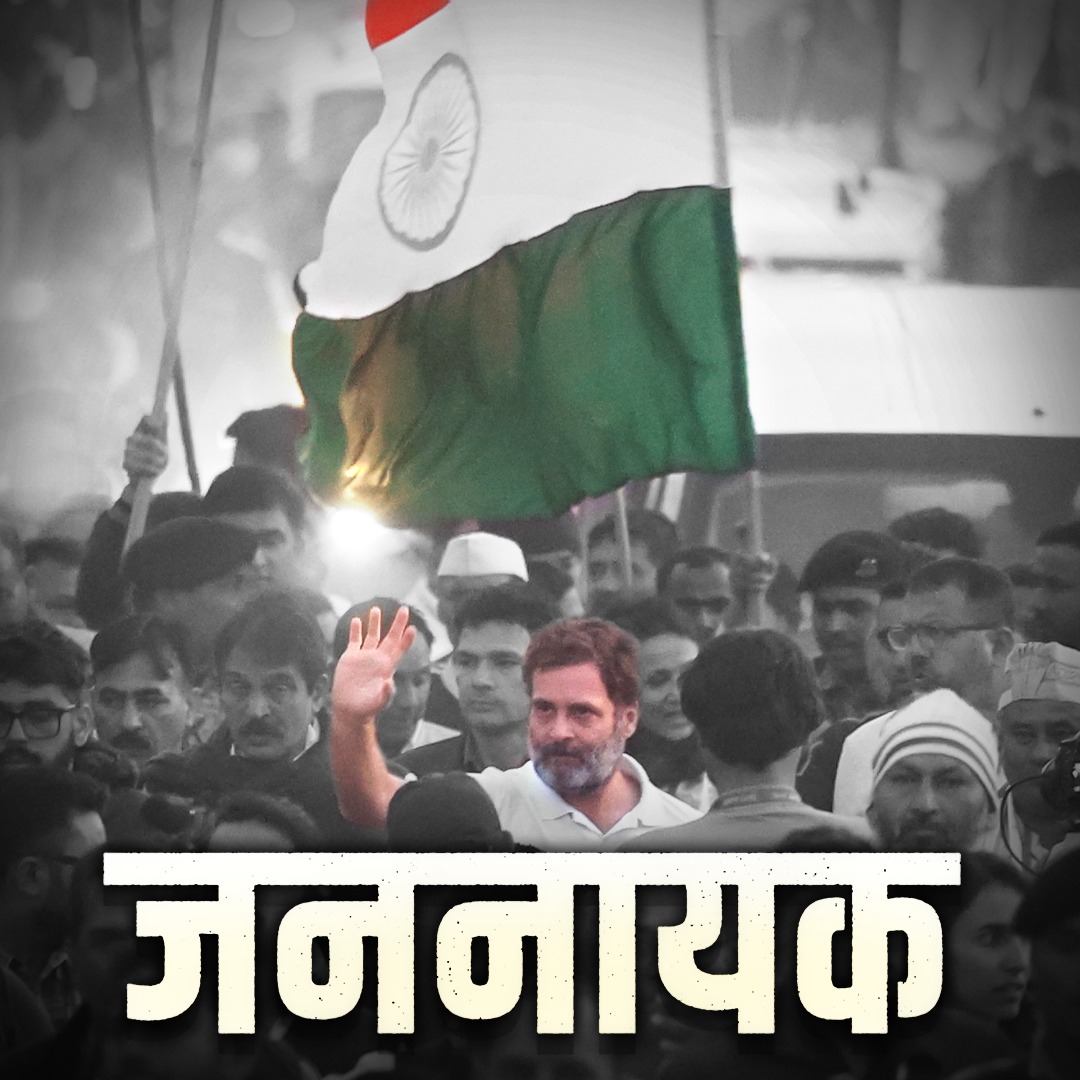
The official Congress Twitter handle uploaded an image connected to Rahul Gandhi’s Vote Adhikar Yatra in Bihar, where the saffron band of the national flag appeared to be cropped out. The omission has sparked criticism from across the political spectrum, with BJP IT Cell Head Amit Malviya calling it a deliberate act of “strategically erasing saffron” and equating Congress with the Muslim League.
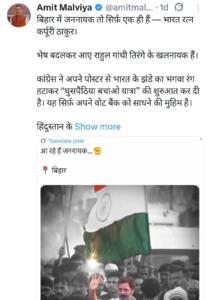
These optics are deeply problematic on so many different levels.
Disrespect to the National Flag
The Tiranga is not just a piece of cloth, it is a living symbol of India’s identity, protected under the Constitution and the Flag Code of India. Each colour carries a profound meaning: saffron for courage and sacrifice, white for truth and peace, and green for growth and faith. By cropping out saffron, the Congress has not only tampered with the flag’s integrity but also appeared to erase the value of courage and sacrifice, which resonates deeply with India’s historical struggles.
Political parties often lean on national symbols to underline their inclusivity. But the selective portrayal of the Tiranga with green and white prominently visible while saffron is missing cannot be brushed off as neutral. It carries unmistakable undertones of partisan representation, suggesting a tilt towards communal colour politics. In India’s highly symbolic political landscape, such choices are rarely seen as accidental.
Vote-Bank Appeasement Politics
For decades, Congress has been accused of minority appeasement. The visual of a saffron-less flag only reinforces the narrative that the party prioritises pandering to specific religious blocs over embracing national inclusivity. Green, commonly associated with Islamic identity in political symbolism, when presented without saffron, risks being read as a signal to Muslim voters, a calculated message designed to shore up support in communities where the Congress has been losing ground.
The parallels drawn by Amit Malviya with the Muslim League may sound harsh, but they are politically potent. The League’s pre-Independence strategy was rooted in religious separatism, emphasising green over saffron. By presenting a national flag that sidelines saffron, Congress has inadvertently allowed comparisons to surface, inviting criticism that it is drifting back to a brand of divisive, identity-based politics reminiscent of that era.
Congress has long positioned itself as the torchbearer of secularism. But secularism is about equal respect for all faiths, not selective appeasement. Altering the Tiranga’s composition undercuts that very principle. It projects a party that is no longer inclusive but increasingly driven by sectarian calculations.
Impact on National Unity
At a time when the country needs unifying symbols, tinkering with the Tiranga fractures more than it binds. The national flag stands above caste, creed, and religion; it represents all Indians equally. By cropping it in such a way, Congress risks alienating a large section of citizens, particularly Hindus who may feel their identity is being threated in the political discourse.
The controversy may harden existing distrust between the Congress and the majority community. In an era of hyper-visual politics, a single image has the power to frame narratives for weeks, if not months. For a party already struggling with an image of minority appeasement, this incident could deepen the perception that Congress is out of touch with the sentiments of the wider electorate.
In India, the Tiranga belongs to no political party. Any attempt to manipulate it for partisan messaging is bound to backfire. By allowing such an avoidable controversy, Congress may have inadvertently signaled precisely the kind of politics it claims to stand against.