





















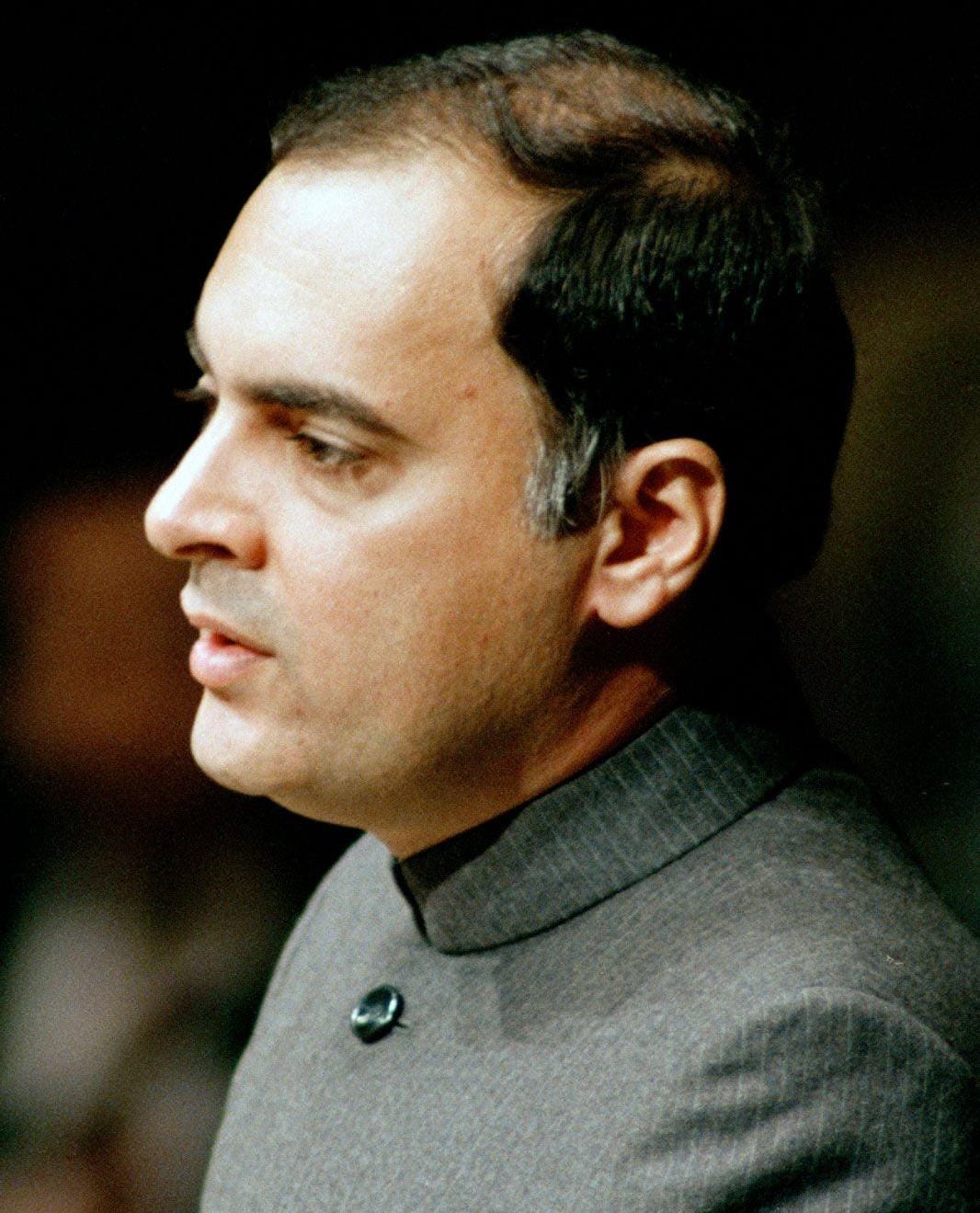
Dropping a bombshell that revives uncomfortable truths, BJP MP Nishikant Dubey has reignited political tremors by accusing former Prime Minister Rajiv Gandhi’s Prime Minister’s Office (PMO) of being a ‘den of foreign spies’ in the mid-1980s. The allegations, posted on social media platform X, have sparked renewed tensions between the BJP and Congress, and could potentially set the tone for a fresh ideological face-off ahead of upcoming political battles.
Dubey’s claims aren’t subtle, he squarely states that the 1985 PMO under Rajiv Gandhi was compromised, with 17 officers and staff members later convicted of espionage. He further alleged that the then Principal Secretary to the PM, P.C. Alexander, was forced to resign following explosive revelations made by a middleman named Kumar Narayan, allegedly caught in connection with a defense deal.
‘When the arms dealer Kumar Narayan was caught, the entire structure of deception began to crumble. The Prime Minister’s Office was exposed as a hotspot of foreign interference. Even the PM’s Principal Secretary had to quit. Seventeen were jailed for espionage,’ Dubey wrote in his post.
A Deep Rot in the PMO?
Dubey’s commentary reads more like a charge sheet than a casual political jab. By highlighting alleged infiltration of India’s highest executive office, he’s raised serious questions about Congress’s historical ties to foreign interests, a theme the BJP has long sought to amplify, particularly in nationalist circles.
‘What does it say about Congress,’ Dubey asked rhetorically, ‘when its very nerve center, the PMO, was infiltrated so deeply that convictions followed? Were we ever truly sovereign under their rule or merely proxies under foreign influence?’
Congress Under Renewed Fire
This isn’t the first time the outspoken BJP leader has targeted the Gandhis. Just last week, Dubey invoked Wikileaks cables to allege that Rajiv Gandhi played middleman in a 1970s fighter jet deal. In the same breath, he accused Indira Gandhi of undue interference in defense procurements; painting a picture of a Congress leadership steeped in murky dealings and questionable allegiances.
While Congress has routinely dismissed such accusations as political vendetta and historical distortion, Dubey’s latest salvo is likely to be picked up by right-wing media and political strategists who aim to reframe the Gandhi legacy as one of betrayal rather than nation-building.
What Lies Ahead
The timing of these allegations is no coincidence. As national sentiment increasingly tilts toward security, sovereignty, and transparency, reviving past scandals serves as a strategic tool for the BJP to discredit the Congress brand, especially among the youth and urban voters unfamiliar with the politics of the 1980s.
What began as a cryptic social media post could snowball into a full-blown political storm, particularly if Dubey or the BJP decides to back his claims with archival records, court documents, or further testimonies.
For now, one thing is clear: the battle for India’s narrative, and its soul is far from over.