
























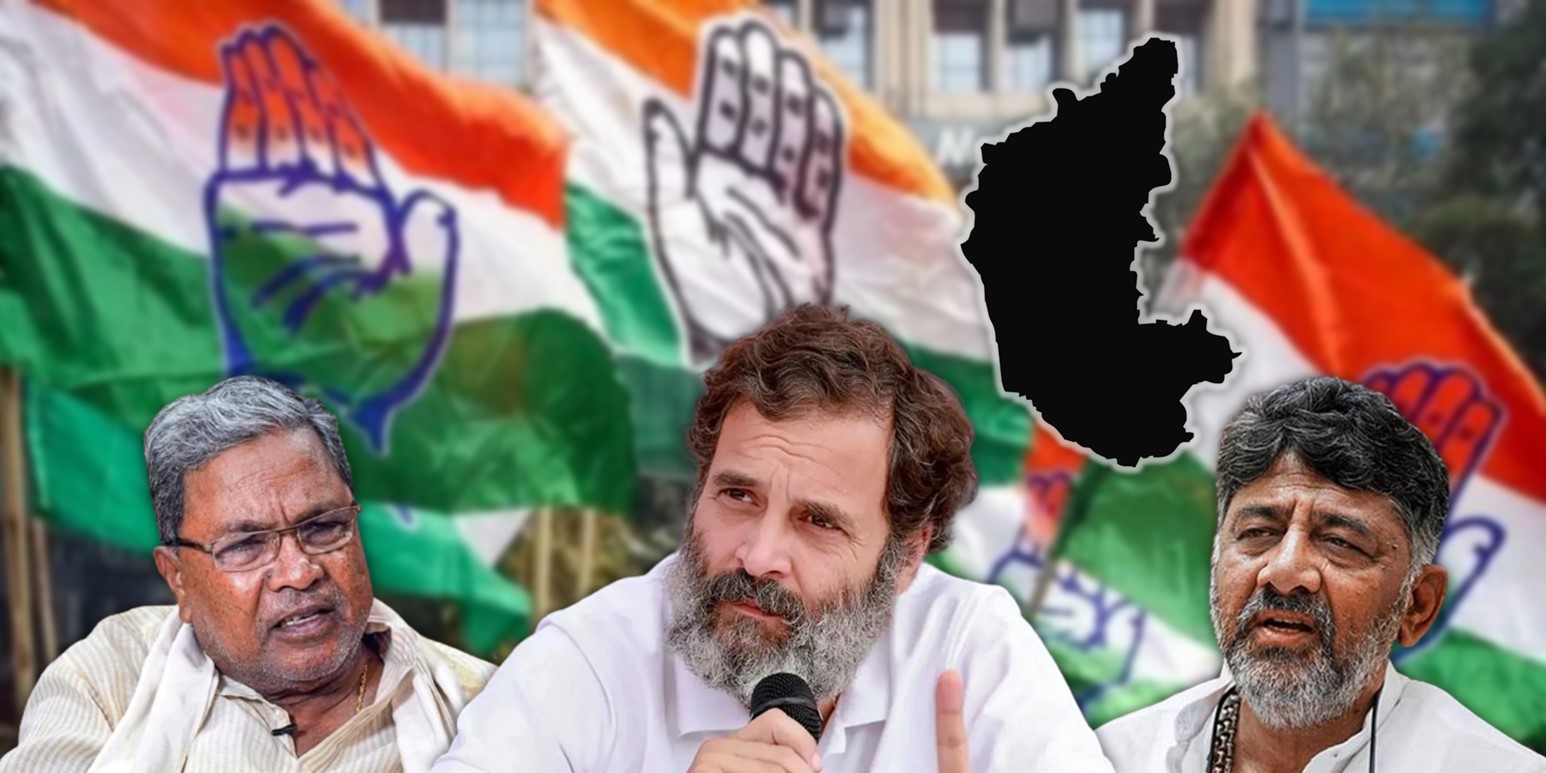
The Congress government in Karnataka is once again indulging in emotional theatrics, this time by proposing the “Rohith Vemula Bill” a politically charged legislation meant to curb discrimination in higher education. Following a prompt from Rahul Gandhi, the bill is not just a poorly-timed gimmick but a dangerous example of how identity politics is being weaponized ahead of the 2028 elections. The bill’s name, rooted in a disputed and controversial case, raises serious questions: Is this about justice, or just Congress’s desperate bid to shore up its dwindling support among Dalits, OBCs, and minorities?
Rahul Gandhi’s Push, Karnataka’s Performance: A Dangerous Mix
The proposed Karnataka Rohith Vemula (Prevention of Exclusion or Injustice)(Right to Education and Dignity) Bill, 2025 is not the result of robust policy-making or institutional introspection. It is a political stunt pushed by Rahul Gandhi through a letter to Chief Minister Siddaramaiah, seeking to name a law after Rohith Vemula, the student whose suicide in 2016 was politicised for years without clarity on his caste status. Congress’s knee-jerk reaction is emblematic of its broader strategy: emotion over evidence, votes over governance.
That a state government would rush a bill with such massive legal and social implications based on a nudge from a political heir, rather than consultation with academic institutions or legal experts, exposes the rot in the system. The bill appears more like a tool for scoring points with certain communities than a genuine attempt at institutional reform.
Naming a Law After Vemula: Political Symbolism?
The name “Rohith Vemula” has long been used by Congress and its ecosystem to craft a narrative of systemic caste oppression — even as multiple inquiries questioned the very basis of that narrative. Vemula’s caste status was never conclusively proven; in fact, the Gachibowli police’s closure report from March 2024 clearly stated that his Scheduled Caste certificate was not legally valid, and there was no evidence of caste-based harassment that directly led to his suicide.
Despite this, the Karnataka Congress government, eager to please its central leadership and capitalize on emotional triggers, has chosen to use his name for legislation. This choice isn’t about reform it’s about optics. It’s about exploiting a tragic death to fuel divisive politics and secure electoral mileage among SC/ST and OBC groups. The fact that Vemula wasn’t even from Karnataka and hailed from Telangana only underlines the opportunistic nature of this move.
Draconian Provisions, Political Misuse: A New Tool for Witch-Hunts?
The bill proposes severe penalties including non-bailable, cognizable offences for acts of “discrimination,” with jail terms of up to three years and fines reaching ₹1 lakh for repeat offenders. Institutions violating so-called “equality” principles may face total withdrawal of financial aid. On paper, this might sound progressive. But scratch the surface, and the law looks like an instrument of coercion.
Without clearly defined legal thresholds, what counts as “discrimination” could be left open to interpretation and political misuse. Academic dissent, ideological debate, or internal disciplinary actions could be falsely labelled as caste prejudice. The bill can easily become a weapon against institutions or individuals unwilling to toe the Congress narrative.
This is especially concerning as institutions are already under pressure. With this bill, the state government now has the power to cripple them financially or jail individuals all in the name of fighting injustice, but in reality, enforcing ideological conformity.
Congress’s Vote-Bank Politics Disguised as Social Justice
The real motivation behind this bill is evident: vote-bank consolidation. By championing a “Rohith Vemula Bill,” the Congress is sending a clear signal to Dalit, OBC, and minority communities ahead of the 2028 elections. It’s a page out of the same old playbook inflame identity issues, divide society into oppressed and oppressors, and rake in the votes. It is no coincidence that this legislation comes after caste census discussions, reservation demands, and growing caste-based mobilizations across the state.
But while Congress claims it’s fighting for social justice, the truth is that it’s using caste wounds to bandage its political irrelevance. Karnataka’s youth need better education policy, infrastructure, and opportunity not a politically-motivated law that adds more red tape and fear to campuses.
This bill is not about protecting the weak. It’s about shielding a weak party from its own failures.
Law Built on Political Opportunism
The Rohith Vemula Bill, as proposed by the Congress-led Karnataka government, is an alarming case of political opportunism masquerading as social reform. By pushing emotionally loaded legislation with debatable legal footing and punitive clauses, Congress is not protecting students it’s politicizing pain. The use of Vemula’s name, despite unresolved caste classification, reflects a deeper malaise in how Congress operates driven not by governance or justice, but by headlines and hashtags.
Instead of fixing systemic rot through consensus and data-driven policy, the Congress is playing with fire. This bill, if passed, risks turning Karnataka’s universities into battlegrounds for ideological vendettas, and administrators into political scapegoats.
Real reform doesn’t need martyrdom branding. It needs intellectual honesty, community dialogue, and political will. Sadly, the Congress today seems more interested in hashtags than healing.