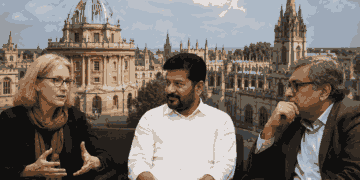














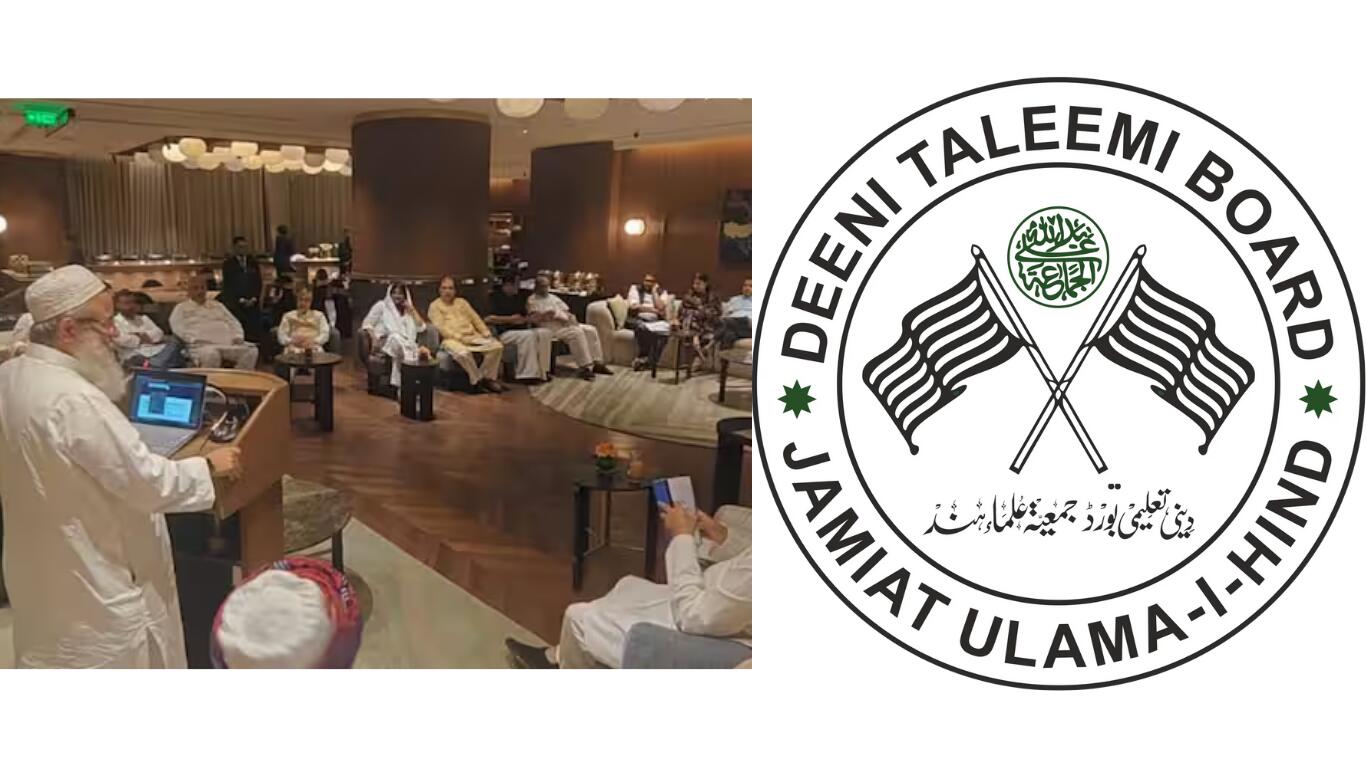
Jamiat Ulema-e-Hind President Maulana Mahmood Madani hosted a high-profile dinner at Delhi’s Shangri-La Hotel, attended by several opposition MPs including Imran Pratapgarhi, Imran Masood, and others. While it may appear to be a routine gathering during the monsoon session of Parliament, the timing, setting, and message delivered raise serious concerns. With Jamiat Ulema-e-Hind distributing booklets listing alleged Muslim community grievances, this event is being viewed as a political move. Is this an attempt to create a new Muslim front in Indian politics? And if so, who truly stands to gain from such communal consolidation?
A Five-Star Gathering with a Political Undertone
At a time when the Parliament’s monsoon session is in full swing, Jamiat Ulema-e-Hind (JUH), led by Maulana Mahmood Madani, chose to organize a closed-door dinner meeting at the luxurious Shangri-La Hotel in New Delhi. Attendees included a string of opposition MPs across parties, such as Imran Pratapgarhi (Congress), Imran Masood (Congress), Iqra Hasan (SP), Zia ur Rehman Barq (SP), Javed Khan (Congress), Agha Ruhullah Mehndi (NC), and Chandrashekhar Azad. What was projected as a dinner turned into a politically loaded meet where a five-point agenda allegedly concerning the Muslim community was discussed. Each MP reportedly received a booklet outlining these concerns, fuelling speculation about a coordinated political mobilization based on religious identity.
Is a Muslim Political Front Taking Shape?
Maulana Madani’s speech at the dinner was telling: “This is the time to unite and strengthen the voice of the Muslim community.” Such a remark, made in the company of opposition MPs, has sparked debate. Is this dinner just a gesture of concern, or a calculated effort to rally Muslim political identity ahead of key state elections and the 2029 Lok Sabha polls? The repeated involvement of JUH in political lobbying, combined with their history of opposing central laws like CAA and Triple Talaq legislation, raises doubts about the real motive behind such “community meetings.” The presence of MPs known for pushing minority-centric politics only adds to the suspicion.
JUH’s Troubling Track Record with Terror Legal Aid
What adds a more serious undertone to this meeting is JUH’s documented history of defending individuals accused of terror links. Since 2007, Jamiat Ulama-e-Hind’s legal cell has provided support to around 700 individuals accused in terror cases. Of these, at least 192 have been acquitted—mostly due to weak prosecutions or procedural lapses, not proven innocence. Their intervention was seen even in high-profile cases like the 7/11 Mumbai train blasts, 26/11 Mumbai attacks, and the 2006 Malegaon blasts. The organisation has defended members allegedly associated with Al-Qaeda, ISIS, and Lashkar-e-Taiba. This history casts a long shadow over JUH’s current demand for a law against “Islamophobia,” and undermines the credibility of their narrative.
A Pattern of Opposition to National Interests
This isn’t the first time JUH has taken an adversarial stand against national policies. The outfit led anti-CAA protests across over 2,000 Indian towns, framing a humanitarian law meant to protect persecuted minorities as discriminatory. It opposed the NPR and vocally criticized the Modi government’s progressive Triple Talaq ban, which freed countless Muslim women from centuries of oppression. The organization has also defended the presence of Rohingya migrants in India, while terming measures to modernize education as attempts to “saffronise” institutions. This consistent pattern of opposing the central government’s reformative and national security measures aligns closely with the political motives of certain opposition parties, further raising eyebrows about the nature of this five-star dinner meeting.
A Political Outreach Disguised as Minority Concern?
While community outreach is an integral part of democracy, the dinner hosted by Maulana Mahmood Madani raises more questions than it answers. Why were only opposition MPs invited? Why was a political narrative of Islamophobia pushed during a Parliamentary session? And most importantly, why is a group with a history of legal defense for terror accused attempting to influence lawmakers with community-specific demands? These aren’t mere coincidences. This appears to be a politically motivated effort to engineer a Muslim political consolidation, using religious identity as the rallying point—ironically, the very thing the opposition accuses others of. In a New India that prioritizes development, security, and unity, such divisive gatherings serve no purpose other than creating unrest and promoting appeasement politics.