





















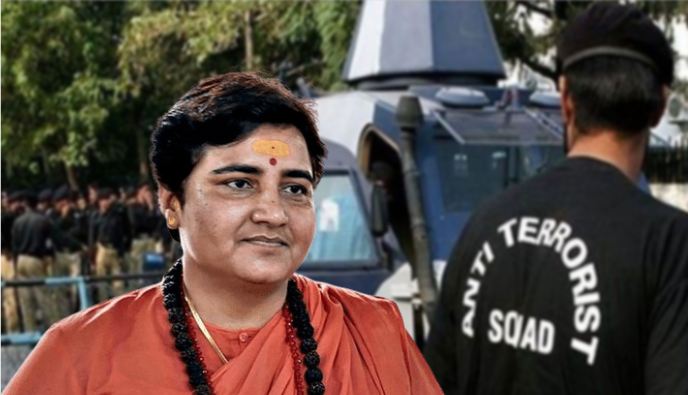
The acquittal of Sadhvi Pragya Singh Thakur and Lt Col Shrikant Purohit in the 2008 Malegaon blast case marks not just the end of a 17-year-long legal ordeal, it also shatters a dangerous, politically motivated myth nurtured by the Congress Party, Pakistan and echoed unquestioningly by anti-India pliant media. The compromised officers in various investigative agencies, abetted by these conspiracy mongers pushed the myth of “Saffron Terror”.
From the moment these names were floated as suspects, the entire weight of the state machinery under the United Progressive Alliance government came crashing down on the accused. Interestingly, their motive was not the pursuit of justice, but to push a narrative against Hindus. A narrative that painted devout Hindus as extremists, the Indian Army as infiltrated by radical elements and Hindu saints as terrorists in a bitter and fake attempt to create false equivalence with Islamic extremists.
The Malegaon blast in 2008 was tragic as six people lost their lives. But instead of seeking justice for these victims, following the evidence, the Congress-led government seized the opportunity to coin the term “Hindu terror” and “saffron terror” not just to communalize a legal investigation, but to equalize decades of Islamist terrorism faced by the nation.
Who Coined Term Saffron Terror
The phrase “saffron terror” was widely used by Congress leaders, who began using it prominently around 2010 during the tenure of UPA government. Several senior Congress leaders brought the term into the public discourse following incidents like the 2008 Malegaon blast and the Samjhauta Express bombing.
Congress leaders too picked up the idea seemingly floated at the party high command’s behest.
The expression was outrightly intended to highlight extremist acts by certain individuals linked to Hindu groups. However, it quickly sparked outrage from critics who saw it as a deliberate attempt to tarnish Hinduism and paint nationalist organizations in a negative light for political purposes.
But the Congress leadership played a key role in mainstreaming the term, using it to push a controversial narrative that was politically driven and damaging to India’s social fabric and global image.
The consequences of this manufactured story were devastating.
1. Innocents were persecuted for a political script. Sadhvi Pragya, a cancer patient, was jailed without charge for years, reportedly tortured, and denied basic human rights. Col. Purohit, a decorated Army officer, spent nine years in prison before even the trial began. The National Investigation Agency (NIA), in its own internal assessments, found glaring holes in the original chargesheets filed by the Anti-Terrorism Squad (ATS), and yet, the damage was already done.
2. The Congress Party used national security as a political weapon. Under the garb of secularism, the Congress sought to delegitimize Hindu nationalist voices and organizations by falsely branding them terror outfits. Digvijaya Singh and other senior Congress leaders went so far as to link the Rashtriya Swayamsevak Sangh (RSS) to acts of terror without proof—allegations that never stood up in court, but which served their purpose in the public imagination.
3. Institutions were compromised. The ATS and later the NIA, under pressure to serve a political agenda, bypassed evidence and relied on dodgy witnesses, manipulated confessions, and media leaks to build a public case rather than a legal one. Why were these agencies not held accountable for failing to secure convictions in a case they called “open and shut”?
4. The term “saffron terror” was weaponized by a global echo chamber. This wasn’t just a domestic campaign. The international press lapped up the “Hindu terror” story, pushing it into global headlines and giving fodder to anti-India forces. That perception lingers today, damaging India’s image, and it began not in Pakistan or Washington, but in Lutyens’ Delhi.
What the courts have now done is not just acquit two individuals—it has exposed the political subversion of justice that was at play during the UPA years.
Speaking in Rajya Sabha on Wednesday, Union Home Minister Amit Shah had blasted Congress for coining the term “saffron terror” and stated that “Hindus can never be terrorists”. He pointed out that the desperation of the Congress party for a certain vote bank, in all these years, emboldened the terrorists and their motives.
Blasting the previous Congress regimes for coining “saffron terror”, he said that the grand old party demonized the majority community i.e. Hindus for its myopic political gains.
Where is Accountability?
Despite the public humiliation and now he legal defeat of Congress-backed saffron terror bogey, it is highly unlikely that anyone in the Congress will apologize for branding an entire faith and culture with the brush of terrorism.
Moreover, no one in the police or ATS is likely to be tried for falsely implicating individuals. Several senior editors in the media, who ran wall-to-wall coverage calling these innocent individuals as terrorists before trial even began are also unlikely to issue retractions and apologize for their misdeeds.
The goal of Congress was never justice. The goal was political gain, power, and narrative control. In that, the Congress succeeded temporarily, but at the cost of India’s secular fabric, the integrity of its institutions, and the dignity of innocent lives.
The real terror exposed by the Malegaon verdict is this: when political parties and investigative agencies collude to frame innocents, justice becomes a casualty, and democracy becomes a facade.
It’s time this conspiracy is investigated, not just by historians, but by prosecutors. Those who scripted the saffron terror myth must be held to account and booked for trying to hurt the entire community.