





















RelatedPosts
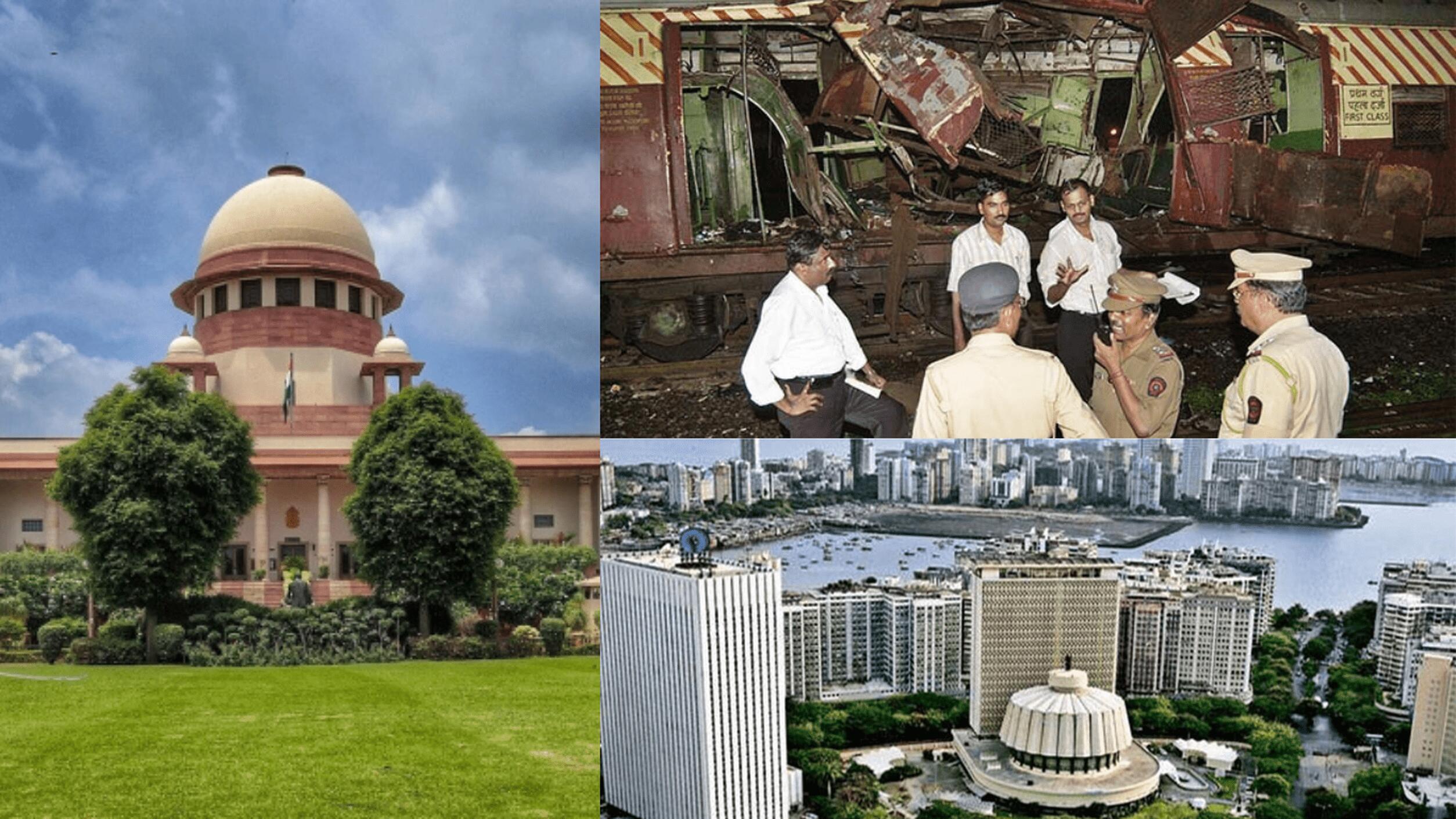
In a major development, the Maharashtra government has approached the Supreme Court challenging the Bombay High Court’s decision to acquit all 12 individuals previously convicted in the 2006 Mumbai train blasts case. The blasts, which occurred on July 11, 2006, on Mumbai’s suburban Western Railway line, had claimed 187 lives and injured over 800 people. The move to the apex court comes nearly a decade after a special trial court had sentenced five of the accused to death and seven others to life imprisonment under the stringent Maharashtra Control of Organised Crime Act (MCOCA).
Maharashtra’s Special Leave Petition (SLP), filed against the controversial acquittal, was mentioned before Chief Justice of India (CJI) BR Gavai by Solicitor General Tushar Mehta on Tuesday. Seeking an urgent hearing, Mehta described the case as “serious” and emphasised that the SLP was ready. The Chief Justice agreed to list the matter the following day. This legal battle sets the stage for a critical reassessment of one of the most heinous terror attacks in India’s history.
The 7/11 Blasts: A Day That Shook Mumbai
The coordinated serial blasts on July 11, 2006, involved seven powerful explosions aboard Mumbai’s suburban trains during the evening rush hour. Within a span of 11 minutes, bombs hidden in pressure cookers ripped through packed compartments on Mumbai’s lifeline — the Western Railway network. The carnage killed 187 people and left over 800 injured, triggering nationwide shock and outrage.
Following a long investigation by the Anti-Terrorism Squad (ATS) and a trial lasting over nine years, a special MCOCA court in October 2015 sentenced five men — Kamal Ansari, Mohammad Faisal Ataur Rahman Shaikh, Ehtesham Qutubuddin Siddiqui, Naveed Hussain Khan and Asif Khan — to death. They were found guilty of physically planting the bombs. Seven others received life terms for their roles in facilitating the conspiracy and providing logistical support.
However, in a startling reversal, the Bombay High Court on May 8, 2024, acquitted all 12 convicts. One of them, Kamal Ansari, had died in 2021 due to COVID-19 while lodged in Nagpur Central Jail.
High Court Verdict Raises Serious Questions
The High Court Bench comprising Justices Anil Kilor and Shyam Chandak delivered a scathing critique of the trial process and the evidence presented by the prosecution. The Court concluded that the case was riddled with serious procedural flaws and lacked credible evidence. It remarked that the prosecution failed to establish guilt beyond a reasonable doubt — a legal standard critical in criminal convictions.
One of the key observations was the unreliability of prosecution witnesses. According to the judges, it was implausible for witnesses such as taxi drivers and train passengers to recall specific individuals after a gap of 100 days, raising questions about the integrity of their testimonies. Furthermore, the High Court dismissed the relevance of the recovered explosives, firearms, and maps, noting that the prosecution had not conclusively identified the type of bomb used in the attack.
In perhaps the most damning portion of the judgment, the High Court stated that the trial had created a “misleading sense of resolution” and warned that “the real threat remains at large.” This observation has led to outrage among victims’ families and sparked fresh debate about the efficacy and integrity of India’s criminal justice process in high-profile terror cases.
A Legal and Political Flashpoint
The acquittal has not only triggered a legal response but also ignited political and public debate. The State government’s prompt decision to approach the Supreme Court suggests a strategic push to restore public confidence and reassert the seriousness of the 7/11 case. Given the scale of the attack and its impact on national security, the State is expected to argue for reinstatement of the original convictions based on the larger circumstantial and forensic evidence presented during the MCOCA trial.
Sources indicate that Solicitor General Mehta will emphasise the voluminous documentation, expert reports, and electronic evidence gathered by investigative agencies. There is also pressure from victims’ families, who have expressed disbelief and anguish over the acquittals. Many feel justice has been undone after years of waiting and suffering.
A Test of Justice and National Security
As the matter comes before the Supreme Court, the nation will closely watch whether the top court reinstates the original convictions or upholds the High Court’s critical assessment of the trial process. This case is not just about 12 individuals — it is a litmus test for India’s ability to prosecute terror cases with precision and fairness. It also reflects on how courts balance the rule of law, public sentiment, and the need to protect national security. For Maharashtra, and indeed for India, the outcome of this appeal could redefine how justice is served in the most serious crimes against the nation.