



















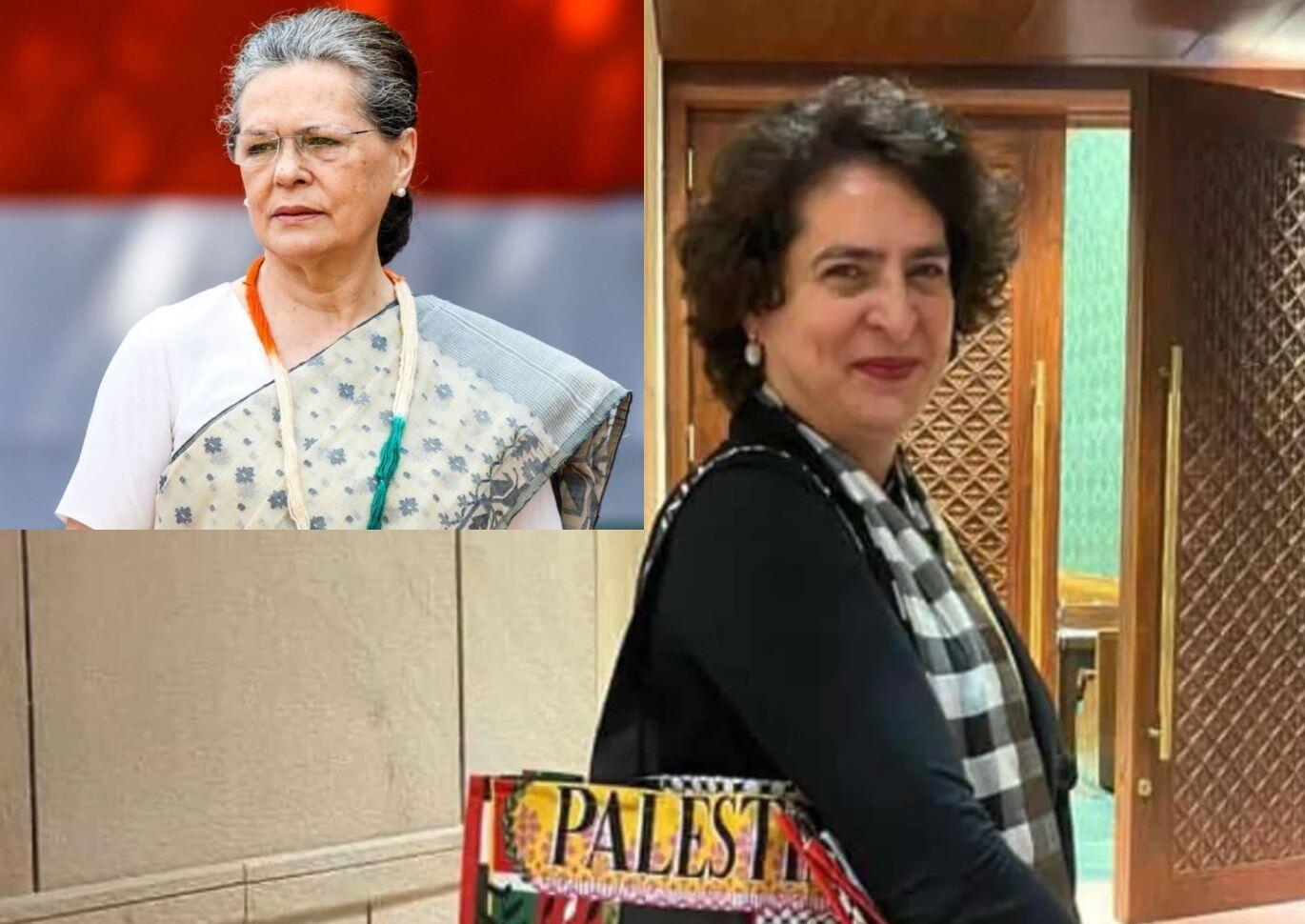
In the realm of humanitarian advocacy, consistency matters, not only for moral credibility but also for the legitimacy of leadership in a democratic context. Sonia Gandhi’s recent editorial piece in Dainik Jagran highlighting her condemnation of violence in Gaza, where she described Israel’s actions as ‘genocide’ and lamented India’s ‘shameful silence,’ has reopened a vital debate about selective outrage and political calculation in Indian electoral discourse.
The question that arises is not whether the Palestinian cause is worthy of humanitarian concern or not; undoubtedly, the suffering in Gaza merits global attention. The issue, rather, lies in the conspicuous absence of comparable empathy or activism from Sonia Gandhi, or the Indian National Congress more broadly, regarding the sustained persecution of Hindus in Bangladesh.
In the months following the resignation of Sheikh Hasina in August 2024, Bangladesh has witnessed a disturbing rise in anti-Hindu violence. Over 76 documented attacks occurred in just two months, according to Indian government reports, with minority organizations citing widespread destruction of temples, displacement, and killings in at least 49 districts. For a party that claims moral leadership on global issues, and for a figure who calls for India to reclaim its ‘moral compass’ in foreign policy, the silence on this crisis is troubling.
This disconnect raises an important question: is the Congress party’s humanitarian stance truly universal, or is it filtered through domestic electoral logic?
The Politics of Selectivity
Sonia Gandhi’s unwavering support for Palestinians in Gaza, while commendable in its concern for international justice, has not been mirrored by equivalent advocacy for Hindu minorities abroad. In fact, a review of her public statements and Congress party communications reveals a pattern of strong commentary on issues involving Muslim communities internationally, be it Gaza, Iran, or Rohingya refugees contrasted with near silence on the systemic abuse of Hindus in Bangladesh or Pakistan.
This pattern fuels what critics, especially within the BJP and among political commentators, describe as ‘selective advocacy.’ It is argued that Congress’s public interventions are often calibrated to resonate with particular domestic constituencies, most notably, Muslim voters. This form of targeted moral concern has long been critiqued under the banner of ‘minority appeasement,’ a term heavily loaded in Indian politics, yet difficult to ignore when such disparities are so plainly evident.
To be clear, no serious political thinker would argue against standing in solidarity with Palestinians in Gaza. But genuine humanitarianism does not operate on a political convenience scale. It requires the courage to call out injustice, regardless of whether it aligns with the sentiments of one’s voter base. Silence in the face of verifiable persecution such as what Hindus have endured in Bangladesh risks reducing moral outrage to a strategic tool of electoral politics rather than a principled stand.
Strategic Silence or Moral Blind Spot?
There may be political calculus at play here. Advocating for Hindus in Bangladesh might not yield significant electoral returns in India; these communities lack the organized political presence within Indian borders that would make them a compelling vote bank. Moreover, speaking out could complicate Congress’s longstanding efforts to appeal to Indian Muslims, especially ahead of crucial elections. However, such a strategy if indeed that’s what it is, comes at the cost of eroding credibility on human rights.
The Congress party has often portrayed itself as the custodian of Indian secularism. Yet, secularism is not the selective defense of minorities only when it suits domestic narratives. A truly secular polity must also defend Hindus abroad when they are targeted for their religion. India’s civilizational ethos rooted in ‘Vasudhaiva Kutumbakam’- the world is one family demands nothing less.
Priyanka Gandhi’s attempt to downplay the religious targeting in the Pahalgam terror attack by referring to the victims as ‘Indians’ rather than acknowledging that they were specifically attacked for being Hindus, has drawn sharp criticism. At a time when the nation is grappling with the trauma of a targeted communal massacre, her refusal to name the motive behind the killings has been seen as a deliberate act of political sanitization.
Critics argue that this rhetorical shift from identifying the victims as Hindus to generalizing them as Indians is not an expression of unity, but rather an erasure of the truth. It belittles the reality of religiously motivated violence and reflects a larger Congress pattern of avoiding uncomfortable truths when they involve the victimization of Hindus. This perceived unwillingness to call out anti-Hindu terror for what it is not only undermines the seriousness of the incident but reinforces the belief that Congress leaders are more concerned with managing vote-bank sensitivities than standing with the victims of targeted violence.
A Question of Leadership
In light of these realities, Sonia Gandhi’s leadership in humanitarian advocacy must be evaluated not only for the causes it champions but also for those it neglects. If India is to position itself as a moral voice in global politics, its leaders must speak not just for the persecuted abroad who resonate with its vote banks, but also for vulnerable populations closer to home, even when those voices are politically inconvenient.
A consistent and principled foreign policy must recognize the plight of Hindus in Bangladesh as part of a broader regional concern about minority rights and religious freedom. It is here that the Congress party’s selective silence becomes not just a political vulnerability, but a moral failing.
Until Indian political leadership regardless of party demonstrates the resolve to call out all forms of persecution with equal clarity, its moral pronouncements abroad will continue to ring hollow. The Indian public, increasingly discerning and globally connected, expects more than calibrated outrage. It expects authenticity.
And that expectation, grounded in both national interest and ethical consistency, is something no party, Congress included, can afford to ignore.