



















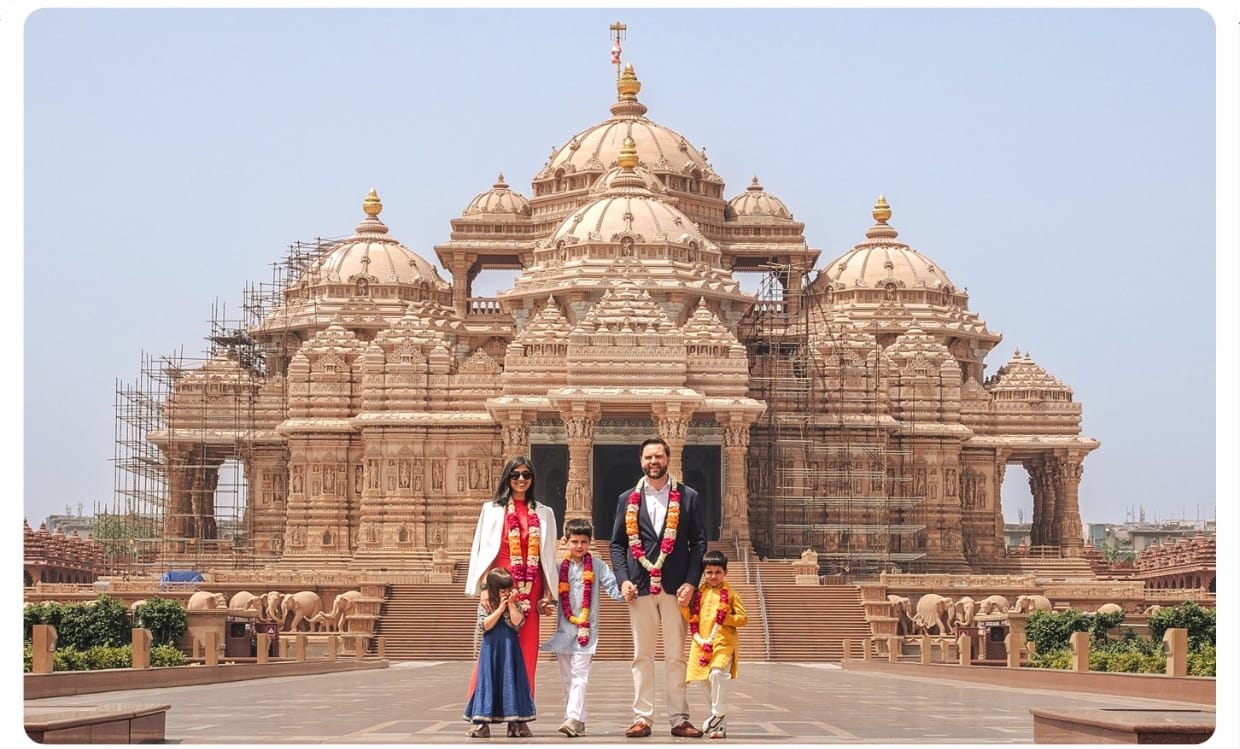
In a political climate where culture wars often extend into religion and parenting, Usha Vance, Second Lady of the United States, offers a refreshing, nuanced perspective on raising children in an interfaith household. Speaking candidly on Meghan McCain’s podcast Citizen McCain, Vance opened up about how she and her husband, Vice President JD Vance, navigate their differing religious backgrounds to foster spiritual openness in their home.
A practicing Hindu, Usha Vance didn’t shy away from the complexities of raising children- Ewan, Vivek, and Mirabel in a home where Catholicism and Hinduism coexist. “They can choose,” she said, referring to whether her children would be baptized into the Catholic faith. That simple statement might sound unremarkable in some households, but in the often-rigid world of organized religion particularly Catholicism, which traditionally expects children to be raised in the faith, it’s a radical act of parental trust and mutual respect.
While the children attend Catholic school, the decision to be baptized is left entirely to them. It’s a stance that respects both the structure of Catholic tradition and the deep spirituality of Hinduism, without demanding that one override the other.
Vance described her own religious roots with warmth and reverence. “My grandmother prays every day, goes to temple regularly, does her own pujas,” she shared. Their children, she said, are exposed to Hindu traditions through books, family practices, and a recent trip to India; though she admitted that not all Hindu holidays are observed in their home yet. “We’re actually hoping to have a Holi party next year,” she added, suggesting a desire to deepen their children’s connection to Hindu culture.
JD Vance, a convert to Catholicism, was not religious when they met, a fact that adds another layer to their shared spiritual journey. His decision to embrace Catholicism after their first child was born, brought up necessary and difficult conversations about how to raise children in a religiously mixed household. “We had to have a lot of real conversations,” Usha said, “because I’m not Catholic, and I’m not planning to convert.”
Rather than forcing a binary decision, the Vances have chosen a more inclusive approach, one that acknowledges religious pluralism not as a threat, but as an opportunity for deeper understanding. “Kids are smart,” she said. “They know I’m not Catholic, and they know there are many ways to experience the divine.”
In a time when religious identity is often wielded as a political weapon, Usha Vance’s perspective feels quietly revolutionary. She’s not promoting syncretism for its own sake, nor is she retreating into spiritual ambiguity. Instead, she and her husband are modeling something increasingly rare: mutual respect, honest dialogue, and the belief that children, given the right tools, can explore faith on their own terms.
It’s a lesson not just for interfaith families but for anyone navigating identity, tradition, and the space between.