






















Amid the success of India’s ‘Operation Sindoor,’ a historic political upheaval has occurred within Pakistan. Balochistan has declared itself independent from Pakistan and proclaimed itself as a sovereign nation. Baloch leaders have clearly stated that they can no longer remain a part of Pakistan and that Balochistan will now move forward as an independent republic. The Baloch leadership has appealed to India and the United Nations for formal recognition of Balochistan as a free nation.
Amid relentless attacks on the Pakistani military and continued warnings by Baloch rebels, it is now evident that this is no longer merely a slogan but has transformed into a strong and widespread mass movement.
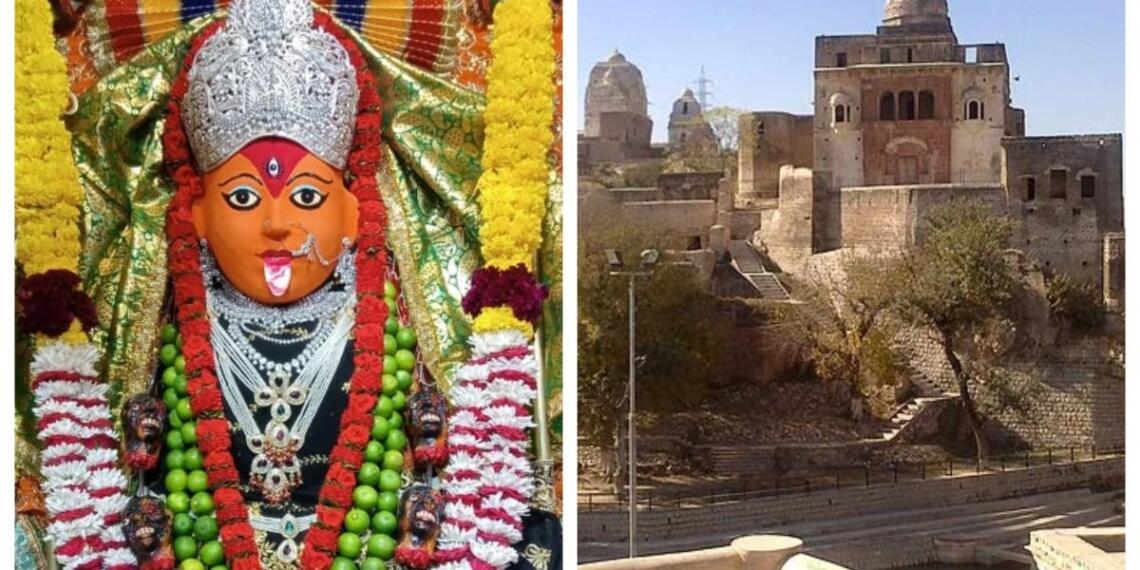
Just as the Kartarpur Corridor enabled Indian Sikhs to access the Gurdwara Darbar Sahib across the border, a similar possibility now stands before Indian Hindus. If Balochistan indeed becomes an independent state, the gates to two revered and ancient Hindu holy places — the Hinglaj Mata Temple and the Katasraj Shiva Temple — can welcome Indian pilgrims.
Currently, with the ever-present tensions between Pakistan and India, entry to these temples for citizens of India is practically non-existent. However, Balochistan’s autonomy would be more than a geographical shift; it might revive centuries of religious and cultural linkage.
Hinglaj Mata: Sacred Land Amongst the Shakti Peethas
Located in Balochistan’s Lasbela district, the Hinglaj Mata Temple has an immense religious, cultural, and historical significance. This temple has the status of being one of the 51 Shakti Peethas, where it is said that the head of Goddess Sati dropped. The location is on the banks of the Hingol River amidst hills, which lends to its spiritual and mystical environment.
The deity here is worshipped as ‘Hinglaj Devi’ or ‘Nani Maa’, particularly by the Sindhi and Baloch Hindu communities. Notably, some members of the local Muslim community also revere the goddess, referring to her as ‘Nani Pir’, and hold deep faith in the site. The Hinglaj pilgrimage is known to be arduous, but spiritually intense, often referred to as the ‘Hinglaj Yatra’.
Katasraj Temple: A Sacred Site Born from Shiva’s Tears
Conversely, the Katasraj Temple, situated in Pakistan’s Punjab province in the Chakwal district, has been a hub of Hindu worship for centuries. A temple complex of old that houses several small shrines within its grounds, it is all dedicated to Lord Shiva. At its very center is the holy Katas Kund — a pond said to have been created from the tears of Lord Shiva when he wept over the death of Sati.
According to historians, this site was once a major center for the study and philosophy of Hinduism. Tales from the Mahabharata recount the Pandavas staying here, and the presence of Adi Shankaracharya during his travels only adds to the spiritual depth of the place. The architecture is a mix of Hindu and Buddhist, giving a glimpse of syncretic history of the region.
Political boundaries are wider than our shrines today. But if Balochistan becomes an independent state, this moment has the potential to surpass strategic calculation and become a historic moment for millions of Indian pilgrims — a moment when the fault lines of faith are erased.
Just as Kartarpur demonstrated that with political will, reunification on the basis of peace and culture is achievable, so too can a similar ‘Corridor of Faith’ be imagined for Katasraj and Hinglaj Mata. It might be a bridge between religion, culture, and being human.