











TFIPOST हिन्दी
TFIPOST Global
Tfipost.com
Tfipost.com
No Result
View All Result
  • Premium
  • Politics
    • All
    • Analysis
    • Opinions
    • Trending
    ‘Agreed on Economic Cooperation Plan Till 2030,’ Says PM Modi in Joint Statement With Putin

    ‘Agreed on Economic Cooperation Plan Till 2030,’ Says PM Modi in Joint Statement With Putin

    ‘Ready to Continue Uninterrupted Shipments of Fuel to India,’ Says Putin at India-Russia Summit 2025

    ‘Ready to Continue Uninterrupted Shipments of Fuel to India,’ Says Putin at India-Russia Summit 2025

    ‘Should Work Together, Pave Way for Peace’: Says PM Modi in Bilateral Talks with Putin

    ‘Should Work Together, Pave Way for Peace’: Says PM Modi in Bilateral Talks with Putin

    Indira Gandhi’s Alliance with the Communists Redefined Indian History Education

    Indira Gandhi’s Alliance with the Communists Redefined Indian History Education

    • Analysis
    • Opinions
    • Trending
  • Economy
    • All
    • Business
    • Economy1
    • Finance
    From Paper-Mandates to eNACH Registration: How Digital Mandates Are Changing Cash Flow

    From Paper-Mandates to eNACH Registration: How Digital Mandates Are Changing Cash Flow

    What is the financial management cycle?

    What is the financial management cycle?

    Smart Investment Planning: Calculating Mutual Fund SIP Growth Easily

    Smart Investment Planning: Calculating Mutual Fund SIP Growth Easily

    Convert ETH to USD Using Price Statistics for Better Trading Decisions

    Convert ETH to USD Using Price Statistics for Better Trading Decisions

    • Business
    • Finance
  • Defense
    • All
    • Defence
    • Strategy
    • Weaponry
    Veterans Deserve More Than Promises: The System Must Match the Soldier’s Sacrifice

    Veterans Deserve More Than Promises: The System Must Match the Soldier’s Sacrifice

    How Ukraine Uses Psychological and Information Warfare to ‘Win,’ and What India Can Learn From This Strategy

    How Ukraine ‘Wins’ the Psychological and Informatiaon War Despite Destruction — Lessons India Cannot Afford to Ignore

    Pakistan’s ‘ship-launched ASBM’ claim doesn’t withstand technical or industrial scrutiny

    Pakistan’s ‘ship-launched ASBM’ claim doesn’t withstand technical or industrial scrutinys

    Borders Can Change: Why Rajnath Singh’s Sindh Remark is India’s New Message to Pakistan

    Borders Can Change: Why Rajnath Singh’s Sindh Remark is India’s New Message to Pakistan

    • Defence
    • Strategy
    • Weaponry
  • Geopolitics
    • All
    • Africa
    • Americas
    • Asia Pacific
    • Europe
    • South Asia
    • West Asia
    ‘Ready to Continue Uninterrupted Shipments of Fuel to India,’ Says Putin at India-Russia Summit 2025

    ‘Ready to Continue Uninterrupted Shipments of Fuel to India,’ Says Putin at India-Russia Summit 2025

    ‘Should Work Together, Pave Way for Peace’: Says PM Modi in Bilateral Talks with Putin

    ‘Should Work Together, Pave Way for Peace’: Says PM Modi in Bilateral Talks with Putin

    Europe’s Slow Descent Into Weakness

    Europe: A Continent Happily Committing a Long-Drawn Suicide

    End of NATO? US Secretary of State Marco Rubio May Skip Foreign Ministers’ Meet in Brussels for First Time in Two Decades

    End of NATO? US Secretary of State Marco Rubio May Skip Foreign Ministers’ Meet in Brussels for First Time in Two Decades

    • Africa
    • Americas
    • Asia Pacific
    • Europe
    • South Asia
    • West Asia
  • Knowledge
    • All
    • Culture
    • Education
    • History
    • Indology
    Despite Nehru’s objection, Rajendra Prasad became India’s first President !

    How Nehru Resisted Dr. Rajendra Prasad—from Presidency to Somnath visit  and Beyond

    Talom Rukbo Initiated the Donyi–Polo Movement: Bringing Tribal Youth Back to Their Roots

    Talom Rukbo: The Forgotten Hero Who Shielded Arunachal’s Tribal Communities from Religious Conversion

    How Guru Tegh Bahadur The Ninth Sikh Guru Became a Martyr for Religious Freedom

    How Guru Tegh Bahadur The Ninth Sikh Guru Became a Martyr for Religious Freedom

    21 November 1962: Looking Back at the Indo-China war and How it Redefined the Border Equation

    21 November 1962: Looking Back at the Indo-China war and How it Redefined the Border Equation

    • Culture
    • History
    • Indology
  • Law
  • Lounge
    • All
    • Books
    • Cinema
    • Entertainment
    • Food
    • Games
    • Health
    • Lifestyle
    • Satire
    • Sports
    • technology
    • Travel
    Top 5 Reasons Why Cloud and DevOps Are the Perfect Career Combo in 2026

    Top 5 Reasons Why Cloud and DevOps Are the Perfect Career Combo in 2026

    감정을 가진 로봇의 시대가 오고 있다

    감정을 가진 로봇의 시대가 오고 있다

    Is AISaver Face Swap the Best Tool for Face Swap Video Online Free in 2025?

    Is AISaver Face Swap the Best Tool for Face Swap Video Online Free in 2025?

    Why Fat Analysis Matters in the Food and Feed  Industry?

    Why Fat Analysis Matters in the Food and Feed Industry?

    • Books
    • Cinema
    • Food
    • Health
    • Sports
    • technology
    • Travel
    • Satire
Tfipost.com
  • Premium
  • Politics
    • All
    • Analysis
    • Opinions
    • Trending
    ‘Agreed on Economic Cooperation Plan Till 2030,’ Says PM Modi in Joint Statement With Putin

    ‘Agreed on Economic Cooperation Plan Till 2030,’ Says PM Modi in Joint Statement With Putin

    ‘Ready to Continue Uninterrupted Shipments of Fuel to India,’ Says Putin at India-Russia Summit 2025

    ‘Ready to Continue Uninterrupted Shipments of Fuel to India,’ Says Putin at India-Russia Summit 2025

    ‘Should Work Together, Pave Way for Peace’: Says PM Modi in Bilateral Talks with Putin

    ‘Should Work Together, Pave Way for Peace’: Says PM Modi in Bilateral Talks with Putin

    Indira Gandhi’s Alliance with the Communists Redefined Indian History Education

    Indira Gandhi’s Alliance with the Communists Redefined Indian History Education

    • Analysis
    • Opinions
    • Trending
  • Economy
    • All
    • Business
    • Economy1
    • Finance
    From Paper-Mandates to eNACH Registration: How Digital Mandates Are Changing Cash Flow

    From Paper-Mandates to eNACH Registration: How Digital Mandates Are Changing Cash Flow

    What is the financial management cycle?

    What is the financial management cycle?

    Smart Investment Planning: Calculating Mutual Fund SIP Growth Easily

    Smart Investment Planning: Calculating Mutual Fund SIP Growth Easily

    Convert ETH to USD Using Price Statistics for Better Trading Decisions

    Convert ETH to USD Using Price Statistics for Better Trading Decisions

    • Business
    • Finance
  • Defense
    • All
    • Defence
    • Strategy
    • Weaponry
    Veterans Deserve More Than Promises: The System Must Match the Soldier’s Sacrifice

    Veterans Deserve More Than Promises: The System Must Match the Soldier’s Sacrifice

    How Ukraine Uses Psychological and Information Warfare to ‘Win,’ and What India Can Learn From This Strategy

    How Ukraine ‘Wins’ the Psychological and Informatiaon War Despite Destruction — Lessons India Cannot Afford to Ignore

    Pakistan’s ‘ship-launched ASBM’ claim doesn’t withstand technical or industrial scrutiny

    Pakistan’s ‘ship-launched ASBM’ claim doesn’t withstand technical or industrial scrutinys

    Borders Can Change: Why Rajnath Singh’s Sindh Remark is India’s New Message to Pakistan

    Borders Can Change: Why Rajnath Singh’s Sindh Remark is India’s New Message to Pakistan

    • Defence
    • Strategy
    • Weaponry
  • Geopolitics
    • All
    • Africa
    • Americas
    • Asia Pacific
    • Europe
    • South Asia
    • West Asia
    ‘Ready to Continue Uninterrupted Shipments of Fuel to India,’ Says Putin at India-Russia Summit 2025

    ‘Ready to Continue Uninterrupted Shipments of Fuel to India,’ Says Putin at India-Russia Summit 2025

    ‘Should Work Together, Pave Way for Peace’: Says PM Modi in Bilateral Talks with Putin

    ‘Should Work Together, Pave Way for Peace’: Says PM Modi in Bilateral Talks with Putin

    Europe’s Slow Descent Into Weakness

    Europe: A Continent Happily Committing a Long-Drawn Suicide

    End of NATO? US Secretary of State Marco Rubio May Skip Foreign Ministers’ Meet in Brussels for First Time in Two Decades

    End of NATO? US Secretary of State Marco Rubio May Skip Foreign Ministers’ Meet in Brussels for First Time in Two Decades

    • Africa
    • Americas
    • Asia Pacific
    • Europe
    • South Asia
    • West Asia
  • Knowledge
    • All
    • Culture
    • Education
    • History
    • Indology
    Despite Nehru’s objection, Rajendra Prasad became India’s first President !

    How Nehru Resisted Dr. Rajendra Prasad—from Presidency to Somnath visit  and Beyond

    Talom Rukbo Initiated the Donyi–Polo Movement: Bringing Tribal Youth Back to Their Roots

    Talom Rukbo: The Forgotten Hero Who Shielded Arunachal’s Tribal Communities from Religious Conversion

    How Guru Tegh Bahadur The Ninth Sikh Guru Became a Martyr for Religious Freedom

    How Guru Tegh Bahadur The Ninth Sikh Guru Became a Martyr for Religious Freedom

    21 November 1962: Looking Back at the Indo-China war and How it Redefined the Border Equation

    21 November 1962: Looking Back at the Indo-China war and How it Redefined the Border Equation

    • Culture
    • History
    • Indology
  • Law
  • Lounge
    • All
    • Books
    • Cinema
    • Entertainment
    • Food
    • Games
    • Health
    • Lifestyle
    • Satire
    • Sports
    • technology
    • Travel
    Top 5 Reasons Why Cloud and DevOps Are the Perfect Career Combo in 2026

    Top 5 Reasons Why Cloud and DevOps Are the Perfect Career Combo in 2026

    감정을 가진 로봇의 시대가 오고 있다

    감정을 가진 로봇의 시대가 오고 있다

    Is AISaver Face Swap the Best Tool for Face Swap Video Online Free in 2025?

    Is AISaver Face Swap the Best Tool for Face Swap Video Online Free in 2025?

    Why Fat Analysis Matters in the Food and Feed  Industry?

    Why Fat Analysis Matters in the Food and Feed Industry?

    • Books
    • Cinema
    • Food
    • Health
    • Sports
    • technology
    • Travel
    • Satire
No Result
View All Result
Tfipost.com
Tfipost.com
No Result
View All Result
  • Premium
  • Politics
  • Economy
  • Defense
  • Geopolitics
  • Knowledge
  • Law
  • Lounge

What made Christianity what it is today, Chapter 2: Crossing paths with Islam

Abhishek Kumar Singh by Abhishek Kumar Singh
15 November 2022
in Premium
Christianity

Pic: Pinterest

Share on FacebookShare on X

In the first chapter of this series, we looked at how Christianity shaped and expanded. Of the two bifurcated parts of the Roman Empire, the Eastern one flourished more. In the later years of the 1st millennium, it came to be known as the Byzantine Empire.

At its peak, the Empire expanded its wings in the Mediterranean Sea, North Africa and the Middle East. By them being a formidable political and military force, Christianity also expanded. It had made a foothold in the pre-Islam Arab world as well.

RelatedPosts

Harvesting Influence: China’s Growing Control Over Africa’s Food Corridors

Lucknow: 23-Year-Old Woman Alleges Neighbor Furkan and his mother Rizwana Tried to Force Religious Conversion, Marriage

The Battle Between Grokipedia and Wikipedia Poised to Escalate into a Full-Blown Knowledge War

Load More

Initial interaction between Prophet and Christians

Historians state that Prophet Muhammad first met Christians during his Caravan to Syria. Later on, it became a tradition for him to meet a Christian Monk named Bahira. In fact, the Prophet’s mission is said to have been confirmed by a Christian Scholar named Waraqa Ibn Nawfal.

Waraqa was a cousin of the Prophet’s wife Khadija. Waraqa is believed to have said, “There has come to him the greatest Law that came to Moses; surely he is the prophet of this people.”

Islam and Christianity had philosophical differences, but their adherents remained largely peaceful for a decade or so. Christians from Najran, Saudi Arabia used to visit the Prophet in Medina. On the other hand, the Prophet also used to return the favour by sending letters to the Byzantine emperor Heraclius and the Negus of Axum, as well as the Sasanian emperor Chosroes.

Arab-Byzantine wars

This was the time when both Byzantines and Sasanians were getting tired of their 2 century-long wars. Additionally, the bubonic plague forced them to go slow on each other. However, emperor Heraclius was able to secure one strategic victory by regaining lost territories and restoring True Cross to Jerusalem in 629. True Cross is the cross on which Jesus is said to have been crucified.

Around the same time, Prophet Muhammad had managed to bring the whole Arab world under one umbrella. He used both conquests as well as alliances to achieve this. The inherent tribal nature of unified Arabia meant that within a few months of the restoration of the cross, Arabs launched an offensive against the Byzantines.

The instant cause of this battle was the murder of Muhammad’s ambassador at the hands of the Ghassanids. Ghassanids were an Arab tribe whose kingdom was a vassal state of Byzantine. The Battle of Mu’tah was largely inconclusive in the big picture as Muhammad’s Army had to retreat due to the death of their 3 key leaders. On their part, the Byzantines did not go ahead with the full-fledged attack on the retreating party.

Also Read: Supreme Court tells Modi govt. to declare religious conversion illegal

Christians paid for their graciousness

Turns out, it was a significant and history-changing blunder. 3 years later, Muslims returned and beat the Byzantines in the Expedition of Usama bin Zayd. Prophet Muhammad had sent Usama to avenge the killing of his father and Prophet’s adopted son by Byzantines in the Battle of Mu’tah.

Muhammad trusted Usama so much that his young age of 20 years was not a barrier for him. When the Prophet died after declaring him as leader of the expedition, Usama gained support from Abu Bakar, who was one of Muhammad’s successors.

The successful expedition by young Usama opened the floodgates. Muslim rulers started to target the southern provinces of the Byzantine Empire (Syria and Egypt).

In 634 AD, Arabians launched an attack on Syria and Roman Palestine. Heraclius had fallen ill and was incapable of leading the army. Rashidun Caliphate forces cruised through and registered a decisive victory in the Battle of Ajnadayn. Soon they went after Damascus (Syria) and seized it for a brief period. It is then that the Byzantines showed some sign of revival.

By that time, Heraclius had recovered and sent troops to reverse the siege. Muslims pushed back and took 2 years to recuperate. In 636, Byzantines foolishly fell into the trap of a pitched battle with Arabians. The Arab Army used the deep valleys and cliffs to cause havoc on the Byzantines. Damascus was finally lost. It was the first big Christian city to fall into the hands of Arabs.

Its impact was huge. In the words of historian Joannes Zonaras, “[…] since then [after the fall of Syria] the race of the Ishmaelites did not cease from invading and plundering the entire territory of the Romans.”

The momentum of this conquest helped them to capture Jerusalem, Gaza, Mesopotamia and Antioch in a two-year time frame. By the end of the 630s, Byzantine Mesopotamia and Byzantine Armenia were under their control and now they eyed Egypt. In 642 AD, the Caliphate captured Egypt and Tripolitania.

Conquest of Africa and Iberian Peninsula (Spain)

After getting hold of Egypt, Muslim Army strived to get hold of North Africa. In 644 AD, they had eastern Libya under their command. Meanwhile, a civil war erupted in the Arab world, following which the Umayyads came to power.

Umayyads were a bit more planned in their approach. They took their time. Meanwhile, they strengthened their forces by developing a Navy of their own. Their navy registered a surprising victory against the Byzantines in 655 AD. The victory opened up the Mediterranean for the Arabs.

The Byzantines could not fully recover from the loss. The loss turned them into a raid party rather than a full-fledged Army. They began small skirmishes against Arabs in Africa and other regions. Umayyads used Egypt as a launch pad for Africa. From there, they launched a raid on Anatolia in 663AD. From 665 AD to 689 AD, Byzantines and Arabs kept fighting in North Africa.

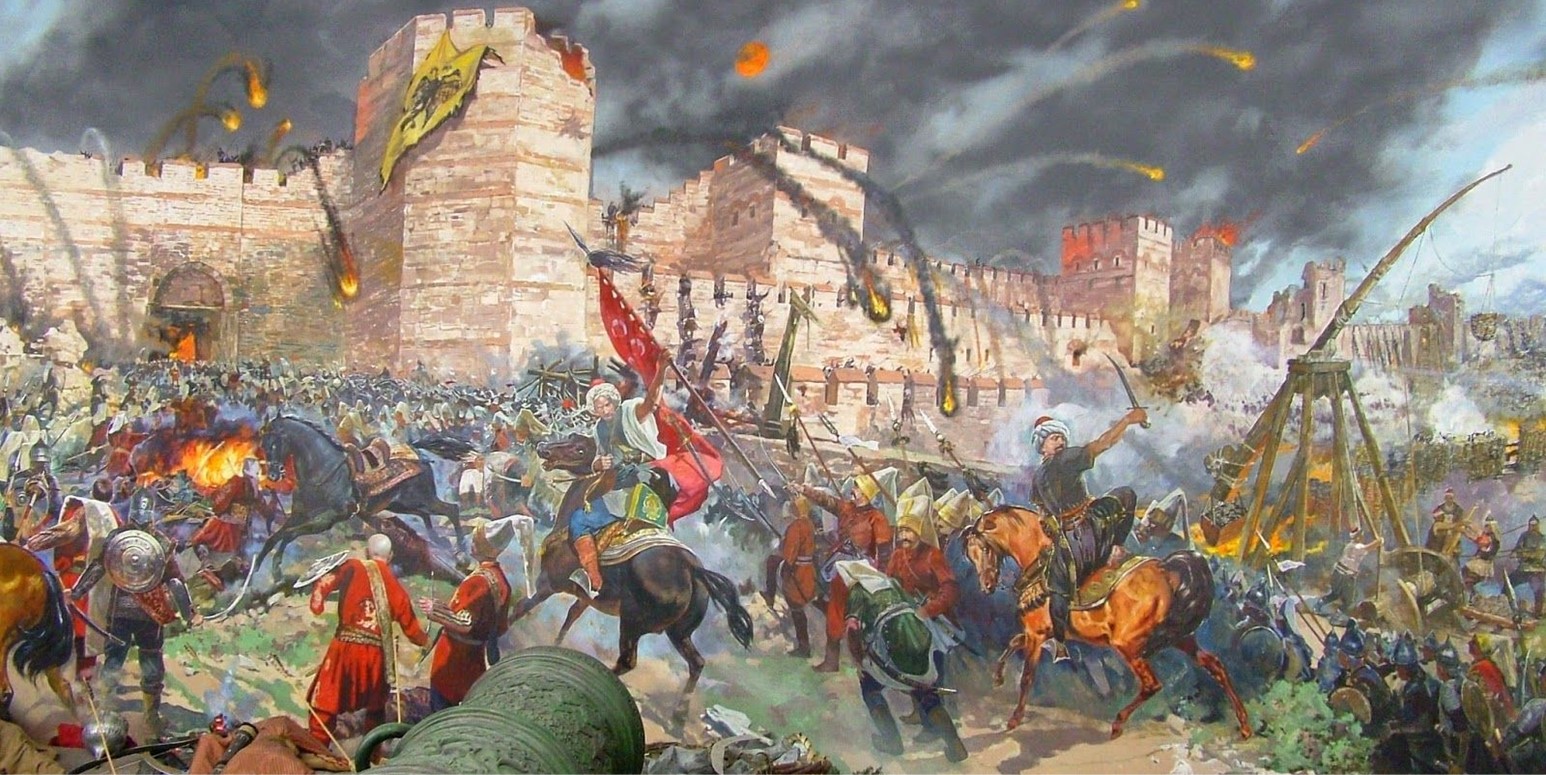
To their credit, the Byzantines were able to reverse a few key gains made by the Arabs. For instance, they did not let them win Constantinople for a long time in 678 AD. But they could not seize the day by capitalising on it. Why would they? Their emperor was old and feeble. He made a truce with the Arabs.

Under Justinian (II), the last ruler of the Heraclian dynasty, the Arabs plundered Byzantine territories at their will. He lost his capital as well. Justinian did come back to power in 705 AD, but the Arabs only strengthened their hold under him.

5 years after Justinian’s stint ended, the Arabs launched the siege of Constantinople but were unable to secure the victory. Despite that, the Arabs had seized a large part of Africa, Sicily and the East.

Meanwhile, the Arabs’ hunger for territories was not ending. They aspired for more and now it was time for the Iberian Peninsula to fall. In the Iberian Peninsula, Count Julian, a local revolutionary reached an agreement with Musa, an Arabian governor, to launch a joint invasion of the Iberian Peninsula. Count Julian was leading a Visigoth faction, which was discontent with the usurpation of the power by Roderick.

The invasion was successful but Count Julian had underestimated the Arabs’ greed for territories. Between 710 and 714, Musa captured the whole of the northeast, northern mountain and the west and east of the peninsula.

By the time he was recalled by higher authorities in 714 AD, most of the Peninsula was under their control, except for a small hilly area. The people living there kept fighting with the Islamists for more than 5 centuries and were ultimately successful.

The fall of Jerusalem

In the Byzantine part of the world, a virtual truce had been achieved. Both empires established diplomatic relations by recognising each other. But not everything was hunky-dory.

The Church, which was a powerful political entity during those times, was especially discontent with the way Jerusalem was treated under the Arabs. For the first century of the conquest, Jerusalem’s sanctity was maintained by Muslim rulers who kept their anarchist sections in check.

The Arab world was getting decentralised and the lack of Muslim-Christian war was compensated by intra-Arab conflicts. Religious fanatics got hold of political power. They felt a moral obligation to convert all non-Muslims to Islam. Earlier only pagans were punished while Christians were allowed to practise their religion by paying Jizya.

Things changed after 725 AD. Now, Christians were told to either convert or die. The wealth of Jerusalem started to drain towards Baghdad for the benefit of the Caliphs. The anti-Christian policy was formalised with the destruction of the walls of Jerusalem. Arabic became the language of the government.

At that time, Christians were somehow learning to reside with their Muslim neighbours. They had taught the Arabs to translate Greco-Roman literature into Arabic. Many Christians gained a prominent place in the Arab world and vice-versa.

The fact that the Arab Navy was stronger than the Byzantine’s owed mainly to them hiring Monophysite Christian Copt and Jacobite Syrian Christian sailors in their ranks. The Jerusalem incident forced Christians to rethink their positions. They started regrouping to resuscitate old Byzantine glory in the guise of a truce.

Byzantine revival

Officially, the truce continued till 863 AD. In that year, the Byzantine general Petronas gained a lead by registering a victory in the Battle of Lalakon. News of the sudden defeat sent Baghdad and Samarra into riots. Anxiety had spread and the subsequent loss of Armenia did not help the cause either.

The Byzantines continued with their offence for the next 100 years or so. They were assisted by the internal fights of the Arab Empire and the reestablishment of the Byzantines into a regional force by Basil I.

His successors followed in his footsteps and through conquests and alliances, went on a winning spree. In 995 AD, Basil II launched a massive campaign against the Arabs. He relieved Aleppo, won Syria, took over Orontes valley and went further South.

According to the British historian Piers Paul Read, “by 1025, Byzantine land stretched from the Straits of Messina and the northern Adriatic in the west to the River Danube and Crimea in the north, and to the cities of Melitene and Edessa beyond the Euphrates in the east.”

The Byzantines held this territory until 1078. However, Jerusalem was still out of their reach. This very fact became the reason behind 3 crusades. In the next part of the series, we will look at the Crusades, their reasons and how they shaped the history of Christianity.

Support TFI:

Support us to strengthen the ‘Right’ ideology of cultural nationalism by purchasing the best quality garments from TFI-STORE.COM

Also Watch:

Tags: #ArmyafricaArabsBattleByzantinesChristiansegyptIslamJerusalemProphetRashidun CaliphateWhat is Christianity religion todayworld
ShareTweetSend
Previous Post

Supreme Court tells Modi govt. to declare religious conversion illegal

Next Post

Guru Ram das ji Biography and life story of a great saint of India

Related Posts

Mera Ration 2.0: A Leap Towards Digital Transparency and Corruption-Free India
Business

Mera Ration 2.0: A Leap Towards Digital Transparency and Corruption-Free India

13 September 2024

How India's Latest Digital Initiative is Revolutionizing Ration Distribution India is making significant strides in the digital realm with...

The Lahore declaration that was not meant to be
History

The Lahore declaration that was not meant to be

25 February 2023

For a long time, India’s geographical region of Kashmir has been a sensitive issue between India and Pakistan. But...

Baikunth Shukla
History

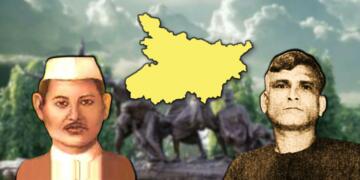
Bihar’s Forgotten Sons: Yogendra Shukla and Baikunth Shukla

22 February 2023

Story of Baikunth Shukla and Yogendra Shukla: Have you been to Bihar before? Stop assuming. I'm not referring to...

Load More

Leave a Reply Cancel reply

Your email address will not be published. Required fields are marked *

I agree to the Terms of use and Privacy Policy.
This site is protected by reCAPTCHA and the Google Privacy Policy and Terms of Service apply.

Currently Playing

A War Won From Above: The Air Campaign That Changed South Asia Forever

A War Won From Above: The Air Campaign That Changed South Asia Forever

00:07:37

‘Mad Dog’ The EX CIA Who Took Down Pakistan’s A.Q. Khan Nuclear Mafia Reveals Shocking Details

00:06:59

Dhurandar: When a Film’s Reality Shakes the Left’s Comfortable Myths

00:06:56

Tejas Under Fire — The Truth Behind the Crash, the Propaganda, and the Facts

00:07:45

Why Rahul Gandhi’s US Outreach Directs to a Web of Shadow Controversial Islamist Networks?

00:08:04
Facebook Twitter Instagram Youtube
tfipostTfipost.com
Right Wing | News Analysis | Indian Opinion
  • About us
  • Contact Us
  • Careers
  • Brand Partnerships
  • Terms of use
  • Privacy Policy
  • Sitemap

©2025 TFI Media Private Limited

No Result
View All Result
  • Premium
  • Politics
    • Analysis
    • Opinions
    • Trending
  • Economy
    • Business
    • Finance
  • Defense
    • Defence
    • Strategy
    • Weaponry
  • Geopolitics
    • Africa
    • Americas
    • Asia Pacific
    • Europe
    • South Asia
    • West Asia
  • Knowledge
    • Culture
    • History
    • Indology
  • Law
  • Lounge
    • Books
    • Cinema
    • Food
    • Health
    • Sports
    • technology
    • Travel
    • Satire
TFIPOST हिन्दी
TFIPOST Global

©2025 TFI Media Private Limited