
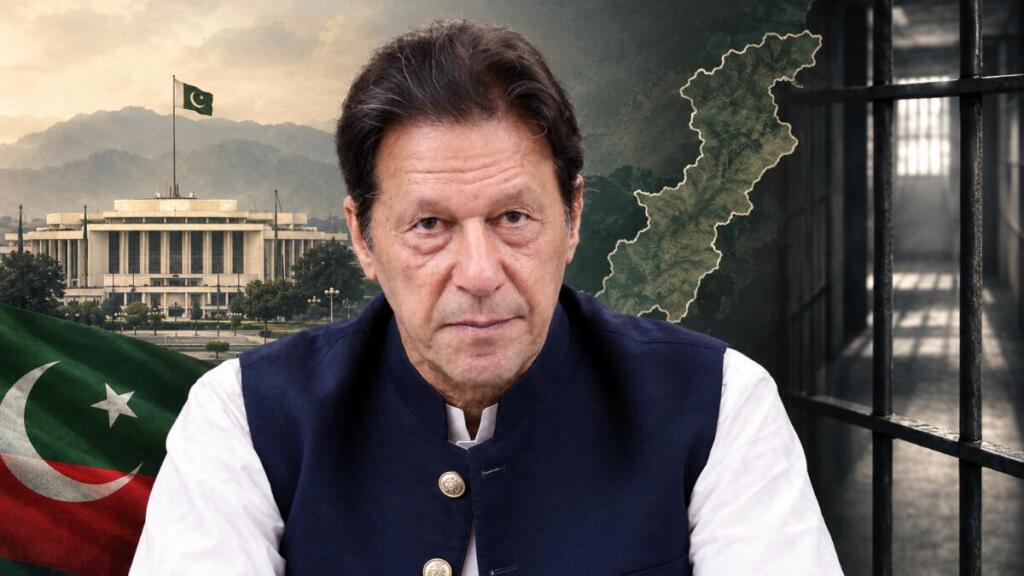
On Sunday 11 October, Pakistan’s president declared a state of emergency and suspended the provincial government of Khyber Pakhtunkhwa (KP), which is led by the party of jailed former Prime Minister Imran Khan. The move sharply escalates a standoff between Khan’s Pakistan Tehreek-e-Insaf (PTI) and the federal government, and it landed days before a planned march on the capital.
The federal government said the PTI administration had failed to tackle Islamist militancy in the province, which borders Afghanistan. Law Minister Azam Nazeer Tarar said a governor would now take charge. Chief Minister Sohail Afridi and the PTI’s provincial president were reportedly arrested after the declaration. Police have since been making arrests in Peshawar, where protesters answered a PTI call to demonstrate.
Interior Minister Mohsin Naqvi defended the takeover on Monday. He argued that federal rule was needed for Pakistan to combat “terrorism” in the province. The PTI sees a different motive. Its spokesperson Zulfikar Bukhari called the move “more of a coup disguised as emergency” and warned of further bloodshed and instability. The party plans to challenge the takeover in court.
Why Khan sits at the centre
Khan has been in jail for more than three years, yet he still commands widespread popularity across the country. His party’s supporters have been trying to turn that popularity into pressure. The PTI was preparing a march on Islamabad to demand his release. It was first scheduled for 27 September, then postponed to 4 October to allow talks between the government and the party’s leadership. Those talks apparently failed. A week before the emergency, PTI supporters had gathered in the province intending to march on the capital.
Khyber Pakhtunkhwa matters because it is the only province the PTI governs. Candidates backed by Khan’s party won the most seats in the 2024 election but formed a government only in KP. The province has served as the party’s organising base. Marchers can set off from it, and a friendly provincial government can shape how police and officials respond. Suspending that government removes the base just as the march gathers pace.
The province’s leadership is also personally tied to Khan. In October 2025, Ali Amin Gandapur announced his resignation as chief minister, allegedly on Khan’s instructions. Khan’s choice, Sohail Afridi, took over. That handover came with its own drama, including a dispute over whether the resignation letters were valid. The Peshawar High Court ruled that Gandapur’s resignation took effect on 8 October. Afridi governed as Khan’s man in the most direct sense. He was prevented from meeting Khan in Adiala Jail despite an Islamabad High Court order that allowed visits twice a week.
Two competing explanations
The government’s case rests on security. KP has suffered an increasing number of militant attacks in recent months. One example this year, listed in a chronology of 2026, is a vehicle bombing near a checkpoint in Bajaur District that killed twelve people. Afridi had opposed military operations in the province, which put him at odds with Islamabad’s approach. On this reading, the emergency is a response to a province the centre believes is being poorly defended.
The PTI and its sympathisers say security is a pretext. Naqvi’s own remarks hint at how entangled the issues have become. Responding to the PTI’s complaint, he said it is absurd that a negotiation over a protest movement, meant to secure court-ordered medical and visitation rights for Khan, becomes a negotiation about terrorism strategy. In other words, the talks began as a dispute over Khan’s treatment in jail and have turned into a fight over who controls the province. Observers also point out that the centre should be held to the same standard it applies to the PTI. Ali Arqam, a longtime observer of KP, said Islamabad should be judged by the same measures as the PTI government.
What happens next
Several things will decide how this plays out. The first is the courts, since the PTI’s legal challenge will test whether the constitutional provision for emergency takeovers was used properly. The second is the march. Whether the PTI can still bring large crowds to Islamabad, with its provincial government gone and its provincial leaders reportedly in custody, will show how much of its strength depended on holding power in KP. The third is security. If militant attacks continue under federal control, Islamabad’s argument gains weight. If they do not ease, the PTI will say the takeover achieved nothing except silencing its government.
Whatever the outcome, the episode shows how far the fight over Khan has spread. It began with his imprisonment and has now reached an entire province’s government. The coverage so far is only days old, so details such as the arrests may change as events unfold.