
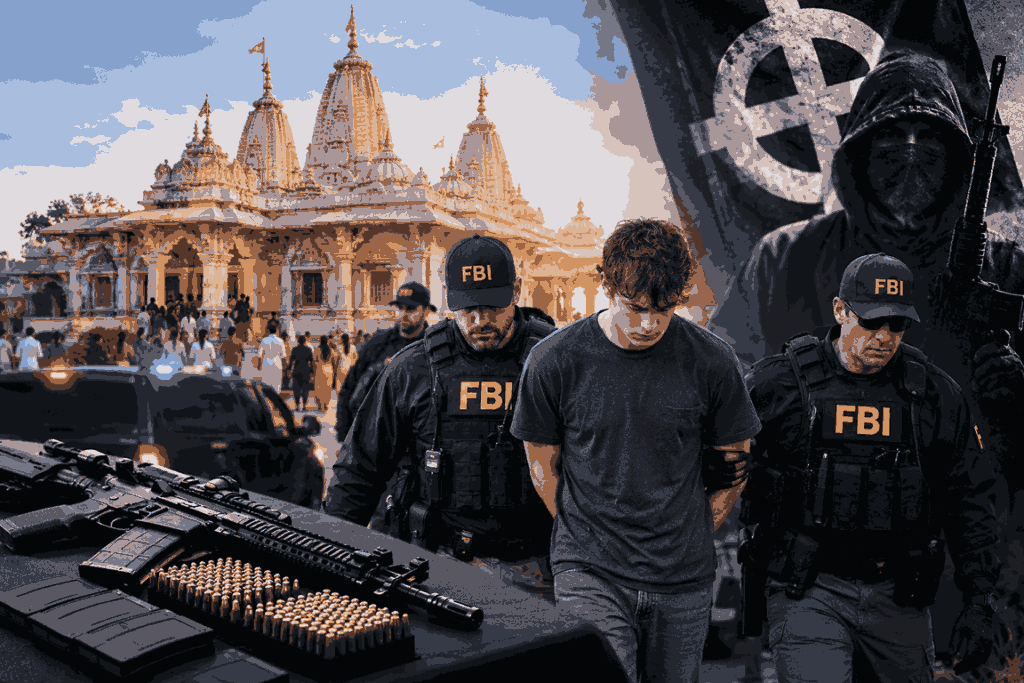
The alleged plot is particularly alarming because places of worship are meant to provide communities with spaces for prayer, spiritual reflection, and social gatherings. A planned attack on a Hindu temple would have threatened not only the lives of worshippers but also the sense of security enjoyed by a wider religious community. The reported intention to kill as many people as possible, if established by investigators, would point to a potentially catastrophic act of violence.
The case also draws attention to the dangers associated with the White Supremacist movement, an extremist ideology rooted in the belief that white people are inherently superior to other racial groups. Individuals influenced by such beliefs have, in some cases, translated racial hatred into threats, intimidation, and deadly violence. However, investigators must establish the suspect’s precise motives and the evidence supporting the alleged plan through a thorough legal process.
The reported seizure of an AR-style rifle and hundreds of rounds of ammunition is a significant aspect of the case. Such weapons and ammunition can enable an attacker to inflict devastating harm in a short period. Their presence, alongside allegations of plans for a mass shooting, makes the circumstances especially serious. Authorities would need to examine communications, online activity, statements, and other evidence to determine whether the suspect had moved beyond extremist rhetoric toward preparing an actual attack.
For Hindu Americans, the reported incident carries particular significance amid broader discussions about religious freedom and the security of minority communities. Hindu temples across the United States serve as important centres of worship, cultural education, festivals, and community life. Families, elderly devotees, and children regularly visit these institutions, often expecting them to be among the safest places in their daily lives.
A credible threat against a temple can therefore have consequences beyond the immediate location. Even when an attack is prevented, reports of an alleged plot can leave worshippers anxious about attending services, celebrating festivals, or bringing their children to religious events. Community leaders may face difficult decisions about security arrangements while trying to ensure that temples remain welcoming and accessible.
The case also highlights the importance of taking credible threats seriously without allowing fear to define community relations. Law enforcement agencies, religious institutions, and members of the public all have roles to play in preventing violence. Reporting specific threats, preserving relevant evidence, and cooperating with investigators can help authorities assess risks and intervene when necessary.
At the same time, the White Supremacist label should not replace the evidentiary standards required in criminal proceedings. Investigators must establish what the suspect allegedly intended, whether the temple was specifically selected as a target, and whether any additional individuals were involved. Prosecutors would need to present admissible evidence to support any criminal charges, while the suspect retains the legal right to a fair process.
The reported incident also underscores the challenge of addressing online radicalisation and extremist propaganda. Digital platforms can expose vulnerable individuals to communities that normalise hatred, glorify violence, or portray minority groups as enemies. Although exposure to extremist material does not automatically lead to criminal behaviour, credible threats and preparations for violence require timely attention.
For authorities, the priority is to establish the full circumstances of the alleged plot and determine whether further protective measures are necessary. For temple administrators, reviewing emergency procedures, maintaining communication with local police, and ensuring that worshippers know how to report suspicious activity can strengthen preparedness without creating unnecessary alarm.
Ultimately, the reported foiling of the alleged attack represents a reminder of the value of early intervention. If investigators confirm that the suspect intended to carry out a mass shooting, the case would illustrate how identifying warning signs and acting on credible intelligence can help prevent irreversible loss of life.
The reported plot has renewed concerns about Hinduphobia in the United States, where Hindu communities have raised alarms over temple vandalism, anti-Hindu graffiti, religious intolerance, and threats against their places of worship. Although the circumstances and motives behind individual incidents vary, repeated attacks on Hindu religious sites have prompted calls for stronger security measures and more effective law enforcement responses.
The White Supremacist ideology allegedly connected to this case must be examined through evidence rather than assumptions, while any proven preparation for violence must be addressed under the law. Protecting places of worship, defending religious freedom, and holding individuals accountable for credible threats are essential responsibilities in a society committed to public safety and equal rights.