
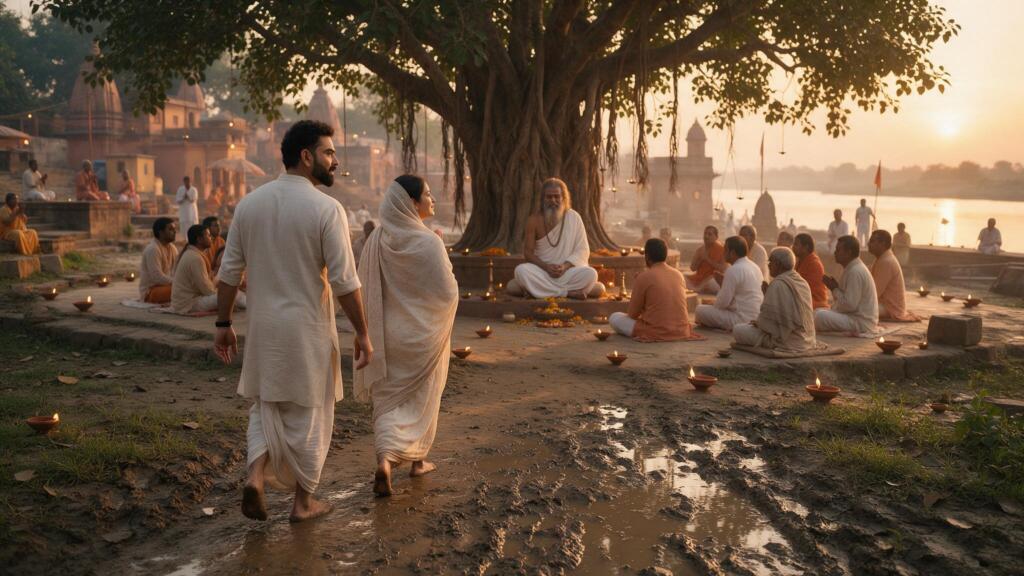
A deep conspiracy to denigrate Hinduism through insulting Hindu ascetics has come to fore, and the prime evidence is the recent insult on Swami Premanand. Had Indian cricketer Virat Kohli not interfered, stating his personal visit to Him rests on immense respect, the damage would have been more critical.
The controversy erupted when Dinesh Sharma, popularly known as Falahari Maharaj and president of the Shri Krishna Janmabhoomi Sangharsh Nyas, alleged that Virat Kohli was paid ₹5 crore to visit the Vrindavan ashram of Swami Premanand. He claimed that a property-builder lobby and a private company based in Rajasthan had orchestrated the celebrity visit to promote the ashram, calling it a PR-driven exercise rather than an act of devotion. These accusations, circulating widely on social media and in sections of the Hindi press, sought to cast doubt on the spiritual authenticity of Swami Premanand and reduce his followers’ faith to a commercial transaction.
Kohli’s team moved swiftly to shut down the narrative. In an official statement, his spokesperson categorically described the claims as “completely false, baseless and factually incorrect,” emphasizing that the cricketer visits Swami Premanand purely out of deep faith and reverence. The statement underscored that Kohli and his wife, actor Anushka Sharma, have been regular visitors to the ashram since January 2023, often traveling from London to Vrindavan two or three times a year to seek blessings. Their most recent visit, on 22 July 2026, saw the couple walking barefoot through muddy paths to reach the new Yamuna Vihar Kunj ashram ahead of Guru Purnima, a detail widely shared in photographs and videos.
The episode has sparked a larger conversation about the vulnerability of Hindu ascetics to coordinated character assaults. Supporters of Swami Premanand argue that the ₹5 crore allegation is not an isolated rumor but part of a pattern aimed at undermining the credibility of contemporary spiritual leaders. By targeting a high-profile devotee like Kohli, the accusers hoped to create a ripple effect, casting suspicion on the ashram’s activities and the integrity of Swami Premanand himself. Had Kohli remained silent, the narrative might have hardened into accepted “fact,” causing lasting reputational harm to Swami Premanand and discouraging other public figures from openly expressing their devotion.
Kohli’s intervention, therefore, is being read as more than a personal clarification; it is seen as a defense of the broader ecosystem of Hindu spirituality. His insistence that his relationship with Swami Premanand is rooted in “aastha” (faith) and “samman” (respect) directly challenges the cynical framing of spiritual engagement as a paid endorsement. In doing so, he has inadvertently highlighted how easily faith can be misrepresented when influential voices remain passive.
The controversy also reveals the precarious position of ascetics like Swami Premanand in India’s media landscape. While millions regard them as moral and spiritual anchors, they often lack the institutional machinery to counter fast-moving digital smear campaigns. In this context, the voluntary support of celebrities—when driven by genuine belief—becomes a crucial shield. Kohli’s repeated visits, documented over nearly four years, serve as a testament to the enduring appeal of Swami Premanand’s teachings, irrespective of sensational allegations.
Critics of Falahari Maharaj’s claims point out the complete absence of documentary evidence—no bank records, invoices, or contracts have been produced to substantiate the ₹5 crore assertion. Legal experts note that such unsubstantiated accusations could potentially invite defamation proceedings, especially when they impugn the character of both a national sports icon and a revered spiritual figure. Meanwhile, devotees of Swami Premanand have rallied online, sharing personal experiences and reaffirming their trust in the ashram’s mission.
As the dust settles, the episode stands as a cautionary tale about the ease with which faith can be weaponized in the court of public opinion. It also underscores the importance of timely, clear responses from those in the public eye. Virat Kohli’s decision to speak up has not only protected his own integrity but also bolstered the standing of Swami Premanand at a moment when the ascetic’s reputation was under serious threat. In a climate where Hindu spiritual leaders are increasingly scrutinized, such acts of solidarity may prove vital in preserving the sanctity of their work and the faith of millions who revere them.