
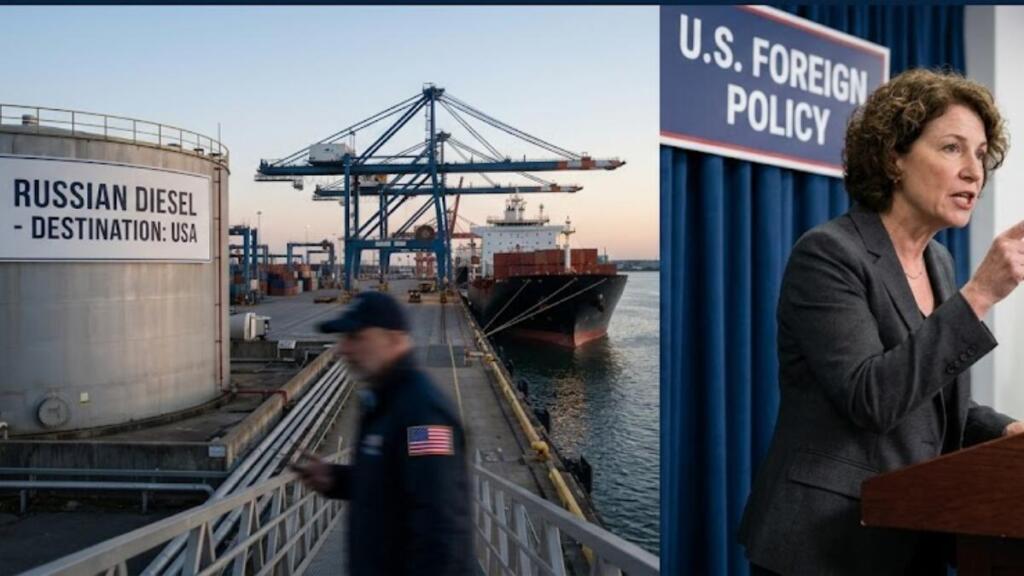
On Friday, the United States agreed to buy Russian diesel. President Trump announced that Russia would “immediately” supply 300,000 tons of diesel to the US, responding to soaring prices worsened by the Russia-Ukraine and U.S.-Iran wars. The Treasury Department said it would lift sanctions on Russian diesel to let the fuel into the global market. The authorisation covers specified transactions until April 7, 2027, and Trump publicly thanked Putin, saying the world needs the diesel. The announcement came as high costs weigh on the midterms.
For India, the timing is striking. Only weeks ago, Trump signed a law authorising further sanctions on Russia, including authority to tariff the top five purchasers of Russian energy, largely aimed at India and China. Washington is now doing the very thing it has pressured India not to do.
The rule bends when the price rises
The stated US position is that Russian energy funds the war in Ukraine and that buying it is objectionable. The record shows how flexible that position has been. Earlier this year, Trump temporarily eased sanctions on Russia to slow rising oil prices, though the effort largely failed. The diesel deal goes further. Critics see a pattern: sanctions are a principle when someone else is buying and a negotiable instrument when America needs the fuel.
India’s exposure was not hypothetical. In August 2025, Trump added a 25% tariff on Indian exports, on top of the 25% already in place, to dissuade India from buying Russian oil. His aides accused India of funding Putin’s war. New Delhi called the threats “unjustified” and vowed to protect its economic interests.
The new law extends that leverage. The administration retains the power to impose tariffs of up to 100% on countries buying Russian oil and gas. Critics argue Indian exporters carry that risk while the US secures its own supply. They also point to how Washington talks about the effect: Senator Lindsey Graham, the bill’s sponsor, said the tariffs “work.” To Indian readers, that sounds less like a policy debate than like leverage on display.