
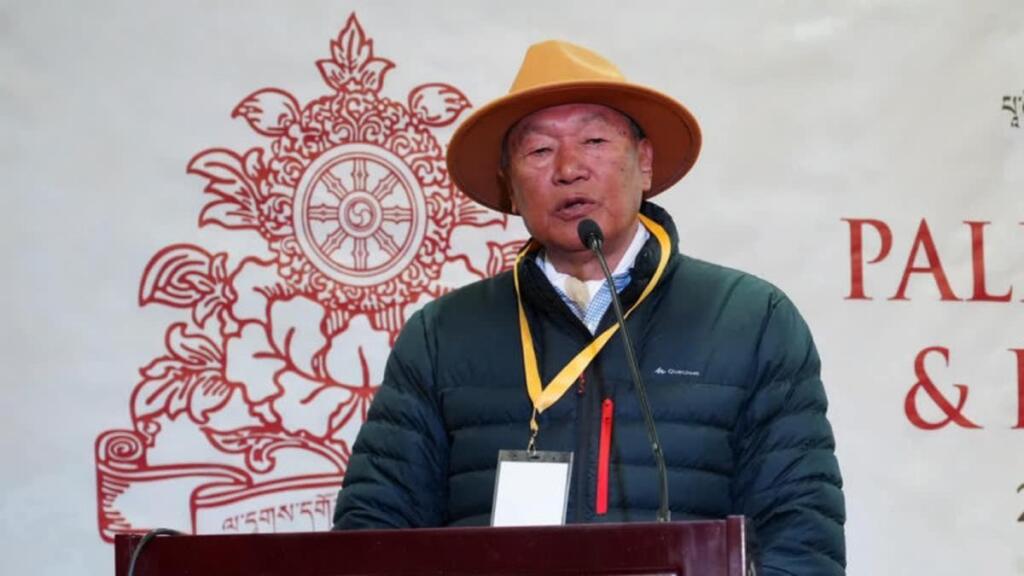
The Leh Apex Body (LAB), the main civil society platform of Ladakh’s Leh district, has rejected Beijing’s assertion that parts of Ladakh have always belonged to China. At a press conference in Leh on Thursday, with climate activist Sonam Wangchuk and other prominent figures present, the LAB declared that western Ladakh has never been part of China and urged the Centre to respond firmly.
The row began with a notification. India’s Home Ministry announced on October 2 that 28 places and geographical features in Ladakh had been given standard names on the official Survey of India map. Chinese Foreign Ministry spokesperson Mao Ning said China has never recognised the “so-called Union Territory of Ladakh” and called the move illegal and invalid, adding that the relevant areas in the western sector of the China-India boundary have always belonged to China.
What the Leh Apex Body said
On history, LAB co-chairman Chering Dorjay Lakruk, who also heads the Ladakh Buddhist Association, said Ladakh was never under Chinese rule and never in recorded history part of China. He asked the Centre to respond in the strongest terms. He urged the Union Home Ministry to send a strong message that India would not surrender an inch of Ladakh, and demanded that China withdraw its remarks. On Aksai Chin, he said Ladakh would not give up the area, which he described as under illegal Chinese occupation.
The statement also spoke to identity and loyalty. “No external power can dictate the identity, aspirations or future of Ladakh,” he said. The body added that local people had backed the Indian Army through every crisis, from the 1962 war to the Galwan clash. Its tone toward Beijing was cautionary. The LAB urged the Chinese leadership to use utmost caution in statements on Ladakh and to refrain from claims that could aggravate tensions. A representative from Nubra, which borders China to the east and Pakistan to the north, also condemned the remarks on behalf of residents.
What the government has said
New Delhi had already replied. On Tuesday, MEA spokesperson Randhir Jaiswal said the UT of Ladakh is an integral and inalienable part of India and that no amount of Chinese denial can change this established fact. He added that the 28 places were identified in consultation with the UT administration and local stakeholders. The LAB’s statement amplifies that line and puts a local voice behind it.
Why the naming matters
Naming is a recurring tool in the India-China boundary dispute. China has run renaming drives for locations in Arunachal Pradesh, which it calls “south Tibet,” in 2017, 2021, 2023, 2024 and 2025, including 23 locations in April, all of which India has rejected. India’s Ladakh exercise is widely read as a response of the same kind, applied in the western sector. Reports say the 28 places include locations in disputed border areas, among them Gogra and Hot Springs.
Why the LAB’s voice carries weight
Ladakh sits on two borders, and its residents are the first to be affected by any escalation. The region has about 300,000 people and borders both Pakistan and China, and India keeps a heavy troop presence there. The LAB is also a party to ongoing talks with the Centre. It is one of two Ladakh bodies negotiating with the central government on local demands. Those demands include statehood, inclusion in the Sixth Schedule, a Ladakh Public Service Commission, two parliamentary seats and job reservation for locals.
A statement of this kind therefore does two things: it answers Beijing, and it restates the region’s place in the Indian union at the same time as local groups press the Centre on governance and safeguards. The LAB framed its appeal on China to the Home Ministry, the same ministry it negotiates with on statehood.
The first question is whether the Home Ministry or MEA responds further to the LAB’s call for a stronger message. The second is whether China repeats or extends the claim, including on specific names in the 28-place list. The third is how the exercise affects border diplomacy, since both sides have stated positions that rule out a quick compromise.