
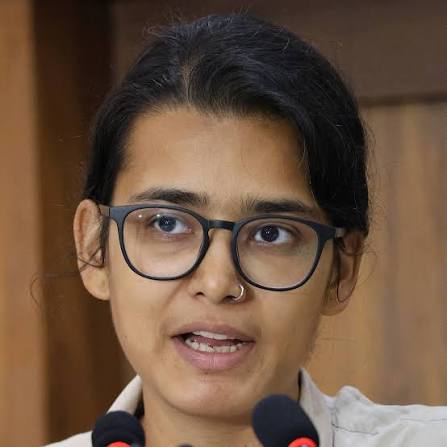
Neha Bora, the national president of the All India Students’ Association (AISA), has credited the anti-Citizenship Amendment Act (CAA) protests of 2019–2020 with shaping her political journey, bringing renewed attention to the ideological debates surrounding the movement, citizenship rights and student activism in India. In a recent conversation with journalist Arfa Khanum Sherwani, Bora described the protests as a defining experience that influenced her decision to become an activist and strengthened her commitment to collective political action.
The remarks, reported by The Commune on October 13, 2026, have revived discussion about the legacy of the anti-CAA agitation and the political ideas that drew young people into the movement. The protests emerged in opposition to the Citizenship Amendment Act, which provides a pathway to Indian citizenship for specified religious minorities from Afghanistan, Bangladesh and Pakistan who arrived in India before the prescribed cutoff date. The legislation excludes Muslims from these specified groups, a provision that became a central point of contention.
During the conversation, Bora reflected on how movements can continue to influence individuals even when they fail to achieve all their immediate objectives. Referring to the Shaheen Bagh protests and the farmers’ agitation, she argued that the political significance of a movement cannot be measured solely by whether its demands are fulfilled. According to her, such campaigns can shape the outlook of an entire generation and encourage young people to participate in public life.
For Neha Bora, the anti-CAA protests were more than a demonstration against a particular law. She described the experience as an introduction to solidarity, collective resistance and the importance of standing alongside people facing political opposition. She also credited the movement with inspiring students to explore political organisations, poetry and forms of expression connected with social struggles.
Her comments also highlighted the continuing disagreement over the meaning of citizenship and the objectives of the anti-CAA campaign. Supporters of the protests argued that the legislation undermined the constitutional principle of equality by making religion a criterion for a citizenship pathway. Supporters of the law, meanwhile, maintained that it was intended to protect persecuted religious minorities in neighbouring countries and did not take away the citizenship of Indian Muslims.
The question of undocumented migration adds another dimension to the debate. The Commune framed the protests as a campaign that sought to defend Rohingya refugees and undocumented Bangladeshi migrants. However, that interpretation should be distinguished from Bora’s own explanation of her political motivations. In the quoted remarks, she emphasised equal citizenship, opposition to discrimination and solidarity with Muslims facing hostility. The excerpt does not establish that every protester shared an identical position on the citizenship status of Rohingyas or undocumented migrants.
For Neha Bora, the enduring value of the agitation lies in its capacity to inspire people beyond the immediate political moment. She argued that students who entered universities in subsequent years continued to draw inspiration from the protests, including through poetry, political discussion and involvement in organisations such as AISA. Her account presents student activism as a process through which personal experiences can develop into sustained political commitments.
The remarks also offer insight into the ideological direction of AISA, a student organisation affiliated with the Communist Party of India (Marxist–Leninist) Liberation. The organisation has participated in campaigns concerning education, student rights and national political issues. Its position within the broader Left movement has frequently brought it into confrontation with the policies of governments led by the Bharatiya Janata Party.
The significance of Neha Bora’s comments therefore extends beyond a retrospective account of one protest movement. They highlight the continuing influence of the anti-CAA agitation on a section of India’s student leadership while illustrating the sharp disagreements that remain over citizenship, religious discrimination and national identity.
Critics of the movement may question its political priorities and the consequences of its demands, while supporters regard it as an important defence of constitutional equality. Both perspectives form part of a wider debate about how democratic protest should operate and how competing interpretations of citizenship should be reconciled.
Ultimately, Neha Bora’s account underscores a familiar feature of political movements: their influence often survives long after demonstrations end. Whether the legacy of the anti-CAA protests is judged primarily through constitutional arguments, political mobilisation or the experiences of individual activists, the movement continues to shape conversations about citizenship and dissent in India. The debate over its achievements, limitations and long-term consequences is unlikely to disappear soon.