
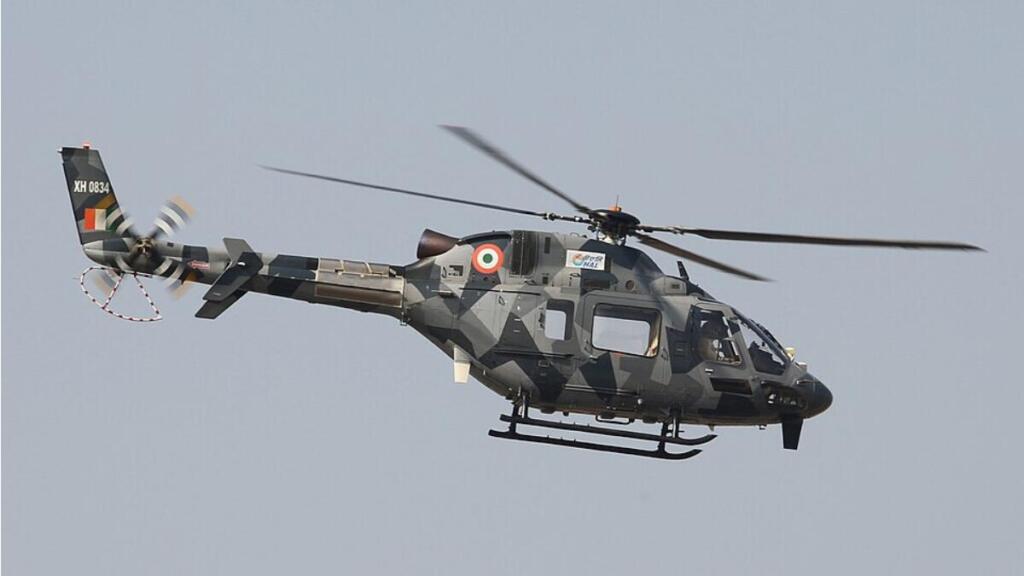
The indigenously developed Light Utility Helicopter (LUH), which the Army and Air Force need to replace their ageing Cheetah and Chetak fleets, has entered the final stages of certification and mission equipment integration. Officials familiar with the matter told the Hindustan Times on Tuesday that once the Centre for Military Airworthiness and Certification (CEMILAC) clears it for induction, Hindustan Aeronautics Limited (HAL) aims to deliver the first 12 limited series production helicopters to the two services in FY 2027-28.
What is the LUH programme?
The LUH is a light, single-engine utility helicopter designed and developed in India by HAL. According to HAL, it is a 3-tonne-class helicopter built to meet the operational needs of the Indian Army and the Indian Air Force. When the Army variant received Initial Operational Clearance in 2025, its glass cockpit, health and usage monitoring system and Safran Ardiden 1U engine were among the features highlighted.
Where does certification stand?
According to the HT report, the helicopter is in the final stages of certification and mission equipment integration. The officials it cites say some improvements are underway to boost performance and operational capability, and that flight testing and certification of these enhancements is at an advanced stage. The aim is a “military type certificate” from CEMILAC, which is what clears the helicopter for induction into service.
The ongoing flight trials are focused on two things, HT has learnt. One is refining the helicopter’s autorotation characteristics. Autorotation is the emergency manoeuvre that lets a helicopter land safely after losing engine power. The other is integrating an automatic flight control system (AFCS), which is meant to reduce pilot workload and improve lateral stability, among other things.
The officials also said the certification framework reflects strict military airworthiness requirements. The helicopter must show safe, reliable performance in hot-and-high conditions, mountainous terrain, and the sandy and dusty environments typical of Army Aviation missions.
For context, earlier reports had pointed to certification by December 2025 and first deliveries as early as March 2026. The delivery target is now FY 2027-28, subject to CEMILAC clearance.
What would the LUH be used for?
HT reports that the helicopter is intended for reconnaissance and surveillance, logistics support, troop movement, casualty evacuation, training, disaster relief and high-altitude operations. The high-altitude role matters because the forces depend on helicopters to supply troops in places such as the Himalayas, which is why HAL’s trials have focused on hot-and-high performance.
Why is it needed now?
The LUH is meant to replace the Cheetah and Chetak helicopters, whose safety record the HT report describes as blemished by a string of crashes. The designs are about six decades old, and the military wants them replaced quickly.
HAL licence-produced 625 Cheetah and Chetak helicopters for the services. It no longer builds them but remains responsible for their maintenance and repair. It began Cheetah production under a 1970 agreement with the French firm Aerospatiale, eight years after a similar partnership with Sud-Aviation (now Airbus) for the Chetak.
How will the replacement work?
According to the officials HT cited, the Army will begin phasing out its Cheetah and Chetak fleets in a year or two. It will replace them with LUHs over the next eight to 10 years as part of the Army Aviation Corps’ modernisation. The plan has two parts: inducting LUHs and leasing similar helicopters as a stopgap for critical needs.
Can HAL build enough of them?
HAL expects the Army and IAF to place combined orders for at least 187 light helicopters. It has set up dedicated LUH production facilities at Tumakuru, with an initial capacity of around 30 helicopters a year, scalable to about 60 depending on future requirements. Feedback from the two services’ LUH flying units will go into later production batches.
The key milestone is the military type certificate from CEMILAC, because there are no deliveries without it. After that, the pace of production at Tumakuru and the speed of the Cheetah and Chetak phase-out will show how quickly the services get relief.