
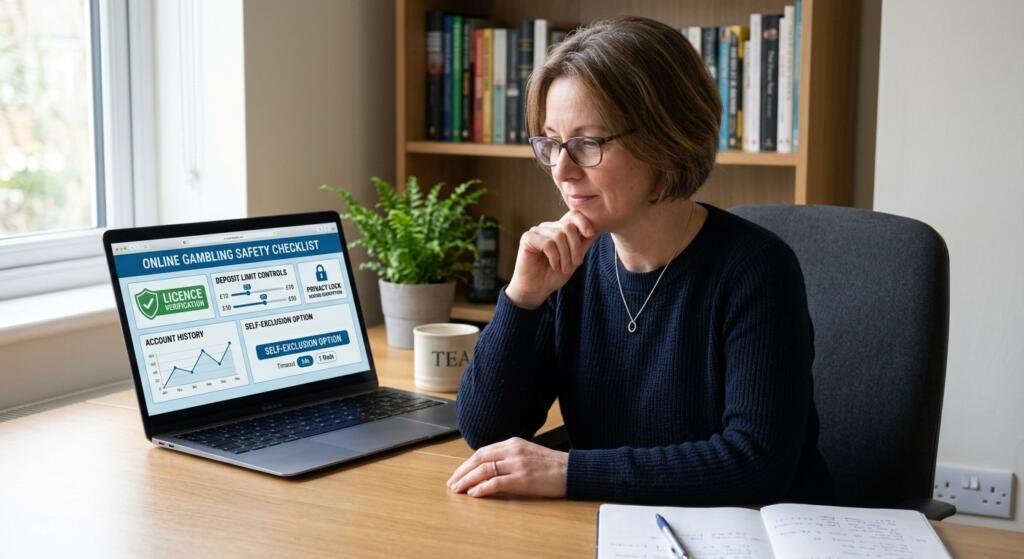
Online slots are often discussed as entertainment, but the safety of the platform behind the games matters just as much as the games themselves. In Britain, that question remains firmly on the consumer-policy agenda. Advertising is scrutinised, age assurance is under constant attention, and operators are expected to show that their services are fair, transparent and properly controlled.
That matters because a polished website is not proof of a safe one. Clear information, meaningful account controls and a valid licence are far more useful signs. If you’re considering an online slots platform, it’s worth knowing what those signs look like before you register or deposit anything.
Why safety is still a public issue
The conversation around digital entertainment has changed. People now expect online services to take privacy, identity checks and clear communication seriously, and gambling is no exception.
In Great Britain, the rules are shaped by the principle that gambling should be conducted fairly and openly, with protections for people who may be at greater risk of harm. The Gambling Commission is responsible for regulating commercial gambling in Great Britain, including remote operators offering games online.
Advertising has also drawn close attention from regulators and the public. A gambling advert should not present play as a route to solving money worries, suggest certainty about results, or be designed to appeal to people below the legal age. The Advertising Standards Authority’s gambling rules set expectations for marketing that is responsible, clear and appropriately targeted.
For a player, the practical point is simple: safety should not be hidden in tiny print. A responsible platform makes key information easy to find, explains its controls plainly and treats checks as part of the service rather than an inconvenience.
Licensing is the starting point, not a finishing touch
A UK Gambling Commission licence is the central baseline for an online slots operator serving customers in Great Britain. Licensing is not merely a logo displayed in a website footer. It places obligations on the business, including requirements around customer funds, game fairness, identity checks, complaints procedures and safer-gambling measures.
The Commission can investigate operators, impose regulatory action and, where necessary, suspend or remove licences. That accountability matters. It means an operator is expected to meet continuing standards, rather than simply pass a one-off check when it launches.
You do not need to take a site’s claims at face value, either. The most sensible approach is to check independently using the Commission’s public register of licensed gambling businesses.
When checking a listing, look for:
- The legal business name, which may differ from the website’s trading name
- An active remote operating licence
- The activities covered by that licence
- Any published regulatory information that may help you understand the operator’s status
It’s also sensible to inspect the platform’s own footer and legal pages. A properly presented service should identify the licensed entity, provide a registered address or contact route, and link to terms, privacy information and safer-gambling support. If those details are difficult to locate or don’t match the register, pause there.
A licence does not mean every experience will be identical, nor does it remove the need to read the rules. What it does provide is a regulated framework and a route for oversight.
Age checks are about keeping access legal and appropriate
Online gambling in Great Britain is strictly for people aged 18 and over. A safer platform takes that requirement seriously from the start, rather than treating it as a box to tick.
Identity verification may involve confirming a person’s name, date of birth and address through electronic databases, documents or further checks where needed. It can feel a little laborious, particularly when you’re used to opening online accounts in a few minutes. Yet the purpose is important: to prevent underage participation, reduce identity misuse and help the operator meet legal duties.
A legitimate service should explain what it needs, why it needs it and how personal information will be handled. Its privacy policy should be available before registration, written in understandable language and clear about data retention and security.
Be wary of any platform that appears to welcome anonymous access, makes vague promises about skipping verification, or asks for documents through informal channels without explaining how they will be protected. Reliable age assurance and identity checks are signs that the operator understands its responsibilities.
The tools that can make a real difference
Safer access is not just about being able to register. It’s about having control once an account is open. Good platforms make their tools visible in the account area, explain how each setting works and avoid making customers hunt through several screens to find them.
Common safeguards include the following.
Deposit limits
A deposit limit lets you set a maximum amount you can add to your account over a chosen period, such as a day, week or month. Setting one before you start is often more straightforward than trying to make a decision mid-session.
Check whether the operator applies a cooling-off period before increasing a limit. A sensible delay gives you time to reconsider, while reductions should normally take effect without unnecessary waiting.
Time reminders and reality checks
Time reminders, sometimes called reality checks, display a message after a set period of activity. They may show how long you have been logged in and provide a prompt to take stock.
They are not a substitute for your own judgement, but they can interrupt the tendency to lose track of time. The useful version is clear and unavoidable enough to be noticed, not a fleeting pop-up that disappears before you’ve read it.
Account history and safer-gambling settings
An account should provide access to your deposits, withdrawals and activity history. Seeing that information in one place can help you make informed decisions about your own use.
Look, too, for options to take a break from the service or to restrict access. The details vary between operators, so read the setting carefully before confirming it. You should know when it begins, how long it lasts and what happens when the period ends.
Self-exclusion
Self-exclusion is a more formal option for people who want to block their access for a set period. In Great Britain, GAMSTOP provides a free national self-exclusion scheme for online gambling websites and apps run by participating licensed businesses.
This is a serious measure, so it’s worth reading the scheme’s information carefully before enrolling. An operator should also offer its own account-level exclusion route and explain how it works.
Marketing should be clear, measured and honest
An online slots platform can tell you about its games, but its marketing should not obscure important information or make claims that distort the nature of gambling.
Responsible advertising is measured in tone. It should not imply that playing is a solution to personal difficulties, present gambling as essential to social standing, or suggest that outcomes are predictable. It should also include appropriate 18+ messaging and be directed away from audiences below the legal age.
Transparency extends to the games themselves. One term you may see is RTP, short for return to player. RTP is usually expressed as a percentage and describes a theoretical long-run calculation based on a very large number of game rounds. It is not a forecast for a single session, a guarantee for an individual, or an indication of what will happen next.
For example, a game’s stated RTP can help explain its mathematical design over the long term, but it cannot tell you what result you will receive on a particular day. A platform that explains this plainly is doing something useful. One that treats an RTP figure as a personal promise is not.
The Commission’s remote gambling and software technical standards set expectations around remote products, including information and technical requirements. Still, readers should take time to read each game’s rules, payout information and platform terms.
A short consumer checklist before you play
Before opening an account, take a few quiet minutes to check the operator on the UK Gambling Commission register, read the terms relating to identity verification and withdrawals, review the privacy policy, and locate deposit limits, time reminders, breaks and self-exclusion settings. Configure any personal limits before playing, not afterwards. Adults who have decided to explore licensed game catalogues can use this contextual resource for best online slots UK such as on Bally Casino. Availability, game selection and account safeguards should always be checked directly by the reader.
Safety is something you should be able to see
The safest online slots platforms are not necessarily the loudest. They make their licence easy to verify, take 18+ access seriously, provide practical controls and communicate without blurring the risks.
That’s the standard worth looking for: fewer grand claims, more useful information. If a service is regulated, transparent and gives you clear ways to manage your account, you’re in a far better position to make a considered choice.