
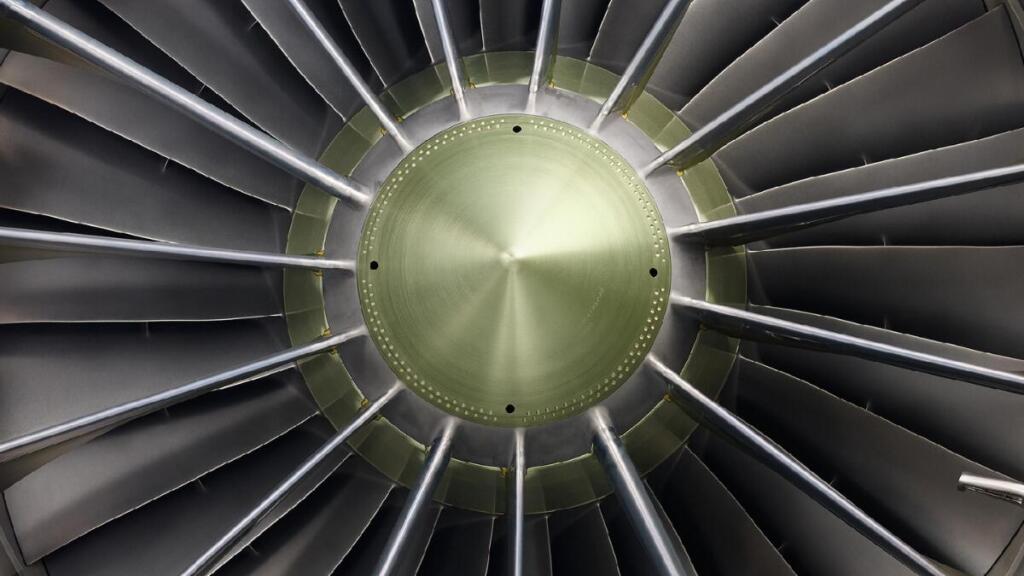
For more than two years, the Tejas Mk1A programme has been defined by one recurring headline: engines promised, engines delayed. That pattern shifted slightly in August, when GE Aerospace confirmed it had shipped three more F404-IN20 engines to Hindustan Aeronautics Limited, taking the total delivered under the current order to 10. GE described the shipment in a short statement, saying it remains “proud to partner with” HAL and the IAF on India’s indigenous fighter programme.
It’s a modest number in absolute terms. But set against a programme that spent years waiting for its very first engine, three in a single month is a meaningful uptick — and it comes on the heels of assurances from HAL’s leadership that supply was finally stabilizing.
Why the Engine Line Went Quiet in the First Place
The F404-IN20 is the powerplant GE built specifically for the single-engine Tejas. GE had already delivered all 65 engines under an earlier order by 2016, after which the production line was mothballed. When HAL signed a fresh contract in 2021 for 99 more engines — a deal worth roughly Rs 5,375 crore — GE had to restart a line that had sat dormant for five years and re-establish a global supply chain that had scattered in the meantime. That process, compounded by pandemic-era disruptions, is largely why deliveries slipped so badly: engine supply was originally supposed to begin in March 2024, and the first engine didn’t actually arrive until March 2025.
Former HAL Chairman D.K. Sunil said in April that GE had committed to delivering 20 engines between June and December 2026, calling that figure conservative and suggesting GE expected to beat it. The August shipment falls within that window, and HAL has reportedly imposed liquidated-damages penalties on GE for the earlier delays.
Production Was Never the Bottleneck — Airframes Are Ready and Waiting
HAL’s assembly line has not been the constraint. By some estimates the company has built and flight-tested roughly 30 Tejas Mk1A airframes — fighters and trainers combined — using non-combat “Category-B” test engines, with most of them essentially finished and simply parked, waiting for a production-standard F404 to be fitted before they can be formally handed over.
That’s the crux of the story now: engines trickling in is necessary, but it doesn’t by itself put jets in IAF squadrons.
The Harder Problem: Making the Systems Talk to Each Other
Beyond the engine, the Mk1A carries a substantially upgraded avionics suite compared with the earlier Tejas Mk1 — an AESA radar, a new electronic warfare suite, and expanded sensor and weapons integration. Individually, most of these have been tested: Astra and ASRAAM missiles have been fired from the aircraft, and air-to-surface weapons trials have been carried out.
The sticking point has been sensor fusion — getting the radar, the EW suite, and the weapons system to feed a single, coherent combat picture through the mission computer, rather than working in isolation. HAL and IAF officials have described this as requiring further testing and software fixes around radar range and performance benchmarks, and a programme review meeting originally planned for spring 2026 was pushed back specifically because HAL didn’t yet have enough progress on these benchmarks to present.
Where Things Stand Now
According to India’s Defence Secretary, Rajesh Kumar Singh, induction is likely to begin from September onward, with the IAF prepared to accept the aircraft under certain concessions — meaning jets could be accepted with their core combat capabilities validated, while some remaining integration work is completed on later deliveries or retrofitted afterward. HAL’s current chairman, Ravi Kota, had earlier pointed to an August–September 2026 window for deliveries to begin, contingent on the F404 supply stabilizing, and said 15–20 more engines are expected in the 2026–27 fiscal year.
Whether that translates into aircraft in IAF hands before Air Force Day on October 8 isn’t confirmed by any of the current reporting — it remains a plausible but unconfirmed marker, not an official target.
The Bigger Picture
The stakes go beyond one squadron. The IAF currently fields around 29 fighter squadrons against a government-sanctioned requirement of 42.5, and it has orders in place for 180 Tejas Mk1A aircraft in total — the original 83 from 2021, plus 97 more approved later, for which HAL signed a separate deal with GE in November for 113 additional F404 engines, with deliveries scheduled to run from 2027 to 2032.
For now, the engine supply chain — once the single biggest obstacle — appears to be moving in the right direction. What happens next depends less on GE’s shipping schedule and more on whether HAL and the IAF can close out the remaining integration work and agree on what “ready” actually means for the first jets to be handed over.