
The second edition of Exercise Tarang Shakti, the Indian Air Force’s flagship multinational air exercise, begins Saturday, September 26, at Air Force Station Jodhpur and adjoining air bases in Rajasthan, running through October 12. The drill marks a significant milestone for the IAF: the first-ever participation of the US Air Force’s fifth-generation F-35 Lightning II stealth fighter in an exercise on Indian soil.
Seven friendly foreign countries — Australia, Bangladesh, France, Germany, Greece, Sri Lanka, the UAE and the United States — will participate with their own air assets, while around 30 to 65 additional nations (reports on the exact figure vary) have been invited as observers and delegates. Air chiefs or equivalent officials from roughly 10 countries are expected to attend in person.
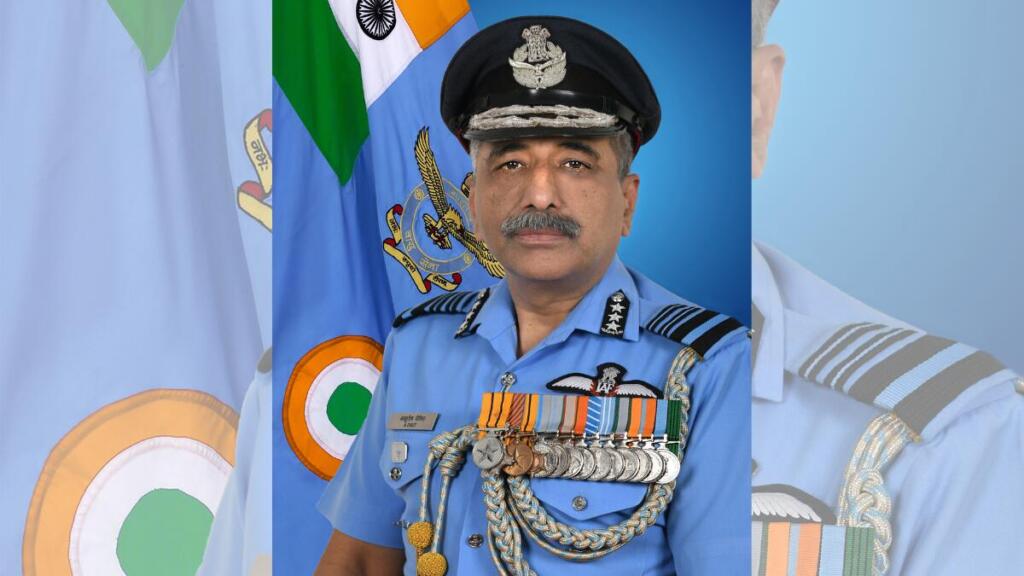
Vice Chief of the Air Staff Air Marshal Ashutosh Dixit, briefing the press ahead of the exercise, said Tarang Shakti 2026 is “about learning from each other, operating with each other, and preparing for the air warfare challenges of tomorrow.” He noted that the smaller number of countries flying aircraft this year compared to earlier expectations was largely a matter of scheduling rather than any change in scope or ambition.
The Headline Attraction: F-35s Over Rajasthan
Six American F-35 fighters are expected to take part — their first operational exercise engagement in India, after previously appearing only as static or flying displays at Aero India in Bengaluru. They’ll fly alongside French Rafales, UAE F-16s, and India’s own frontline fleet, including Su-30MKIs, Rafales, Tejas Light Combat Aircraft, Mirage 2000s, MiG-29s and Jaguars — along with AWACS surveillance aircraft and mid-air refueling tankers.
The presence of such advanced, diverse airframes operating together is expected to give the IAF rare exposure to complex, high-end multinational air combat scenarios rarely replicated in bilateral exercises.
What the Exercise Will Cover
The drills span a wide operational canvas: counter-air missions, air defense, close combat, reconnaissance, airlift, and air-to-air refueling, alongside emerging focus areas such as unmanned systems, precision weapons, integrated air and missile defense, counter-drone capabilities, information dominance, and space-enabled operations.
Air Marshal Dixit pointed to lessons drawn from recent conflicts, including Operation Sindoor, as shaping this year’s emphasis on intelligence-led operations and joint operations across domains. “We do not conduct Tarang Shakti to demonstrate what we already know,” he said, framing the exercise as a genuine learning platform rather than a showcase.
Western Rajasthan was chosen for its vast, largely unrestricted airspace — ideal for realistic combat flying — with exercise areas extending across Jaisalmer, Barmer, Phalodi and Jodhpur.
A Bigger Strategic Picture
Beyond training value, officials and analysts see Tarang Shakti as serving three intertwined purposes: military readiness, international defense diplomacy, and a platform to showcase India’s “Make in India” aerospace ambitions. Foreign air chiefs visiting Jodhpur may get the chance to fly in India’s indigenous Tejas LCA, underscoring New Delhi’s push to position itself as both a learner from advanced partners and, eventually, a supplier of its own defense technology to the world.
The exercise builds on the inaugural 2024 edition, which involved 11 foreign air forces and roughly 150 aircraft across two phases, and cements Tarang Shakti’s place as a biennial fixture on the IAF’s calendar.