
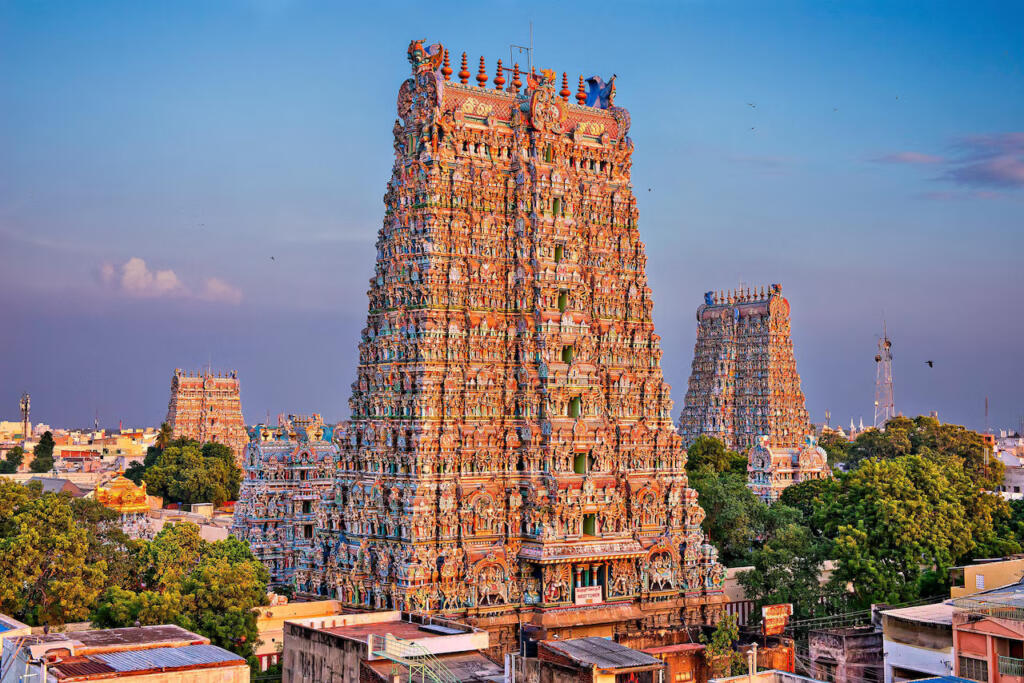
The consecration of the historic Madurai Meenakshi Sundareswarar Temple has unfolded amid heated debate, with Sanskrit mantras becoming the focal point of a political and cultural flashpoint in Tamil Nadu. As lakhs of devotees gathered for the once-in-17-years Kumbhabhishekam on September 17, 2026, the Dravida Munnetra Kazhagam (DMK) found itself embroiled in controversy over the traditional use of Vedic chants during the sacred fire rituals.
The Madurai Bench of the Madras High Court had earlier dismissed petitions demanding that Tamil hymns be recited on an “equal footing” with Sanskrit mantras during the Velvi Kundam (sacred fire-raising) segment of the ceremony. Justice C. Saravanan noted that existing temple practice already accommodates Tamil spiritual mantras and Thirumurai recitations by Odhuvars, but ruled that unless specific rules are framed, outsiders cannot independently seek parity in the core Agamic rituals.
Temple authorities submitted to the court that both Sanskrit mantras and Tamil hymns would be chanted during the Kumbhabhishekam, as had been the custom in previous consecrations. The HR&CE Department affirmed that qualified Stanikabattars and Tamil Odhuvars are available to perform the Panniru Thirumurai and other devotional compositions alongside the Vedic rites.
Despite the court’s clarification, sections within the DMK and allied Dravidian groups expressed strong dissatisfaction, alleging that the dominance of Sanskrit mantras marginalises Tamil devotional traditions. VCK leader Thol. Thirumavalavan went further, urging the state government to issue orders ensuring the entire Kumbhabhishekam is conducted using Tamil mantras, citing the language’s cultural significance.
Critics within the party framed the issue as part of a broader struggle over linguistic identity and temple administration, arguing that centuries of Tamil Bhakti literature deserve equal liturgical space. However, temple priests and Agamic scholars maintained that the Kumbhabhishekam’s core rituals are governed by the Kaarana and Kaamiya Agamas, which prescribe specific Vedic formulae that cannot be altered without compromising the ceremony’s sanctity.
In the days leading up to the event, heavy security and traffic curbs were imposed across Madurai as authorities prepared for an unprecedented influx of pilgrims. Devotees from across India and abroad thronged the temple complex, many expressing indifference to the political row and emphasising spiritual devotion over linguistic debates.
Inside the sanctum and around the Yaga Saalai, priests chanted Sanskrit mantras as part of the consecration rites, while Odhuvars recited Tamil hymns in designated areas. Temple officials described this as a continuation of established practice, noting that Tamil Thirumurai have long been part of the 10-day festival, with thousands of verses sung during processions and special pujas.
The episode has reignited discussions about the role of language in Tamil Nadu’s temple rituals, especially under the HR&CE Department’s oversight. While petitioners sought a uniform rule mandating equal recitation of Tamil and Sanskrit mantras across all Kumbhabhishekams, the court stopped short of issuing such a directive, leaving the matter to existing customs and future rule-making.
For now, the Meenakshi Temple’s consecration has proceeded without legal interruption, but the political fallout continues. Party functionaries have vowed to raise the issue in legislative forums, while temple trustees and Agamic scholars warn against politicising rituals that millions consider inviolable. As the dust settles, the question remains whether a middle path can be found that honours both Tamil Bhakti heritage and Agamic tradition without reducing Sanskrit mantras to a battleground for identity politics.