
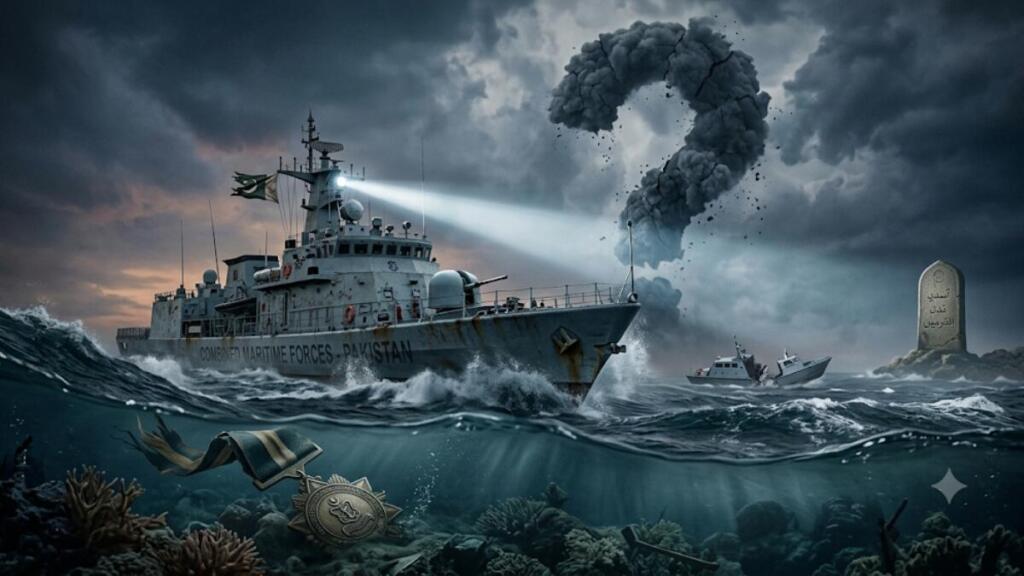
Pakistan’s navy has never been shy about showcasing its Combined Maritime Forces involvement — joint communiqués, change-of-command ceremonies, statements about “interoperability” with US, UK and Gulf partner navies. It is a well-worn part of the institution’s public messaging, aimed as much at domestic audiences as international ones.
That messaging ran into an uncomfortable contradiction this year when a Red Sea-adjacent strike disrupted commercial shipping in waters CMF nominally helps secure, without any indication that Pakistan’s coalition standing translated into faster warning, evacuation support or protective coordination specific to Pakistan’s own interests in the corridor.
It is worth being precise about what CMF actually does and does not do. The coalition coordinates patrols, shares maritime domain awareness data among members, and runs periodic task force operations against piracy and smuggling. It does not operate a national-citizen protection service, and no member state should reasonably expect one. The problem is that Pakistan’s official rhetoric around CMF membership has, over the years, implied exactly that kind of protective reach — stature by association rather than capability by construction.
By contrast, India’s engagement in the same maritime space has generally kept the two functions separate and clearly labelled: multinational cooperation on one track, sovereign evacuation and protection planning on another, run through the Indian Navy’s own assets and MEA coordination, as seen in past evacuation operations from conflict zones in the wider region. The distinction has mattered in practice, not just on paper.
Pakistan’s naval modernisation debates rarely engage with this gap. Public discussion tends to focus on platform acquisitions — frigates, submarines — and coalition standing, treating both as proxies for maritime security writ large. The safety of Pakistani interests in high-risk corridors gets far less institutional attention, despite representing one of the most direct, measurable maritime security outcomes a state can be judged on.
The Red Sea episode has, in effect, forced a comparison Pakistan’s naval establishment would probably rather avoid: between the visibility of its coalition participation and the near-total absence of a dedicated protective mechanism when the moment actually arrived. Task force banners and joint communiqués photograph well. They have not, on this occasion, demonstrated that coalition standing converts into protection when it is needed. That gap between image and outcome is now part of the public record, and no amount of coalition messaging closes it.