
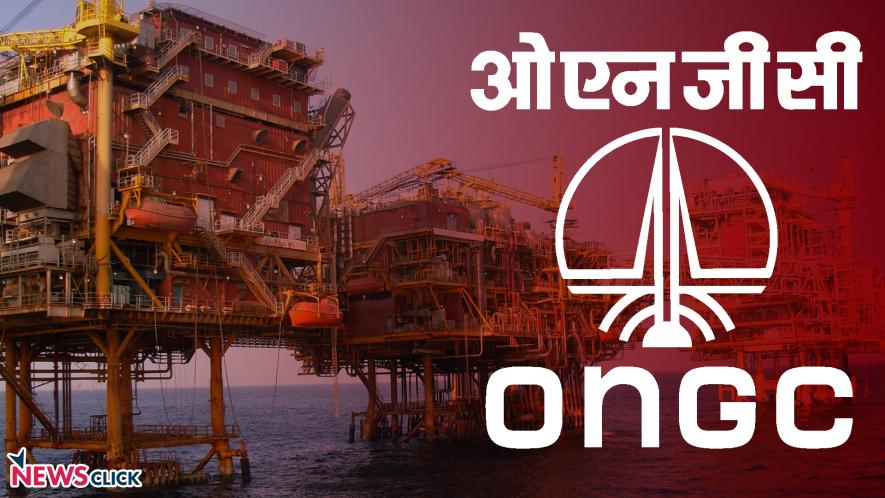
State-owned Oil and Natural Gas Corporation has announced a promising gas discovery off the eastern seaboard, marking a significant milestone for ONGC Odisha operations and India’s push toward energy self-reliance. The find, made at a deepwater exploration well in the Mahanadi Offshore Basin about 43 kilometres from Konark, has sparked optimism among policymakers, industry watchers, and local communities who see the potential for jobs, infrastructure development, and a stronger domestic gas supply.
The gas strike occurred on September 18, 2026, at the MN-DW18-1-H-D well, drilled under ONGC’s flagship Samudra Manthan deepwater exploration campaign. According to the company, the hydrocarbon-bearing zone was encountered between depths of 1,441 and 1,452 metres, after the well reached a final target depth of 1,623 metres. ONGC reported that the well has been flowing gas continuously for three days, with “encouraging flow rates and steady reservoir pressure,” suggesting the presence of a commercially promising gas-bearing structure.
For ONGC Odisha, this discovery represents more than a technical success; it is a strategic foothold in a basin long considered prospective but underexplored. The Mahanadi Offshore Basin has attracted attention for its geological similarities to other productive basins along India’s eastern margin, yet until now it lacked a confirmed deepwater gas find of this nature. Industry analysts note that the proximity of the well to the coast—just 43 km from Konark—could allow for faster development and monetisation if further appraisal confirms commercial viability, potentially leveraging shared infrastructure with nearby deposits.
Still, caution tempers the early enthusiasm. ONGC has made clear that additional tests, including appraisal drilling and reservoir evaluation, are needed before any production decision can be taken. These studies will determine recoverable reserves, flow sustainability, and the economic feasibility of developing the field. For ONGC Odisha, the next phase is critical: transforming an encouraging flow into a bankable project that can contribute meaningfully to India’s gas grid and reduce reliance on imports.
The timing of the discovery also matters. With the government pushing to raise the share of natural gas in India’s energy mix to 15 per cent by 2030, every new domestic find carries added weight. ONGC Odisha is now at the centre of that ambition, with the Mahanadi find offering a potential boost to the country’s deepwater exploration programme and reinforcing the strategic importance of the eastern offshore region. If the field proves commercially viable, it could be developed as part of a cluster, sharing processing and transportation infrastructure with other discoveries to bring gas to market more quickly and cost-effectively.
Local stakeholders are watching closely. For coastal Odisha, the prospect of a new gas field raises hopes of employment opportunities, skill development, and ancillary industrial growth. At the same time, environmental and fishing communities have voiced concerns about the impact of offshore drilling on marine ecosystems and livelihoods. ONGC Odisha will need to navigate these sensitivities carefully, ensuring that exploration and any future production adhere to stringent environmental standards and engage meaningfully with local populations
Market reactions have been cautiously positive. ONGC’s shares drew attention following the announcement, with analysts noting that successful deepwater discoveries could improve the company’s reserve replacement ratio and long-term production profile. For investors, the key question is how quickly ONGC Odisha can move from discovery to development, and whether the Mahanadi find can be scaled into a sustained production hub rather than a one-off success.
As appraisal work begins, all eyes will be on the data emerging from the MN-DW18-1-H-D well. Flow rates, pressure maintenance, and reservoir characteristics will dictate whether this becomes a flagship project for ONGC Odisha or a promising but limited find. What is already clear is that the discovery has reinvigorated interest in India’s deepwater frontier and underscored the importance of persistent exploration in basins once written off as too challenging.
For now, the message from ONGC is measured: tests are needed before a production decision, but the initial results are encouraging. If those tests confirm a robust, commercially viable reservoir, ONGC Odisha could soon be celebrating not just a gas strike, but the beginning of a new chapter in India’s energy story—one where the eastern offshore region plays a central role in powering the nation’s growth.