
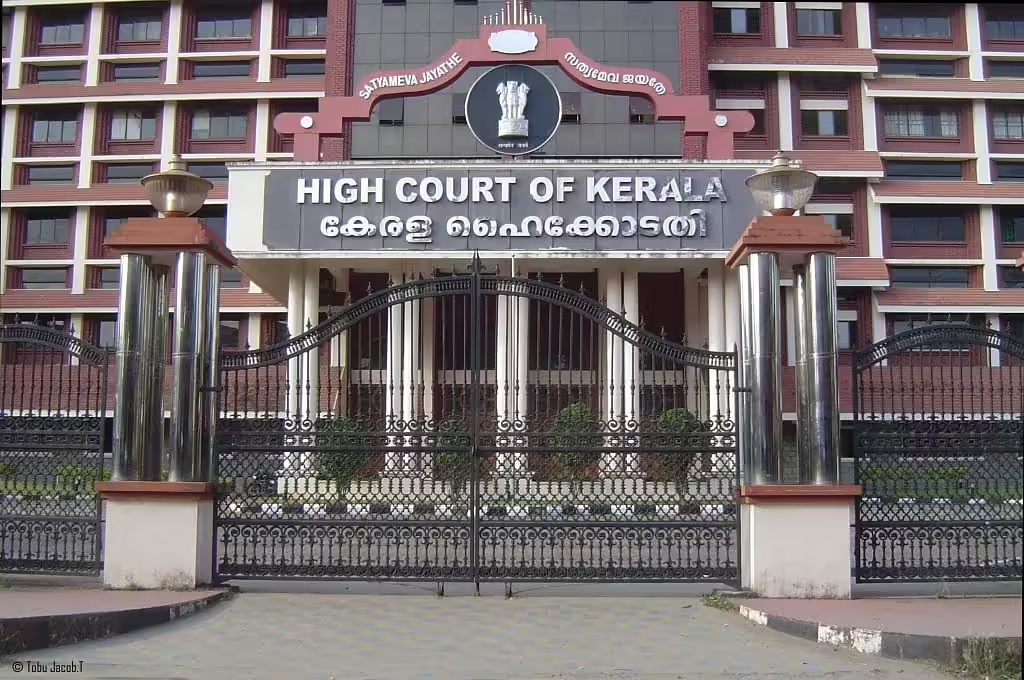
The Kerala High Court has made an important observation on child protection and the limits of personal law, ruling that Muslim Personal Law cannot be invoked as a defence against prosecution under the Protection of Children from Sexual Offences (POCSO) Act when the alleged victim is below 18 years of age. The ruling came while the court considered a petition seeking to quash criminal proceedings against a man accused of sexually assaulting a girl who was allegedly his wife.
The case concerned a girl who was 17 years old at the time of the alleged offences. According to the prosecution, the accused allegedly took the girl to his residence on October 23, 2021, and repeatedly sexually assaulted her over the following four days. Charges were registered under provisions of the Indian Penal Code as well as the POCSO Act. The accused subsequently approached the High Court seeking to have the criminal proceedings against him quashed.
At the centre of his argument was the claim that the girl was his legally wedded wife. He contended that the marriage had taken place according to Islamic rites when she was 17 years and one month old. On that basis, he sought protection under the then-existing marital exception to the rape provision of the IPC. He also relied on the alleged marriage to challenge the applicability of POCSO provisions.
The High Court, however, rejected the attempt to use the claimed marital relationship as a shield against prosecution. The court held that the applicability of POCSO does not disappear merely because the accused claims that the minor was his wife under Muslim Personal Law. The court stressed that where one party to a marriage is a minor, the statutory protections provided by POCSO continue to operate regardless of whether the marriage itself is ultimately found to be valid.
The Bench also noted that the question of whether a legally valid marriage had actually taken place could not be conclusively determined at the stage of a petition seeking quashing of proceedings. The accused had relied on statements reportedly made to the police by the girl, her brother and the Qazi associated with the alleged marriage. However, the court observed that the question of marital validity involved factual issues that would have to be examined during trial.
The ruling therefore draws a clear distinction between questions surrounding personal or religious law and criminal legislation designed specifically to protect children. Muslim Personal Law may govern certain questions concerning marriage, but it cannot operate as an exemption from a special criminal statute when the statutory conditions for an offence under POCSO are alleged to have been met.
The court’s reasoning also relied upon the Supreme Court’s landmark decision in Independent Thought v. Union of India, which had effectively raised the age threshold relevant to the marital rape exception from 15 to 18 years. In light of that ruling, sexual intercourse by a man with his wife when she is below 18 can attract prosecution for rape under the applicable criminal law, even where the woman is described as his spouse.
This aspect of the judgment is particularly significant because Indian courts have previously encountered competing arguments concerning the intersection of religious personal laws, marriage and child-protection statutes. The Kerala High Court had itself previously held that marriage under personal law does not automatically place a minor outside the protection of POCSO. The latest ruling reinforces that position.
The court further emphasised that proceedings should not be terminated at the preliminary stage when the allegations, taken at face value, disclose the ingredients of the alleged offences. Its limited jurisdiction while considering a quashing petition does not permit a mini-trial or a detailed assessment of evidence. Those questions are properly left for the trial court.
The judgment consequently sends a broader message about the priority given to the protection of children under India’s criminal justice framework. Muslim Personal Law cannot be treated as a blanket exemption from legislation such as POCSO, particularly where the alleged victim falls within the statutory definition of a child.
The case also illustrates why the legal status of a marriage and criminal liability arising from sexual acts involving a minor are not necessarily the same question. Even if an accused ultimately establishes a claim concerning marital status, that claim does not by itself extinguish offences created by child-protection legislation. Muslim Personal Law therefore cannot, by itself, determine whether POCSO applies.
By refusing to quash the proceedings, the Kerala High Court has allowed the criminal case to proceed according to law. The final determination of disputed facts, including the circumstances surrounding the alleged marriage and the allegations themselves, remains a matter for trial. The decision nevertheless establishes an important legal principle: Muslim Personal Law cannot be used to circumvent statutory safeguards enacted to protect children from sexual abuse.